


Featured Projects
2026 Community Projects
Each year, the Urban & Regional Planning Practicum partners with communities across Michigan to address real planning challenges through applied research, engagement, and collaborative problem-solving. The 2026 projects demonstrate the breadth of Practicum work, addressing issues ranging from neighborhood revitalization and climate resilience to housing, mobility, public space, and community development. Working closely with municipal staff, community organizations, residents, and other stakeholders, student teams developed evidence-based recommendations to support informed decision-making and long-term implementation. Together, these projects demonstrate the Practicum’s commitment to creating meaningful community impact while preparing students for professional planning practice.
Interested in partnering with the Planning Practicum?
Propose a Project → Applications are available as PDFs or MS Word Documents.
Email completed applications to Jesus J. Lara, Ph.D. at: jjlara@msu.edu
Proposal Deadline: December 1, 2026
East Lansing: East Village Concept Plan
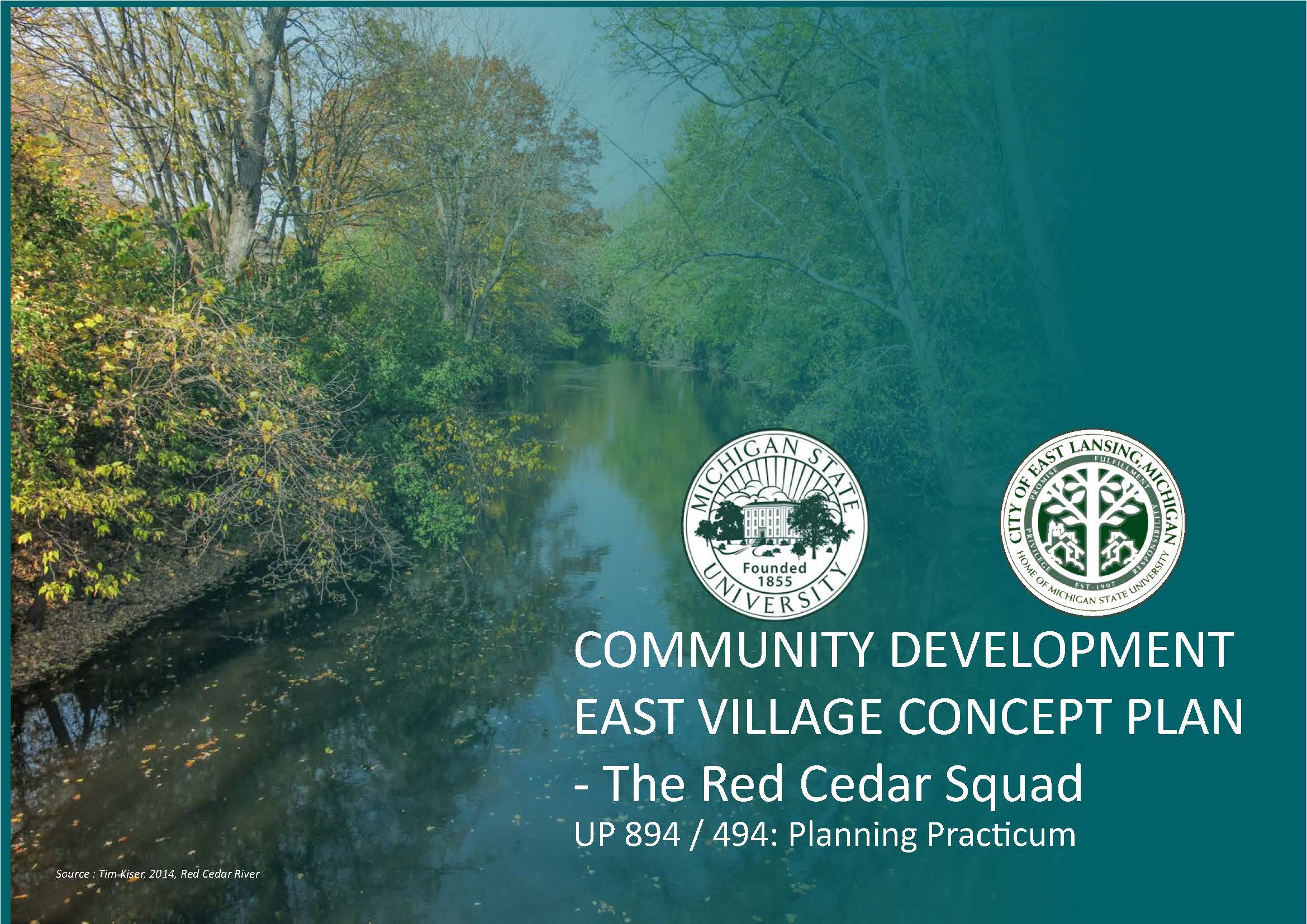
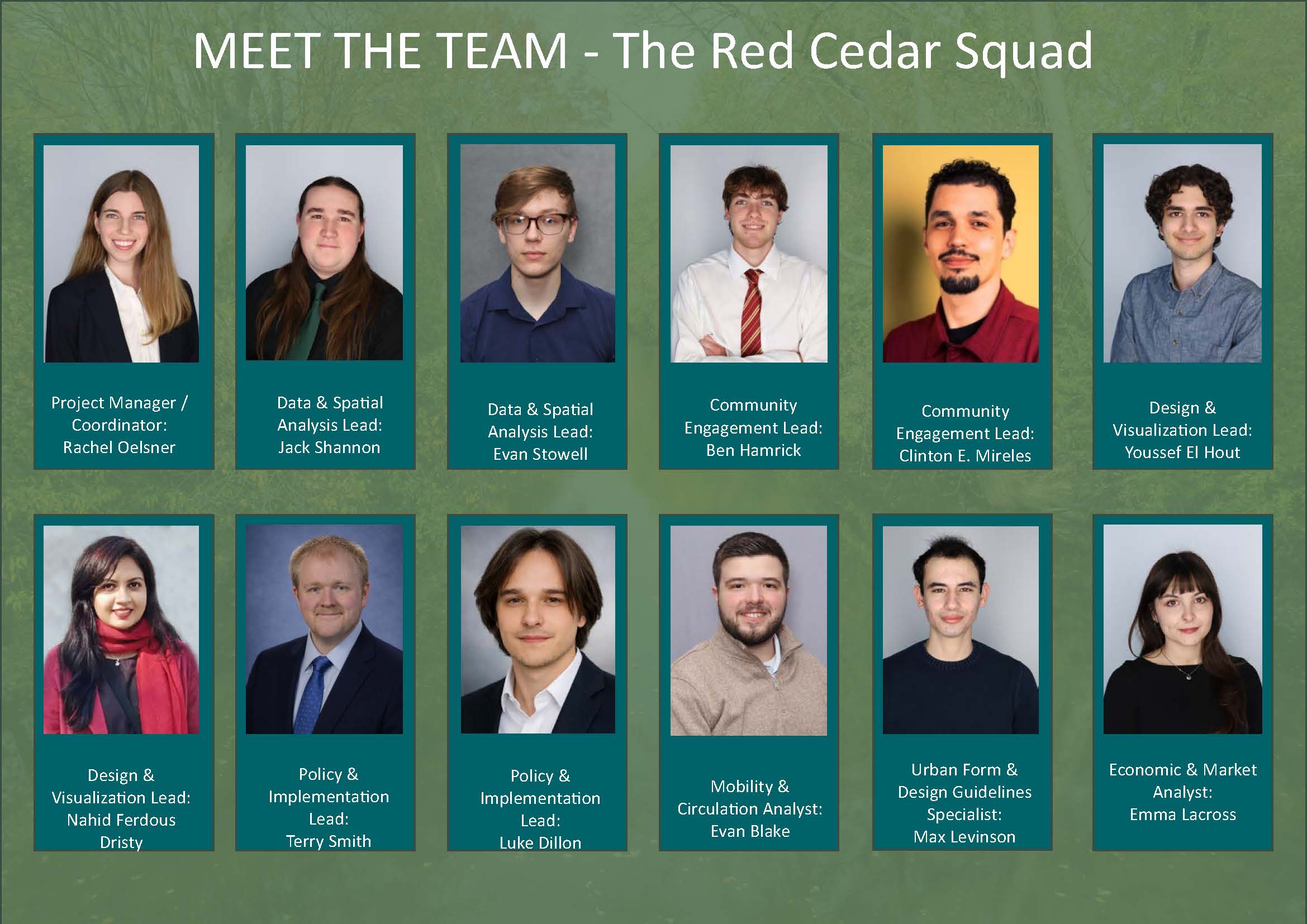
This project was conducted in partnership with the City of East Lansing to evaluate existing conditions and develop actionable strategies for creating a more livable and vibrant East Village district. The project identified three critical challenges: a student housing capacity gap, infrastructure needs, and an underutilized public realm. In response, the team developed four priority recommendations: improving pedestrian accessibility and safety; revitalizing the Grand River corridor through mixed-use development and public-realm activation; strengthening the district’s character through enhanced public spaces and placemaking; and expanding attainable housing options to meet growing demand.
Recipient of the 2026 American Planning Association
Outstanding Graduate Student Project Award
Grand Rapids: Bus Stop Shade & Climate Resilience Assessment
This project was conducted in partnership with the City of Grand Rapids Office of Sustainability to assess bus stops in priority areas known as Neighborhoods of Focus. The project examined opportunities to improve accessibility, shade, comfort, and climate resilience within the public transit system while developing recommendations to support future investment and decision-making. As part of the project, the student team created the Infrastructure Priority Index (IPI), an analytical model and planning tool designed to help prioritize bus stop improvements based on multiple community and infrastructure needs
Recipient of the 2026 American Planning Association
Outstanding Graduate Student Project Award
Flint: Martin Park Neighborhood Revitalization Plan
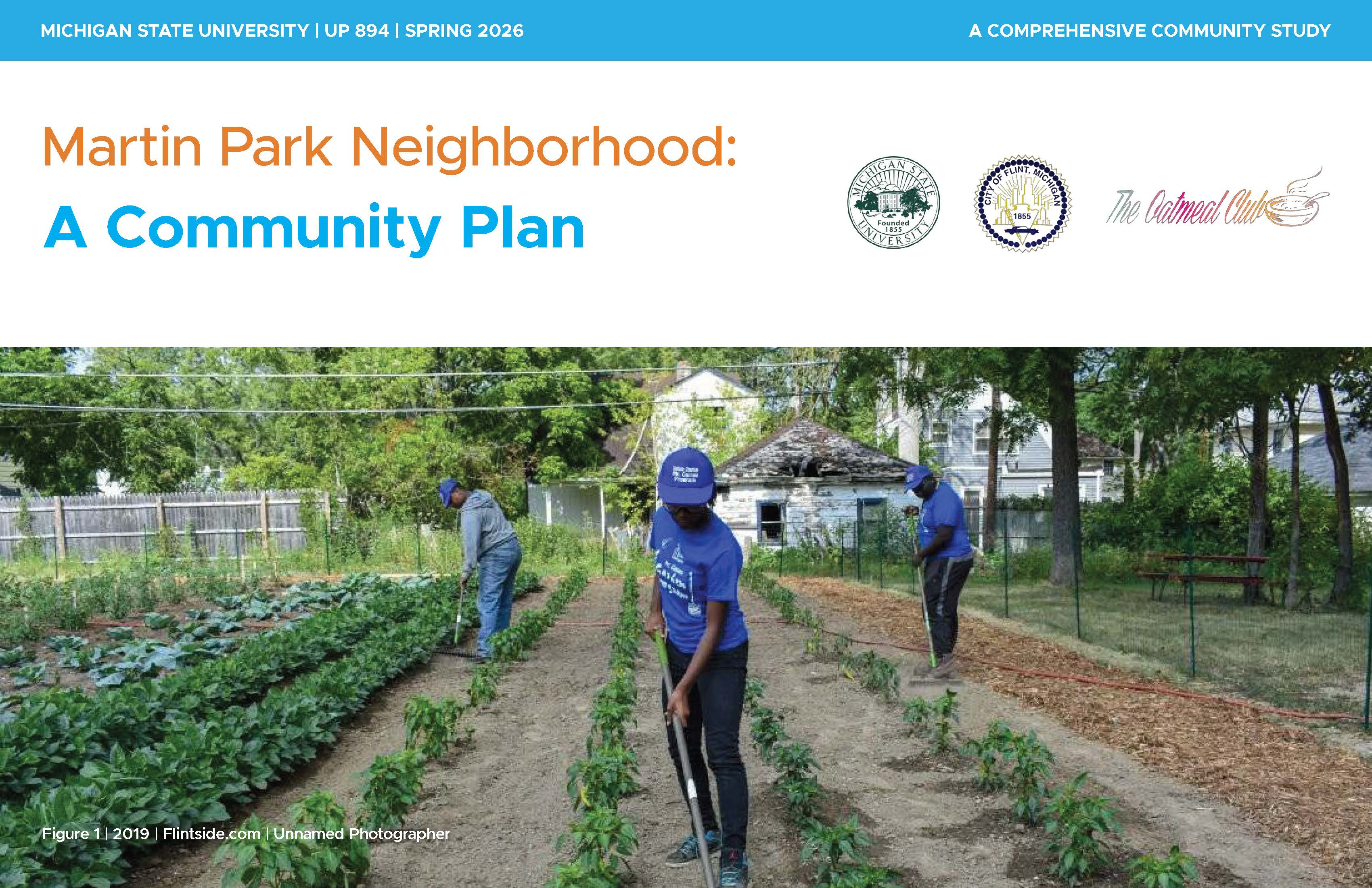
Developed in partnership with the City of Flint, Martin Park residents, local businesses, and The Oatmeal Club, this project addressed long-term disinvestment in the Martin Park neighborhood. Students evaluated existing conditions, identified resident priorities, and developed practical strategies to improve quality of life. Although Martin Park is located near downtown Flint and a major commercial corridor, the neighborhood continues to experience housing vacancy, aging housing, limited access to everyday services, and unsafe walking conditions. Rather than relying on large-scale redevelopment, the plan emphasizes realistic, visible improvements that can strengthen safety, access to services, housing conditions, and neighborhood stability over time.
Together, the 2026 projects illustrate the range of challenges that can be addressed through university-community planning partnerships. From neighborhood revitalization and housing to mobility, climate resilience, and public space, students translated research and community input into practical strategies that partners can build upon. In the process, students gained meaningful professional experience while contributing planning knowledge, new perspectives, and actionable recommendations to communities across Michigan.
 Print
Print Email
Email