


Veronica rust – Puccinia veronicae-longifoliae
 Print
Print Email
EmailPathogen: Puccinia veronicae-longifoliae
Hosts: Veronica longifolia and V. spicata
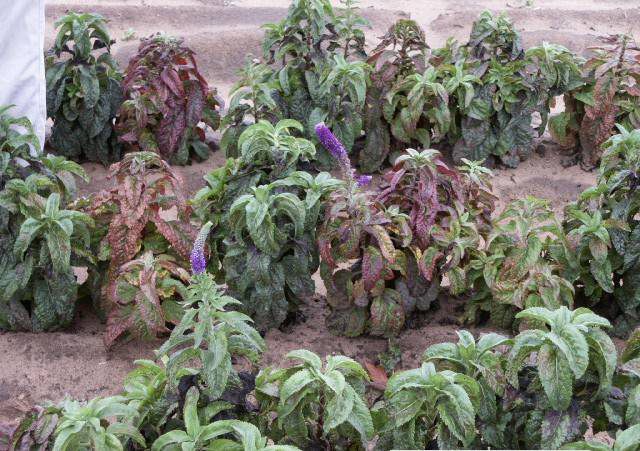
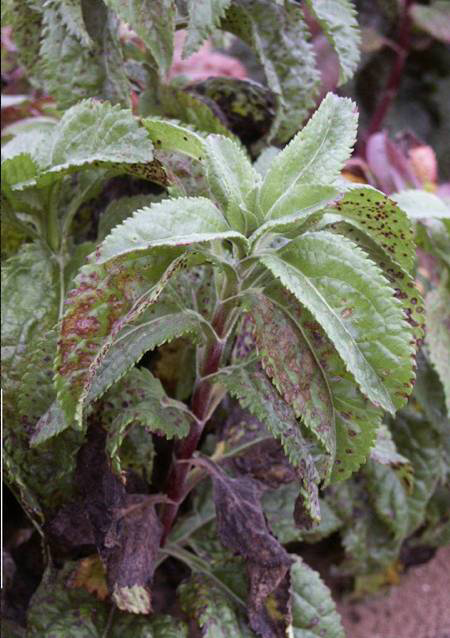
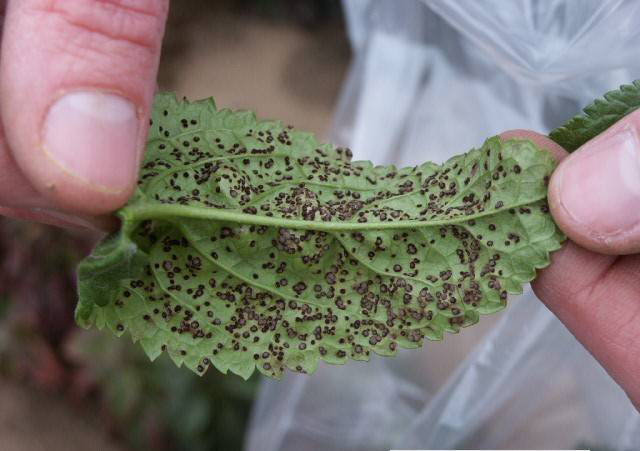
Symptoms: Bronze, purplish overcast on the upper surface of infected foliage. Raised reddish brown pustules on the underside of the foliage. Under severe disease severity significant foliar blighting occurs.
Spread: This disease was introduced to Michigan in 2004 and was found again in 2005. The disease occurred on field grown Veronica. To date it has been a problem in very few nurseries. Long distance disease spread is thought to occur with movement of infected propagation material. Spores, produced on foliage are carried by wind currents.
Management: Carefully inspect incoming plant material for signs of rust, pay particular attention to material that originated off shore. Plants with rust pustules or other disease symptoms should be destroyed. Fungicide applications are needed for disease control in some situations. Resistance development is a concern with this pathogen, follow recommended fungicide resistance management strategies.
Other Documents in this Series
You Might Also Be Interested In
-
Herbicide Resistance in Field Crops
Published on May 21, 2026
-
Agricultural Weather Outlook for September 17, 2026
Published on September 17, 2026
-
Agricultural Weather Outlook for September 10, 2026
Published on September 10, 2026
-
Agricultural Weather Outlook for September 3, 2026
Published on September 3, 2026
-
Agricultural Weather Outlook for August 27, 2026
Published on August 27, 2026
-
Agricultural Weather Outlook for August 20, 2026
Published on August 20, 2026
Accessibility Questions:
For questions about accessibility and/or if you need additional accommodations for a specific document, please send an email to ANR Communications & Marketing at anrcommunications@anr.msu.edu.