MSU scientist receives $540K grant from National Science Foundation to advance biodegradable packaging
 Print
Print Email
EmailResearch builds on insights from other projects such as the NSF-funded Center for Plastic, Paper and Hybrid Packaging End-of-Life Solutions.
EAST LANSING, Mich. — Packaging materials protect food, pharmaceuticals and consumer goods from contamination, but what happens to them once they’ve served that purpose? Many cannot be recycled — especially plastics — and contribute substantially to the roughly 350 million tons of global plastic waste generated annually.
A new two-year project supported by the National Science Foundation (NSF) led by a world-renowned Michigan State University scientist focuses on the development of innovative thermoplastic packaging that is cost-efficient, high-performing, biodegradable and microplastic-free.
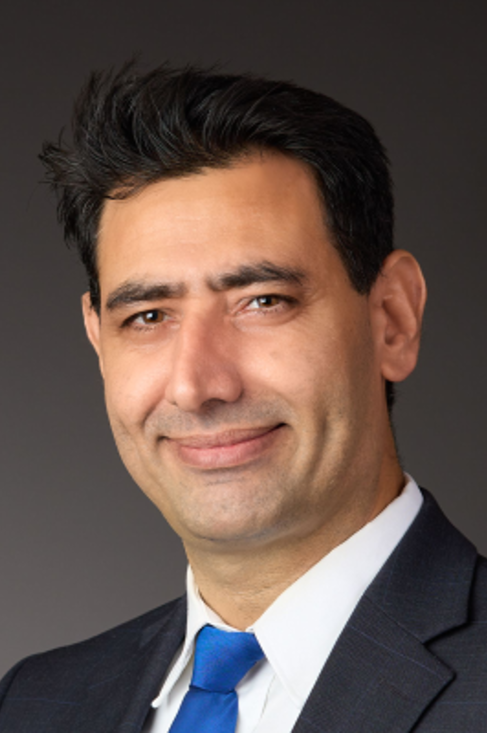
Muhammad Rabnawaz, an MSU College of Agriculture and Natural Resources Faculty Laureate and professor in the top-ranked School of Packaging, is using the $540,000 grant to explore these materials through experiments and artificial intelligence-driven machine learning techniques.
The inability to recycle many of the plastics currently used is perhaps the largest challenge facing the packaging industry. The goal is to develop materials that break down in composting environments without leaving behind persistent plastic particles. Rabnawaz said the project could potentially help enable the creation of a $40 billion annual compostable packaging market.
“Multilayer plastics serve an important role in protecting moisture-sensitive food, medicine and other products, but they also contribute to the accumulation of plastic pollution and microplastics in food, water and soil,” said Rabnawaz, whose work is funded in part by MSU AgBioResearch. “It’s a priority area for NSF, the Environmental Protection Agency (EPA) and many others that recognize the negative effects of microplastics. This work has a multitude of implications across a range of fields, from agriculture to protecting the environment and human health.”
Rabnawaz, who began at MSU in 2016, has established an internationally acclaimed research program. His APEX Lab (AI for Paper & Plastic Engineering and Manufacturing Systems Integration) is aimed at furthering manufacturability, scalability and industry adoption of renewable and biodegradable packaging solutions through an integrated AI and experimental validation approach.
A globally respected leader in the field, Rabnawaz has published more than 120 peer-reviewed articles and holds more than 75 U.S. and international patents. These accomplishments are made possible by roughly $11 million in funding support over the last decade from sources such as NSF, EPA, the U.S. Department of Energy and the U.S. Department of Agriculture.
The new funding is built on insights from previous awards, including a 2025 NSF grant to establish the Center for Plastic, Paper and Hybrid Packaging End-of-Life Solutions (C3PS) directed by Rabnawaz — a partnership among scientists from lead institutions MSU and Western Michigan University, as well as six additional universities.
C3PS is the first NSF-funded center that unites academia and industry to develop sustainable packaging materials, an effort meant to foster innovative research collaborations and strengthen U.S. leadership in packaging technology. Over the past 16 months, C3PS has independently funded 10 grants totaling $800,000.
With the new NSF funding, researchers have three primary objectives. The first is to develop machine learning models that survey the chemical design of thermoplastic materials. Rabnawaz indicated that determining potentially viable chemistries has previously taken several years, but AI-based machine learning methods expedite the process.
“This is the first big grant I’ve received that will use AI, machine learning and predictive modeling,” Rabnawaz said. “It’s significant because AI is becoming increasingly important in material discovery. We can have thousands of formulations to evaluate. It may have taken us 20 years to do this research before, but we’re striving to accomplish these goals in two years with one-tenth of the resources.”
Second, the team will assess the materials against established multilayer plastic performance benchmarks and confirm biodegradation status using industrial composting. Finally, researchers will investigate commercial viability and environmental resilience across the materials’ lifecycle, from raw production through end-of-life composting.
The team will eventually partner with companies to ensure economic feasibility and test the materials in real-world settings.
Also involved in the project are Christopher Saffron, a professor in the MSU Department of Biosystems and Agricultural Engineering, and Tengfei Luo, the Dorini Family Professor for Energy Studies and associate chair in the Department of Aerospace and Mechanical Engineering at the University of Notre Dame.
Saffron is an expert in the conversion of plant biomass into high-value products, while Luo is a leading researcher in the use of data-driven approaches to engineer and design materials, especially polymers, for energy, water treatment, thermal management and space applications.
"This collaboration brings together complementary expertise in biopolymer chemistry and materials informatics to accelerate the development of sustainable packaging solutions,” Luo said. “By combining molecular-level insights and AI into material structure and properties with advances in biodegradable polymer design, we aim to help the packaging industry move toward materials that perform well in real-world applications while leaving a much smaller environmental footprint."
Training the next generation of packaging professionals is an essential element of the project, Rabnawaz said. Postdoctoral, graduate and undergraduate students will have the opportunity to learn about the intersection of polymer chemistry, machine learning and environmental systems science.
“When we look at the legacy of plastic pollution, it’s clear that we have not done enough to address what happens to packaging after it has served its purpose,” Rabnawaz said. “My vision for the future is that we can do better. With the emergence of AI, we now have powerful tools that, combined with rigorous experimental validation, can help us accelerate the discovery of packaging materials that are safe, functional and sustainable throughout their lifecycle. We owe it to future generations to pursue that vision. And just as importantly, while we work toward it, we are training the next generation of scientists and engineers who will take the baton from us and carry this work forward.”
Michigan State University AgBioResearch scientists discover dynamic solutions for food systems and the environment. More than 300 MSU faculty conduct leading-edge research on a variety of topics, from health and agriculture to natural resources. Originally formed in 1888 as the Michigan Agricultural Experiment Station, MSU AgBioResearch oversees numerous on-campus research facilities, as well as 15 outlying centers throughout Michigan. To learn more, visit agbioresearch.msu.edu.