Wild mustard
September 16, 2015
 Print
Print Email
EmailSinapis arvensis L.
Life cycle
Erect winter or summer annual.
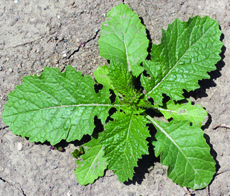
Wild mustard rosette.
Leaves
Seedlings have smooth, kidney-shaped cotyledons and prominently veined, bristly hairy leaves that initially develop from a basal rosette. Lower leaves are irregularly lobed and toothed with petioles; upper leaves are alternate, stalkless to short-stalked with coarsely toothed margins and pointed tips, gradually becoming smaller toward the top.
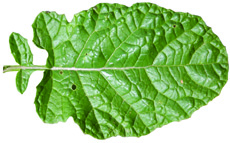
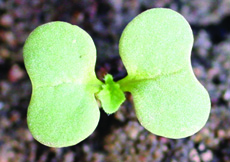
Wild mustard lower leaf (left). Kidney-shaped cotyledons of wild mustard (right).
Stems
Erect, up to 3-foot-tall stems bolt from a basal rosette to flower. Stems are bristly hairy at the base, often branched and nearly hairless at the top.
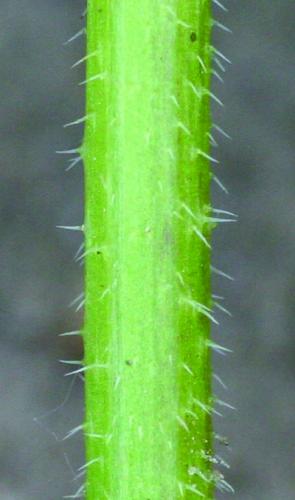
Wild mustard stem.
Flowers and fruit
Bright yellow flowers with four petals are found in terminal clusters. Fruit are 1- to 2-inch-long, cylinder-shaped capsules with a four-angled beak at the tip that contain round, black to purple seeds.
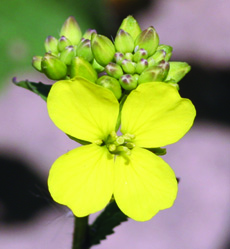
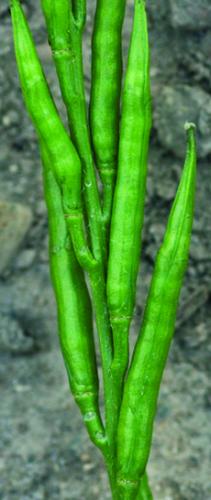
Wild mustard flower (left) and fruit (right).
Reproduction
Seeds.
Print a PDF of this page: Wild mustard