
Inter-Industry Research Highlights Economic Importance of Michigan Fruits and Vegetables
DOWNLOADAugust 11, 2026 - Michigan State University Extension
 Print
Print Email
Email- 475 main pageviews of the report
- 193 downloads of the report
Priority Areas
Sustainable profit margins are critical for any business to continue operations and serve its clients and the public. It is important to conduct industry and sector-level analysis to gauge where changes and support are needed.
For certain situations deemed as market failures, intervention may be needed by government, nonprofits or private-sector industry groups. Such policy modifications take substantial time, discourse and information to determine. MSU Extension met these needs by conducting research to determine the specific nature of these complex economic problems and convening grower and industry discussions.
Impacts
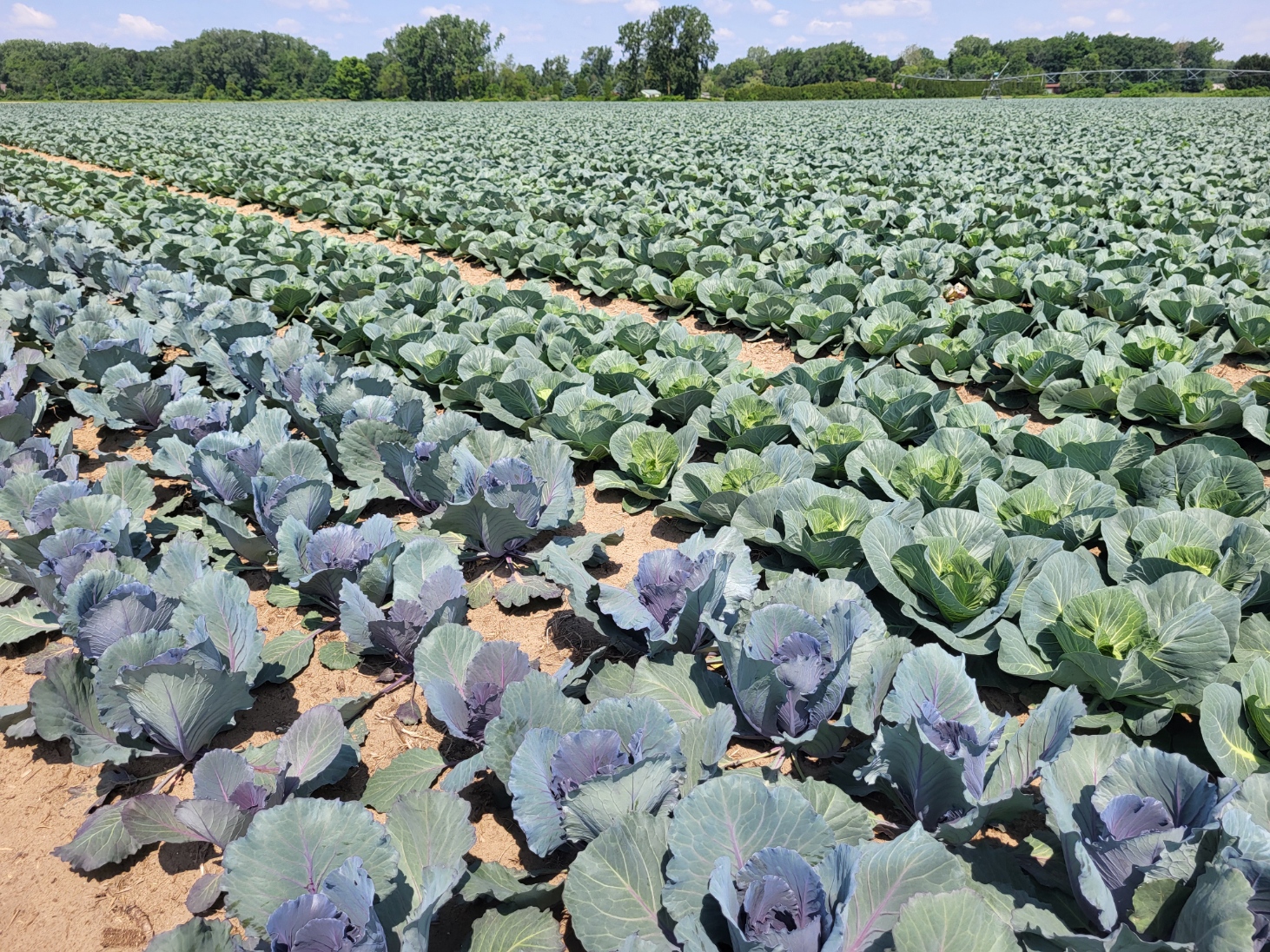
Michigan State University Extension supports farmers and agriculture-related businesses, and through this, supports employment opportunities in Michigan. The specialty crop sector of agriculture is of critical importance to Michigan’s economy and employment. On a per-acre basis, fruit and vegetable production is very intensive, providing many jobs and substantial revenues on relatively compact areas.
As one of the top states for both processed and fresh fruits and vegetables, Michigan’s natural resources are an important source of food for the Midwest and the nation. Michigan has multiple regions with unique climates and soils suitable for fruit and vegetable production, and an abundance of freshwater. Examples include West Michigan’s proximity to Lake Michigan, which provides temperate frosts for fruit production, and the muck soils in Mid- and East Michigan, which enable large-scale lettuce and vegetable production.
MSU Extension’s work in developing this specialty crop sector assessment has both spurred discussion and helped initiate cross-institution collaboration. For example, as a result of our report, “Assessing the Impacts of the Loss of Specialty Crops in Michigan,” a Michigan community college contacted MSU Extension and industry leadership to collaborate on a large U.S. Department of Agriculture (USDA) grant. This project would train employees with technical skills needed to maintain and fix specialty crop packinghouse equipment and learn modern farm technology.
Access the report “Assessing the Impacts of the Loss of Specialty Crops in Michigan” at
https://www.canr.msu.edu/resources/assessing-impacts-of-loss-of-specialty-crops-michigan.
Assessing the impacts of the loss of specialty crops in Michigan research study

A team of MSU Extension farm business management educators and faculty from MSU Department of Agriculture, Food and Resource Economics collaborated with fruit and vegetable industry leadership to conduct a study on the specialty crop sector in Michigan. The study was prompted by concerns about profitability in the face of tightening margins and high import pressure. The purpose of the study was to detail the economic contribution of the sector in Michigan and to better understand the challenges these industries are facing.
To conduct the study:
- Farmers, processors, packers and other industry representatives were extensively interviewed.
- Several industry focus groups were held for fruits and vegetables.
- Results from the focus groups and interviews were analyzed qualitatively.
- Publicly available industry data was collected from the USDA National Agricultural Statistics Service and analyzed using IMPLAN software.
The study uncovered many interesting relationships between different specialty crops. The industries are strongly interconnected in many ways. They depend on each other to help provide a labor pool and, in turn, generate revenue and work throughout the summer season for both farm employees and processors. Some other highlights from the study include:
- Michigan specialty crop farm gate receipts reached $3.1 billion.
- The total annual economic contribution of the supply chain is $6.3 billion, supporting over 41,000 jobs for Michigan residents.
The results of this study are described in the report “Assessing the Impacts of the Loss of Specialty Crops in Michigan.” The report also notes the high level of support that this sector provides to community businesses, especially in rural areas, from restaurants, equipment repair, input supply and much more.