Groundbreaking Collaboration Focuses On Curriculum Design For A New Generation Of Timber Construction Professionals
 Print
Print Email
EmailMichigan State University's Construction Management program and the Sam Beauford Woodworking Institute in Adrian, MI will partner to develop the nation’s first non-union mass timber workforce curriculum.

 The Sam Beauford Woodworking Institute (SBWI) and the Construction Management (CM) program at Michigan State University’s School of Planning, Design and Construction (SPDC) have announced a collaborative effort to develop the nation’s first non-union Mass Timber workforce development curriculum.
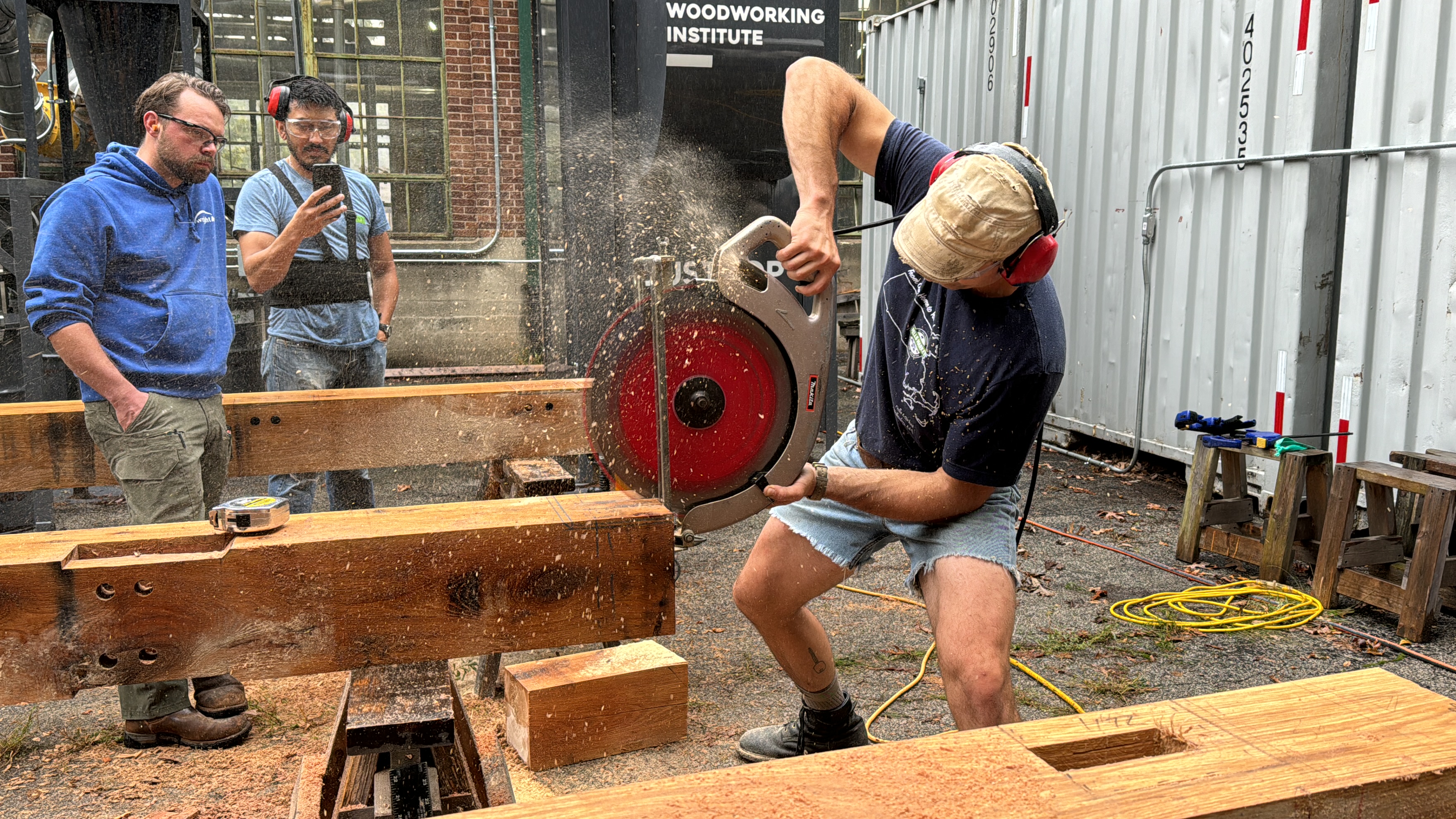
The Sam Beauford Woodworking Institute in Adrian, Michigan, is an accredited nonprofit college redefining skilled-trades education through craft, design, and innovation. SBWI offers intensive programs in woodworking, furniture making, and building trades that merge artistic craftsmanship with technical mastery.
MSU’s relationship with SBWI developed through outreach and engagement efforts led by MassTimber@MSU, a collaboration across the Department of Forestry, SPDC, and MSU extension, that leverages research, education, outreach and public policy to advance mass timber construction and production in Michigan, the Great Lakes Region and beyond. That relationship led to the new collaboration between CM faculty, Dr. George Berghorn, and Luke Barnett, President of SBWI to produce a full curriculum framework designed to train workers for the emerging Mass Timber and Timber Framing industries. The curriculum will be implemented at SBWI’s new purpose-built campus as part of its Timber Framing and Mass Timber Trade School Program, launching in fall 2027.
The initiative—led by George H. Berghorn, Ph.D., LEED AP, CGP of MSU and Luke Barnett, President of SBWI—will produce a full curriculum framework designed to train workers for the emerging Mass Timber and Timber Framing industries. The curriculum will be implemented at SBWI’s new purpose-built campus as part of its Timber Framing and Mass Timber Trade School Program, launching in fall 2027.
“By uniting research and workforce education, we can create a clear pathway from forest to fabrication,” said Berghorn, who also serves as Research Director of MassTimber@MSU. “This curriculum will help ensure that Michigan has the skilled professionals it needs to grow the mass timber industry responsibly and efficiently.”
The partnership brings together MSU’s research and academic expertise in mass timber construction with SBWI’s leadership in hands-on skilled-trades education. Together, the two institutions are developing a comprehensive training pathway that integrates classroom theory, applied design, and field-based learning.
MSU’s Leadership in Mass Timber Innovation 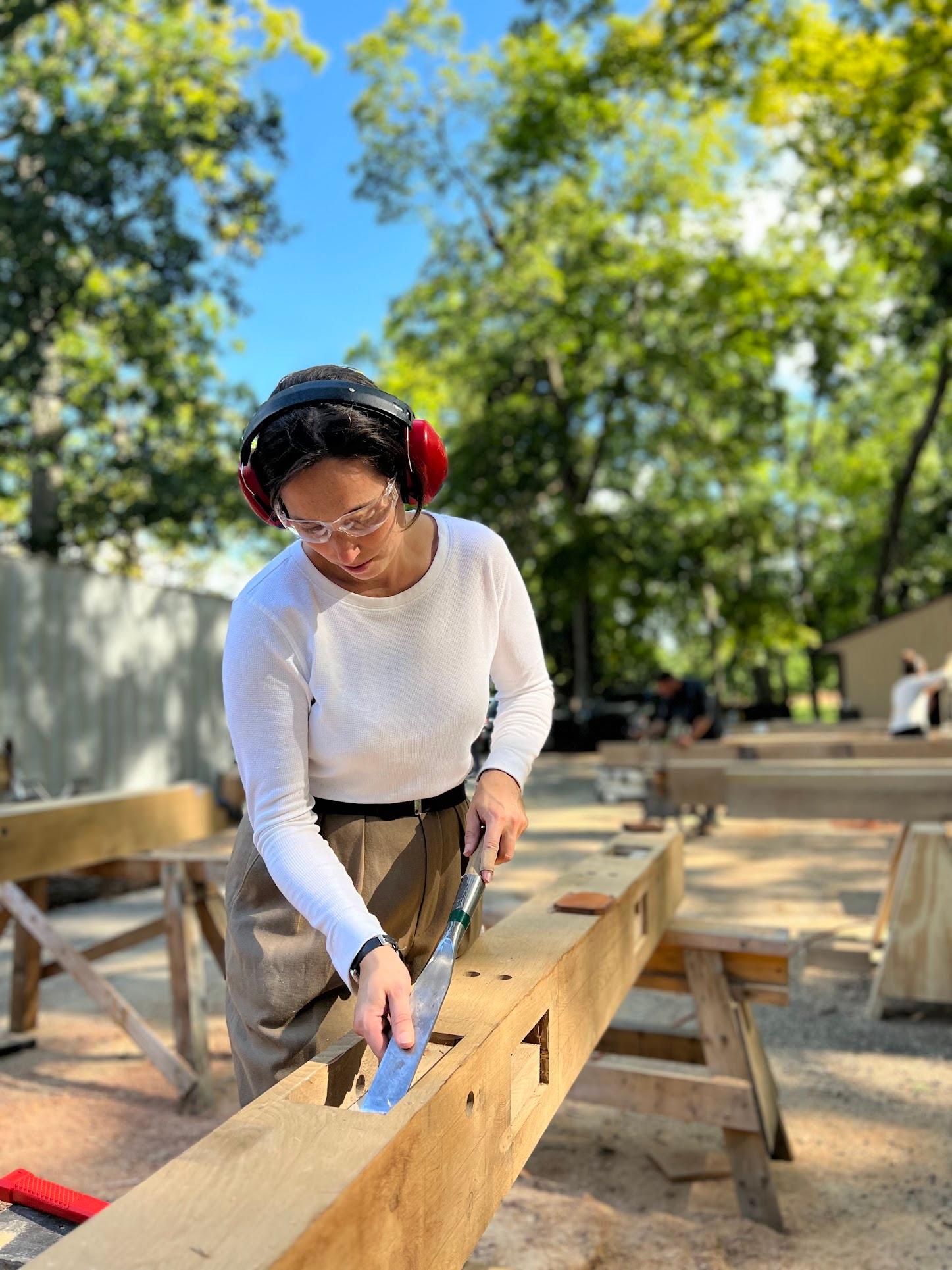
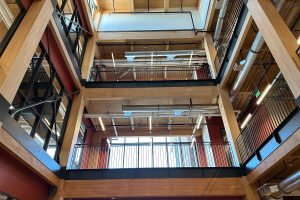
Michigan State University has established itself as a leader in mass timber research and education through MassTimber@MSU The program, under the leadership of Director Sandra Lupien, leverages the MSU STEM Teaching & Learning Facility, Michigan’s first mass timber academic building, as a living laboratory for mass timber stakeholders across the region. The building features 3,000 cubic meters of glulam and CLT, storing an estimated 1,856 metric tons of CO₂, and exemplifies the climate benefits of engineered wood systems. In addition to MassTimber@MSU’s robust outreach, engagement, and technical assistance efforts, program-affiliated researchers in CM, Forestry, Civil & Environmental Engineering, and Chemistry are working to strengthen the state’s wood-products supply chain, policy frameworks, and workforce capacity through industry and community partnerships.
Advancing Economic Growth and Sustainability
The development of a dedicated mass timber curriculum addresses Michigan’s growing need for trained workers in engineered wood construction—a field poised for rapid expansion as developers and architects seek lower-carbon building materials. MSU’s market analysis shows that mass timber adoption can generate new jobs in manufacturing, design, and construction while stimulating rural economies tied to forestry and wood production.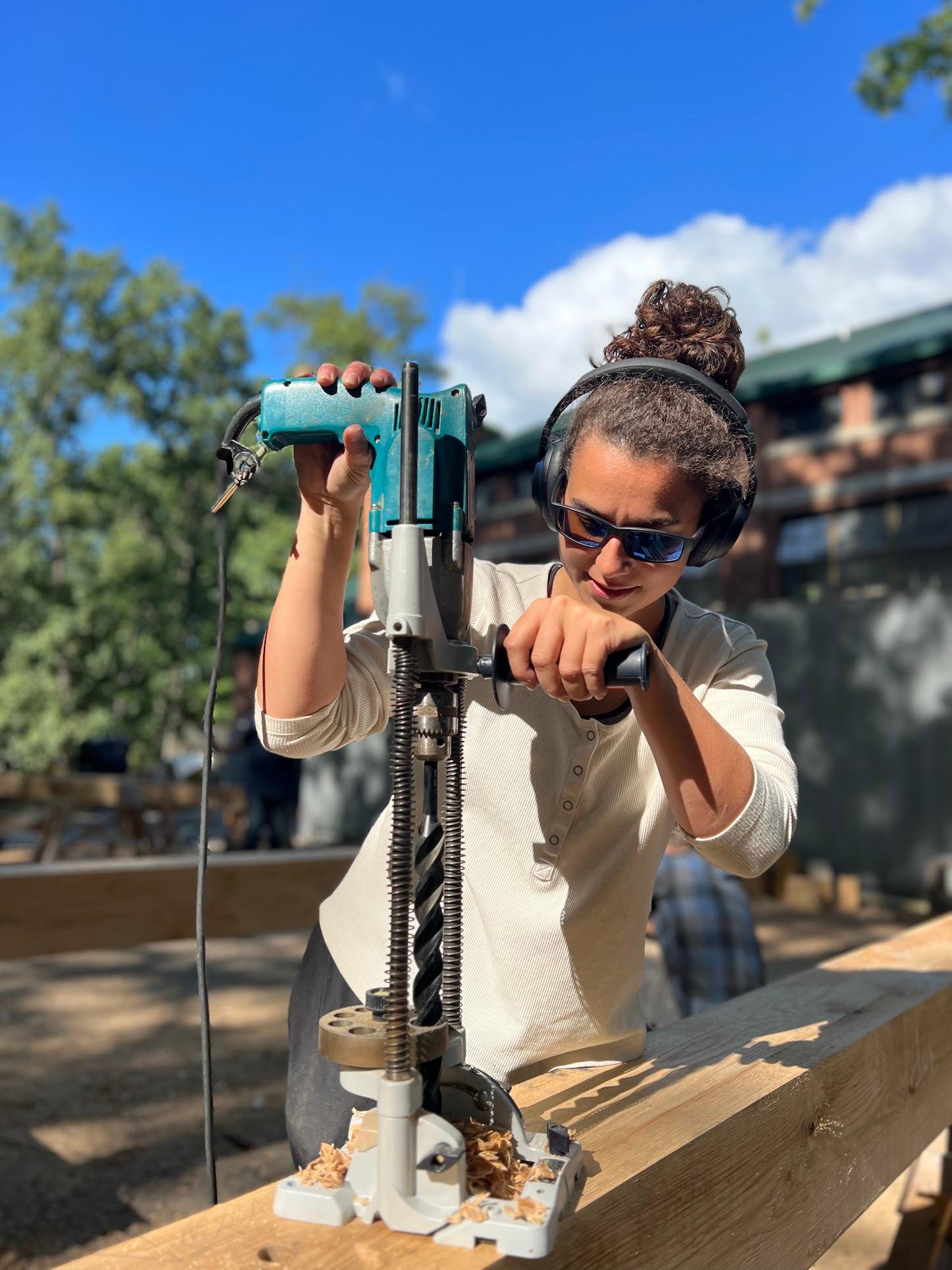 Each mass timber building built through these methods can offset significant greenhouse-gas emissions compared to conventional construction materials. The SBWI–MSU partnership supports the state’s goals for sustainable growth, carbon reduction, and workforce development in the next generation of construction.
“Our collaboration with Michigan State University allows SBWI to design a curriculum that meets real-world needs,” said Luke Barnett, President of SBWI. “This is about giving students practical, employable skills while advancing sustainable construction and economic development in Michigan.”
Timeline & Next Steps
2025–2026: Joint curriculum design, industry advisory input, and accreditation preparation.
Fall 2027: Launch of SBWI’s Timber Framing & Mass Timber Trade School Program at its new Adrian, Michigan campus.
Ongoing: Engagement with industry partners and expansion into continuing-education certifications.

Learn more about The Sam Beauford Woodworking Institute at sbwi.edu.
Learn more about MSU's MassTimber@MSU initiative at canr.msu.edu/masstimber.