Large crabgrass – Digitaria sanguinalis
 Print
Print Email
EmailDigitaria sanguinalis (L.) Scop.
Poaceae (Grass family)
MI Status
Non-native
Life cycle
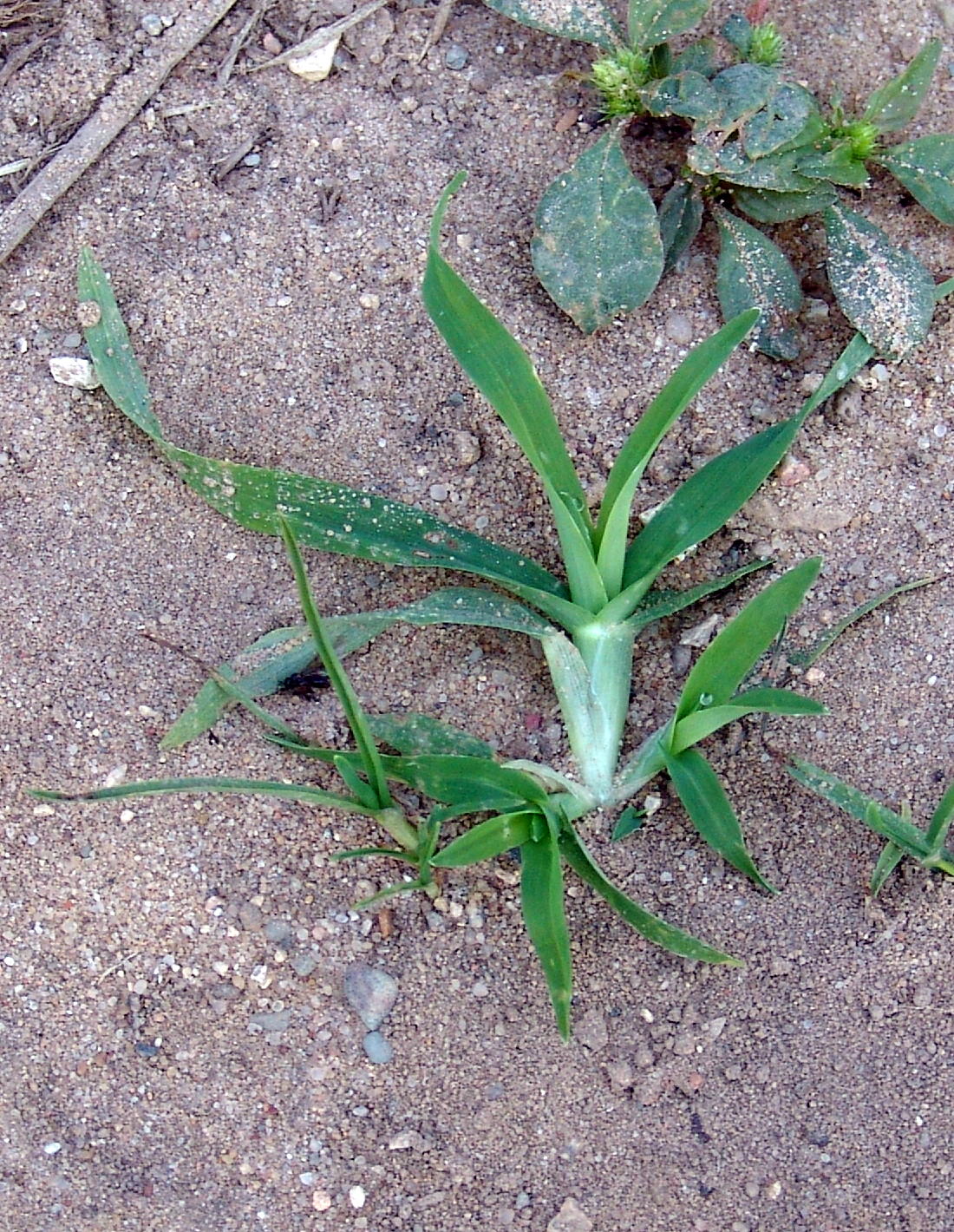
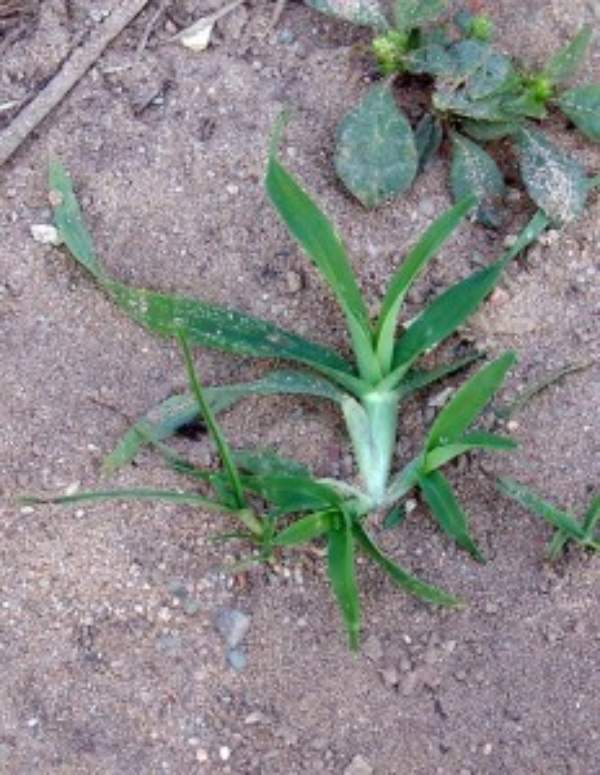
Prostrate to ascending summer annual.
Leaves
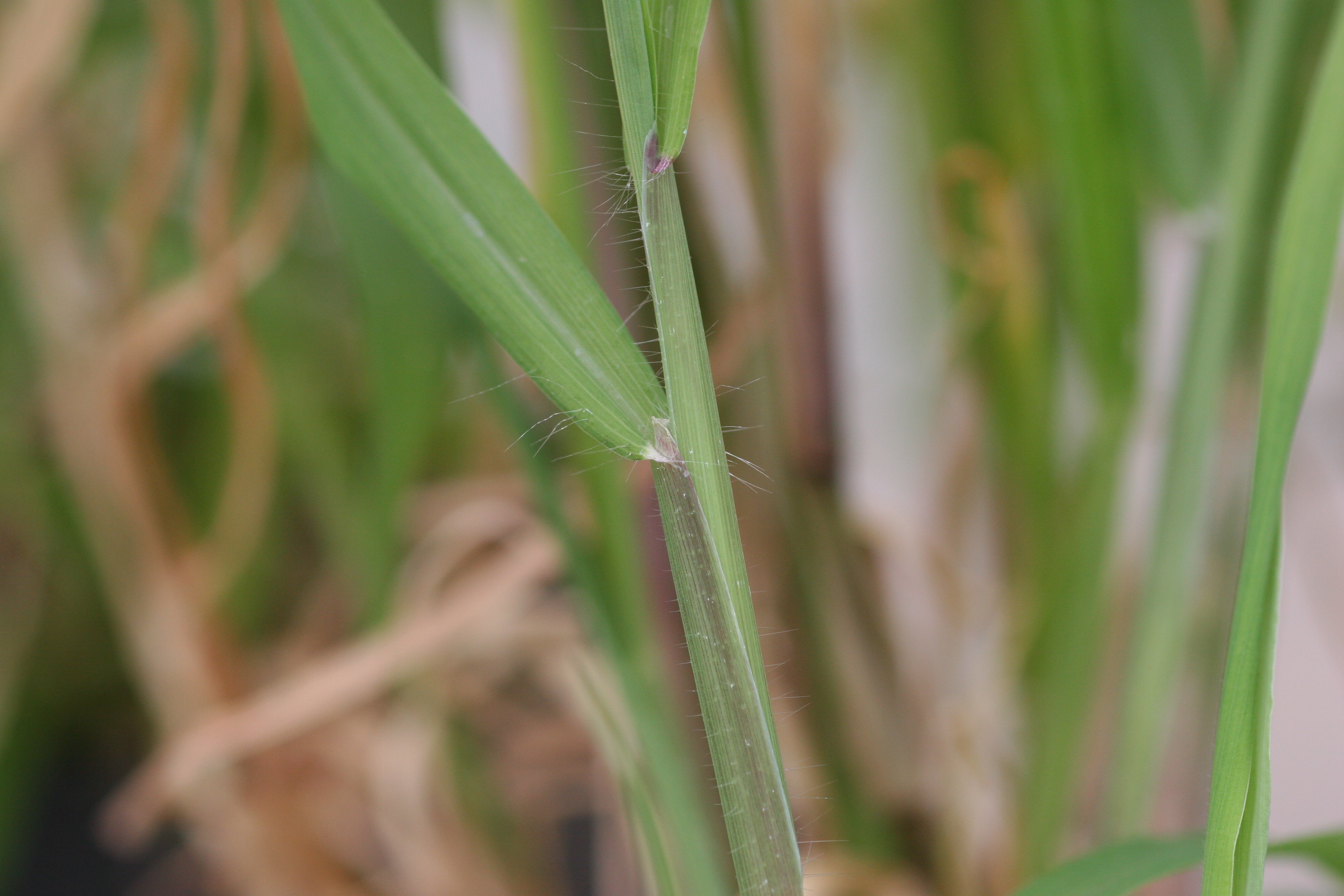
Both leaf surfaces and the sheath are densely hairy. Leaves are rolled in the bud and more numerous at the base. Leaves are generally shorter, wider, and more tapered than those of most other grasses.
Ligule
Jagged, membranous ligule.
Stems
Prostrate to ascending stems may reach 3 feet tall, capable of rooting at the nodes. Mature stems are often compressed in cross-section.
Flowers and fruit
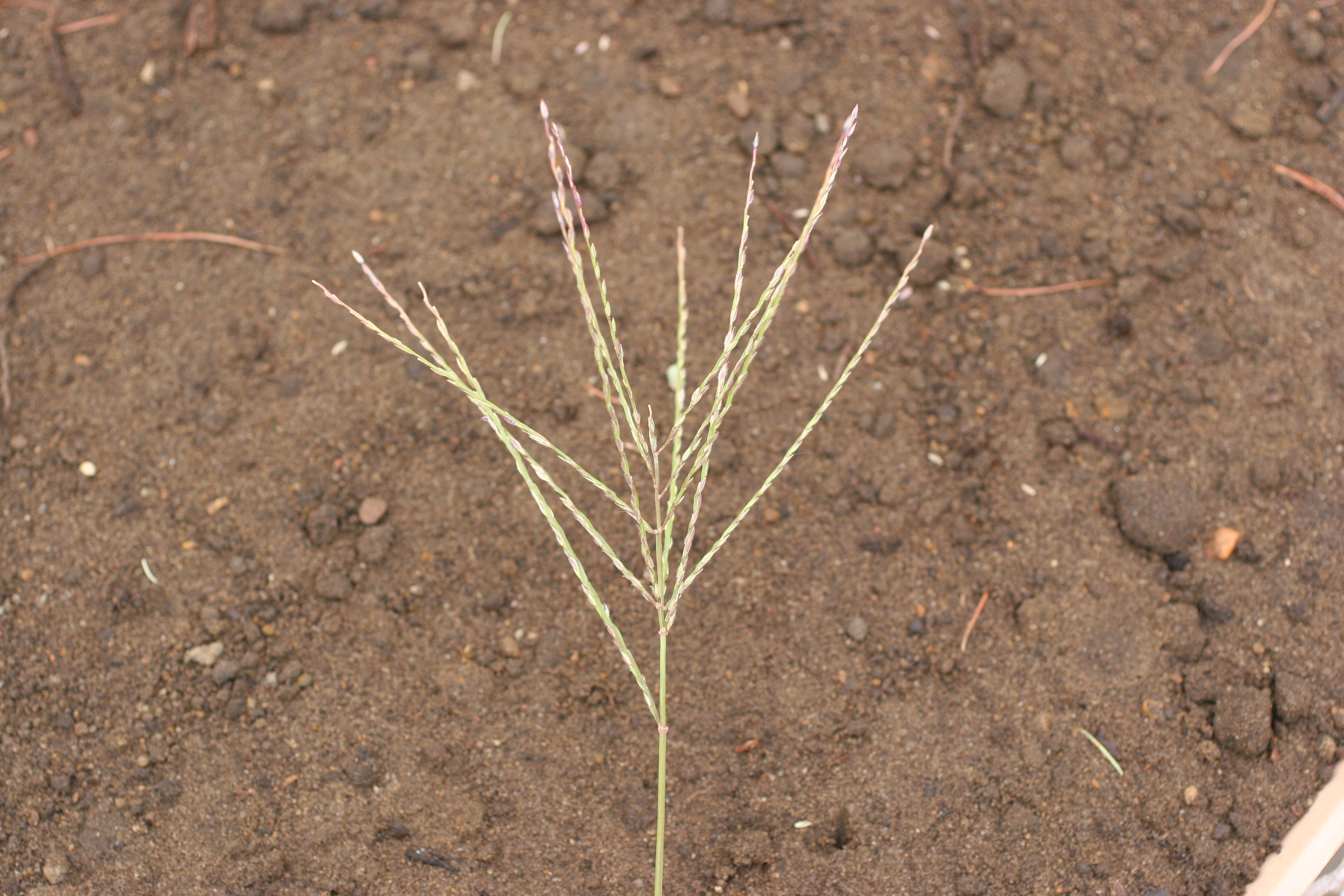
The seedhead is a terminal panicle that consists of a few to several slender, fingerlike branches arranged in a whorl. Each plant is capable of producing thousands of yellowish-brown, narrow oval to lance-shaped seeds.
Reproduction
Seeds.
Similar weeds
Smooth crabgrass [Digitaria ischaemum (Schreb.) Schreb. ex Muhl.]
Differs by having a smaller stature, hairless to sparsely hairy leaves and sheath, a tuft of long hairs at the collar region, and stems that do not root at the nodes.