



Japanese knotweed – Fallopia japonica
 Print
Print Email
EmailFallopia japonica
Polygonaceae (Smartweed family)
MI Status
Non-native
Life cycle
Aggressive, clump-forming perennial.
Leaves
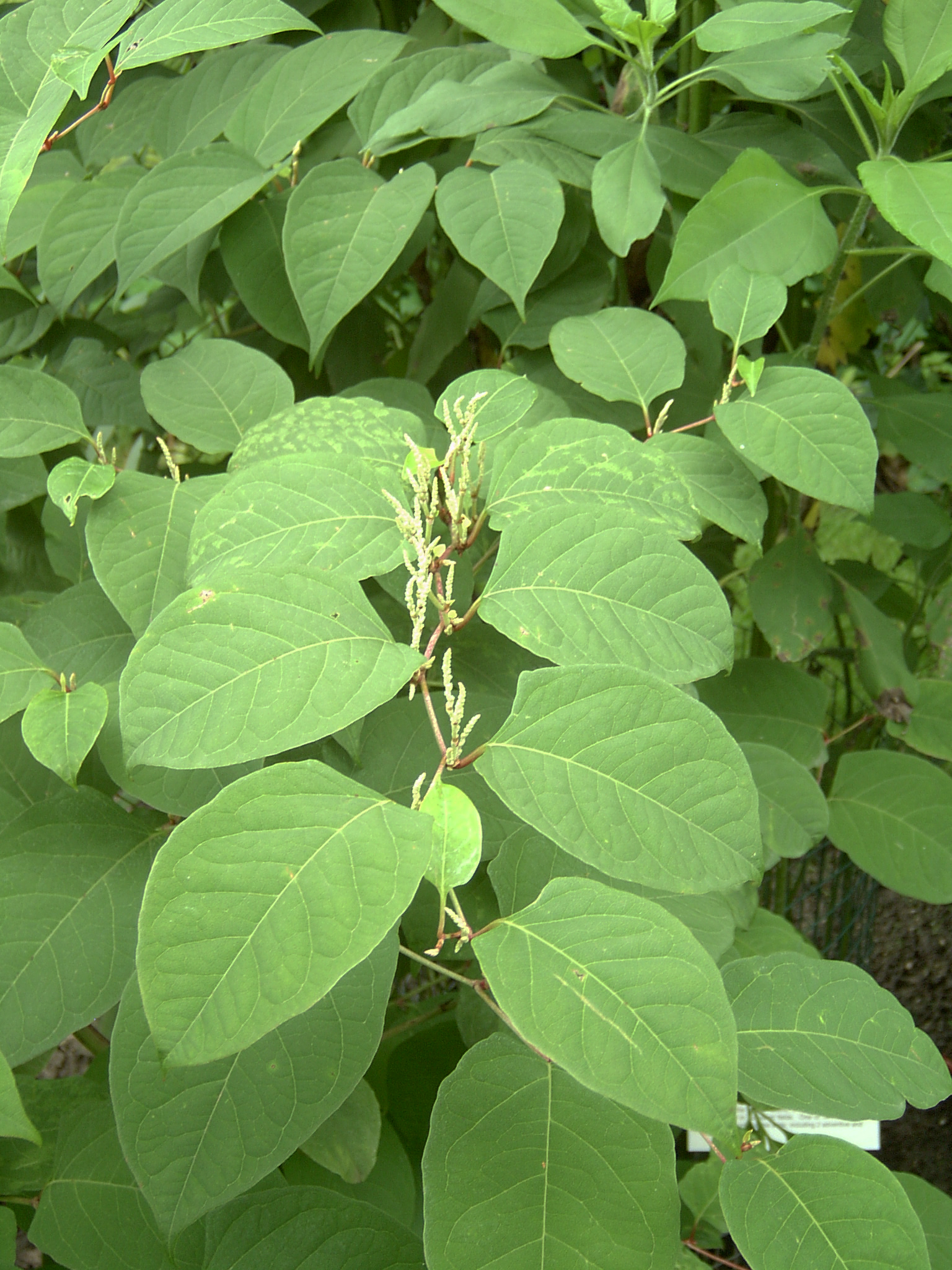
Alternate, broadly egg-shaped, sometimes heart-shaped, with a squared leaf base.
Stems
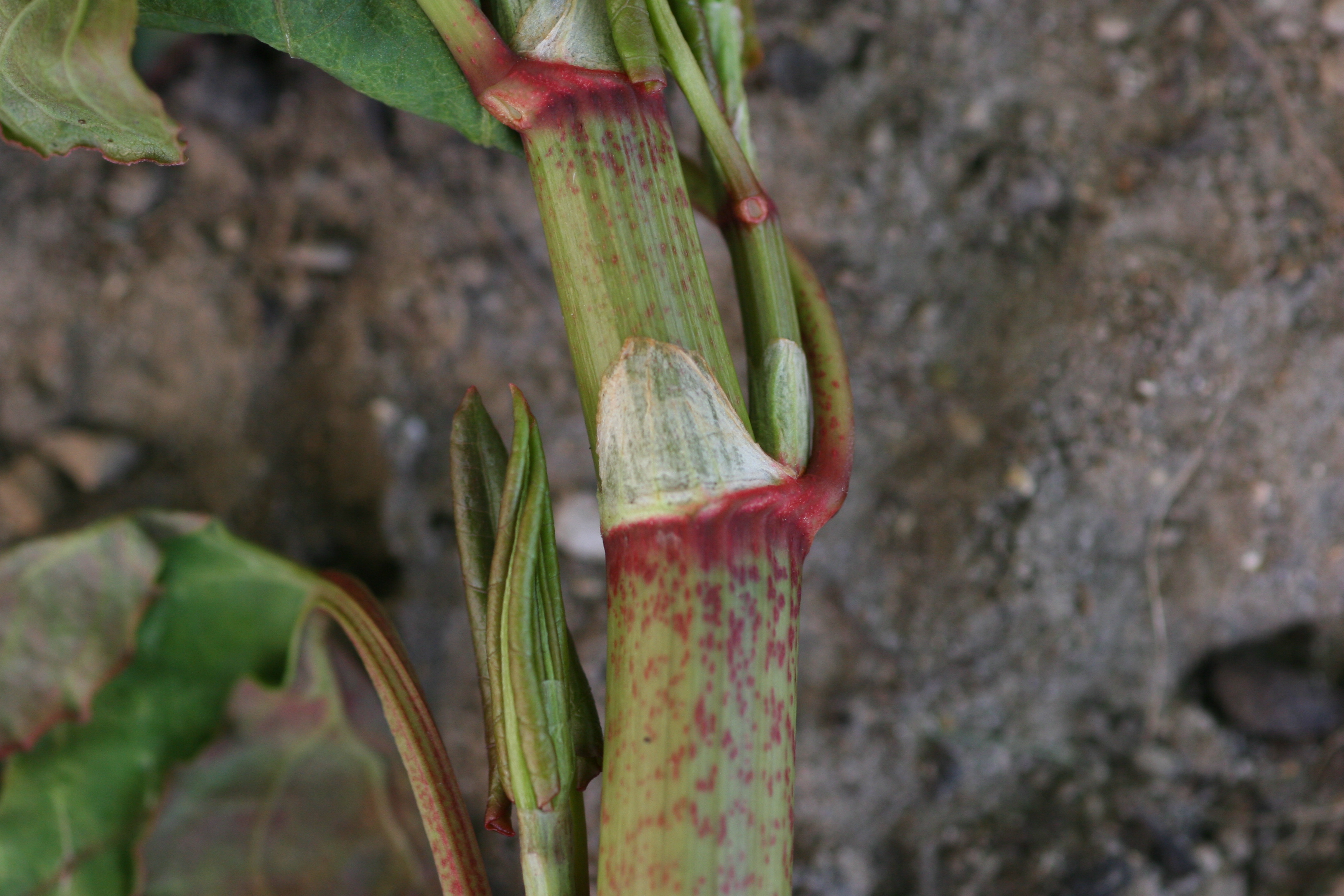
Stout, semiwoody, red to brown, hollow and bamboolike, often exceeding 6 to 8 feet in height. Stems are also jointed, forming a zigzag growth pattern.
A membranous sheath (ocrea) surrounds the stem at the base of each petiole. Reddish shoots arise from thick, sturdy, and abundant rhizomes.
Flowers and fruit
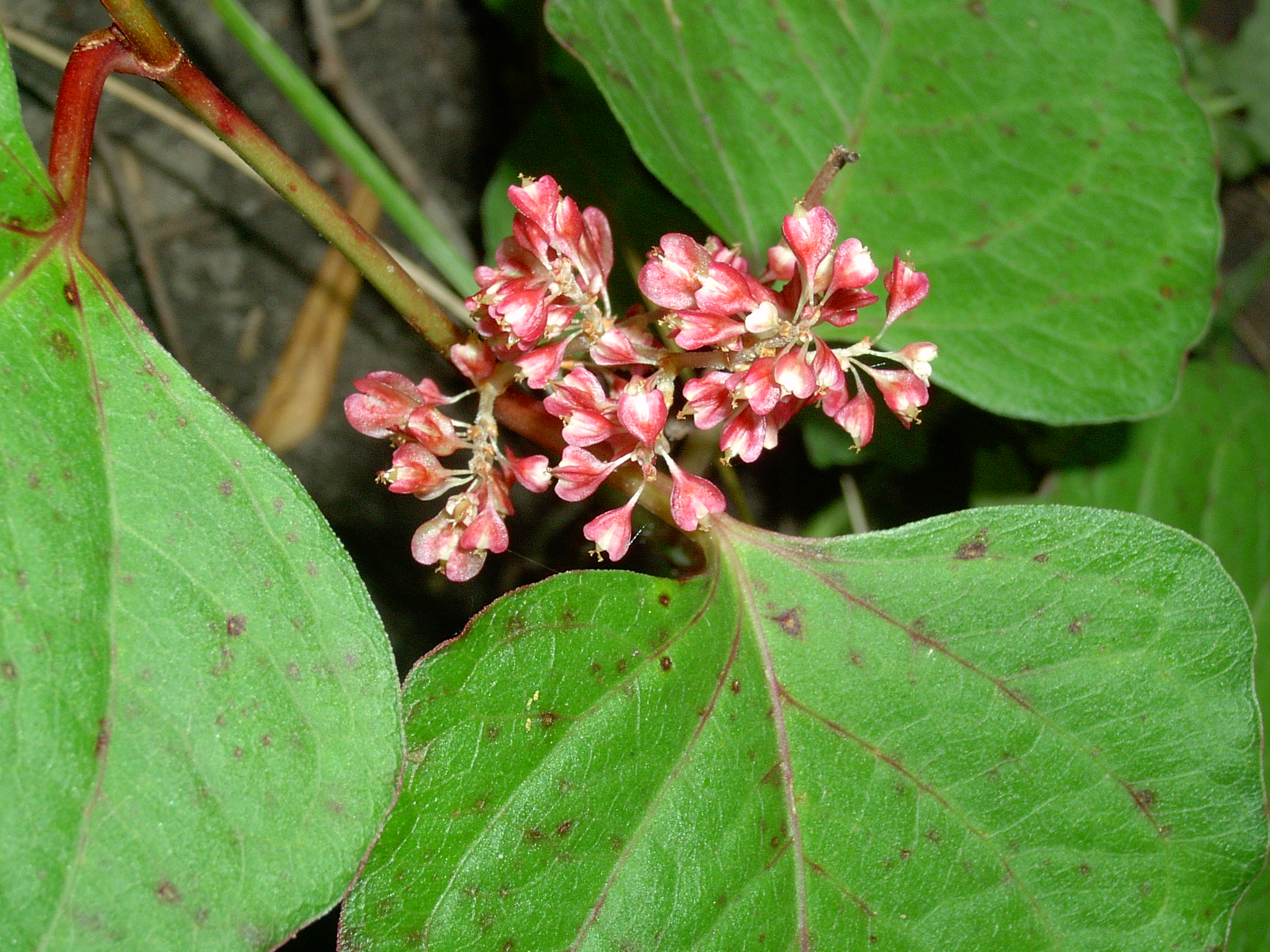
Flowers are small, white to pink, and borne in elongated clusters. The seed is enclosed in a single-seeded, shiny, dark brown to black, three-sided fruit.
Reproduction
Seeds and aggressive rhizomes.
Similar weeds
Giant knotweed
(P. sachalinense F. W. Schmidt)
Differs by having a greater height and a heart-shaped leaf base.
Other Documents in this Series
You Might Also Be Interested In
-
Herbicide Resistance in Field Crops
Published on May 21, 2026
-
Agricultural Weather Outlook for September 17, 2026
Published on September 17, 2026
-
Agricultural Weather Outlook for September 10, 2026
Published on September 10, 2026
-
Agricultural Weather Outlook for September 3, 2026
Published on September 3, 2026
-
Agricultural Weather Outlook for August 27, 2026
Published on August 27, 2026
-
Agricultural Weather Outlook for August 20, 2026
Published on August 20, 2026
Accessibility Questions:
For questions about accessibility and/or if you need additional accommodations for a specific document, please send an email to ANR Communications & Marketing at anrcommunications@anr.msu.edu.