


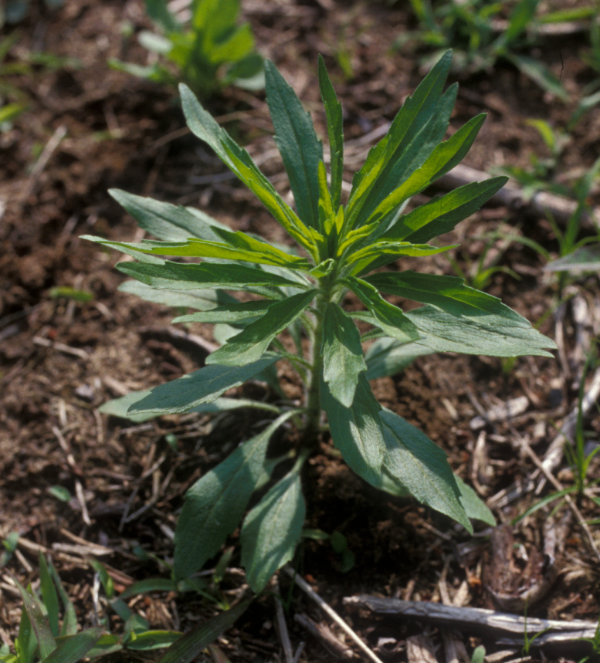
Horseweed (marestail) – Conyza canadensis
 Print
Print Email
EmailConyza canadensis (L.) Cronq.
Asteraceae (Aster family)
MI Status
Native
Life cycle
Erect winter or summer annual.
Leaves
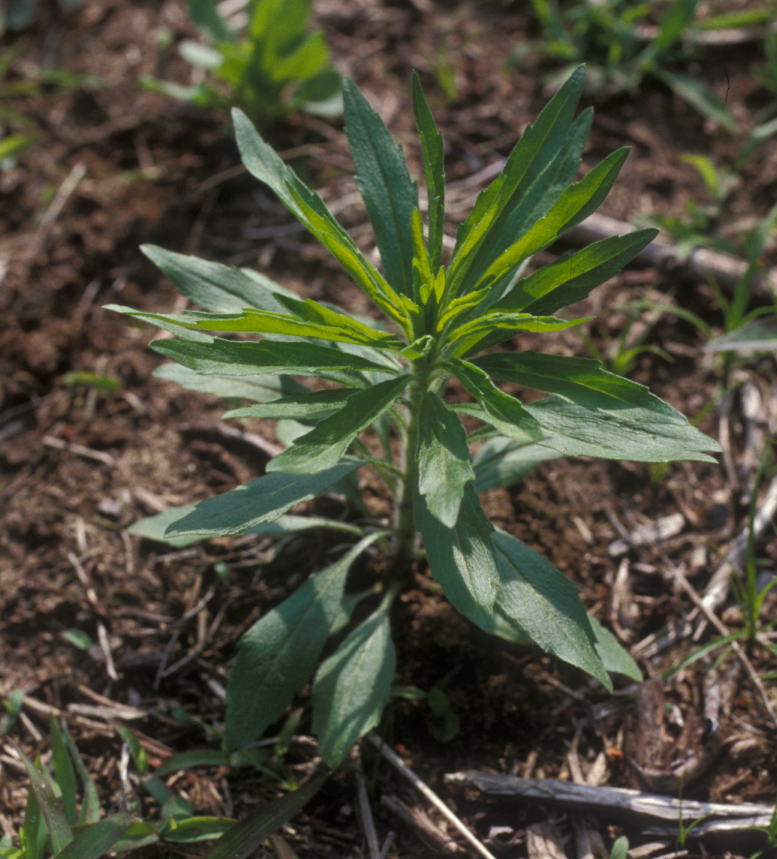
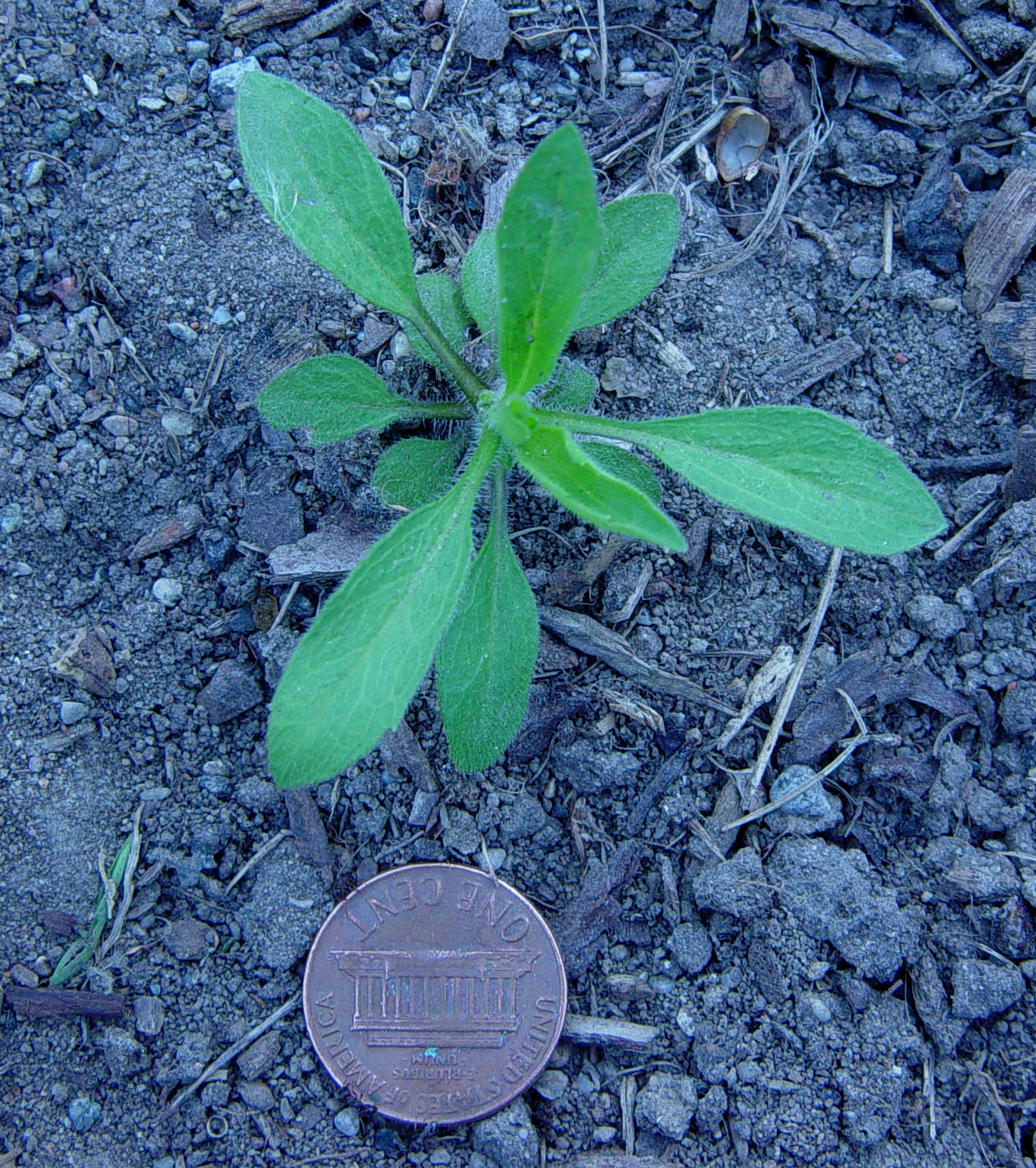
Cotyledons are egg- to spatula-shaped and hairless. Seedling leaves initially develop from a basal rosette; mature leaves are alternate and numerous, and crowded along an erect central stem. Leaves are hairy and linear to lance-shaped with smooth to toothed margins, gradually becoming smaller toward the top of the plant.
Stems
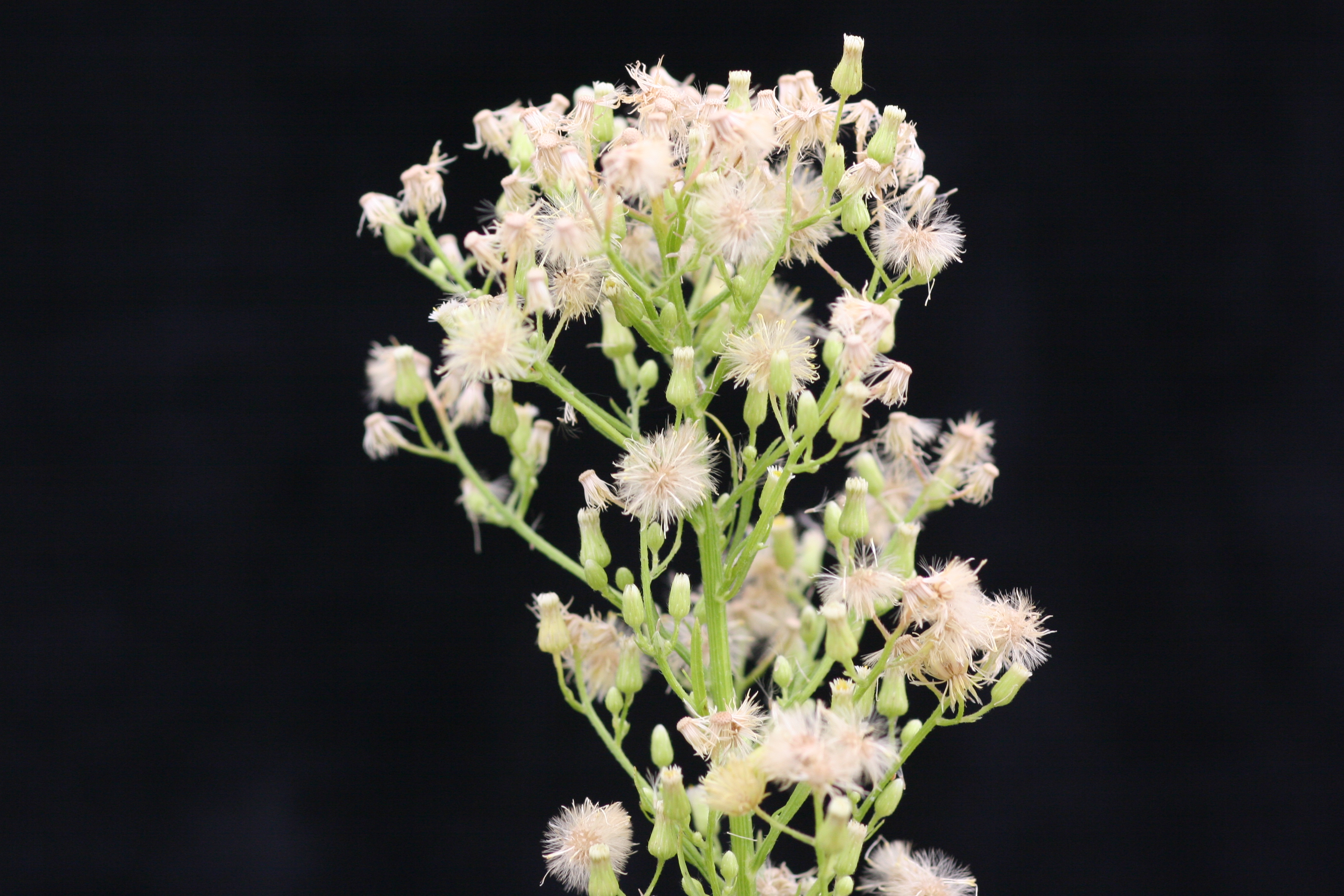
An erect, hairy central stem arises from a basal rosette, then branches to flower, reaching up to 7 feet tall. Flowering branches resemble a horse’s tail.
Flowers and fruit
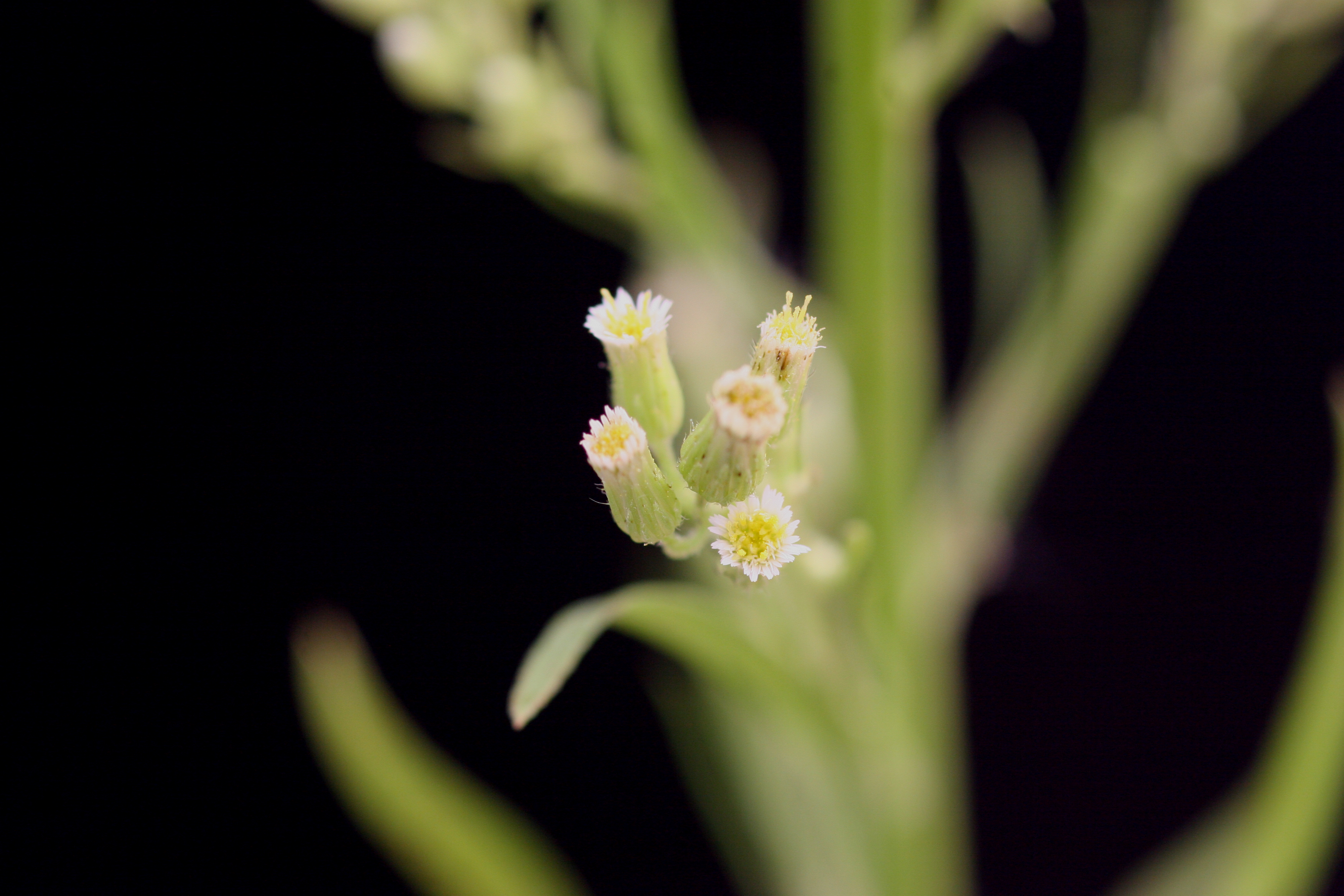
Numerous clusters of small, white flower heads are found on many short branches near the top. Each seedhead can produce thousands of small seeds; each seed is enclosed in a single-seeded, wind-dispersed fruit.
Reproduction
Seeds.
Other Documents in this Series
You Might Also Be Interested In
-
Herbicide Resistance in Field Crops
Published on May 21, 2026
-
Insect Diagnostics
Published on July 31, 2025
-
Agricultural Weather Outlook for September 17, 2026
Published on September 17, 2026
-
Agricultural Weather Outlook for September 10, 2026
Published on September 10, 2026
-
Agricultural Weather Outlook for September 3, 2026
Published on September 3, 2026
-
Agricultural Weather Outlook for August 27, 2026
Published on August 27, 2026
Accessibility Questions:
For questions about accessibility and/or if you need additional accommodations for a specific document, please send an email to ANR Communications & Marketing at anrcommunications@anr.msu.edu.