"Get Moving" Physical Activity Adult Facilitator Guide
DOWNLOADMay 15, 2026 - Michigan State University Extension, Heather Dyer and Heidi DeVooght
 Print
Print Email
EmailReady to access the full Get Moving Adult Facilitator Guide (accessible for screen reader use)? Click on the download button above for the full version.
Wondering if this resource is right for you? Learn more about the guide below.
What is this Facilitator Guide?
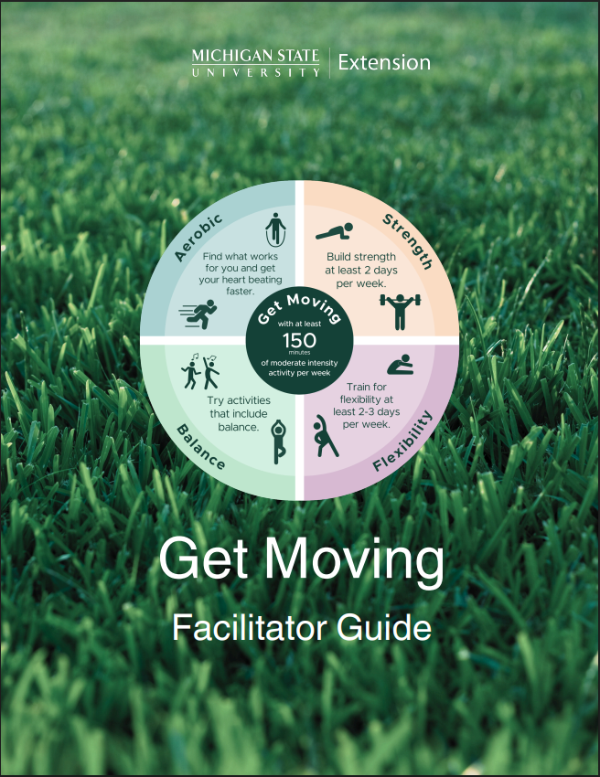
The MSU Extension Nutrition and Physical Activity team is committed to enhancing physical activity offerings by integrating the Physical Activity Guidelines for Americans into our direct education health and nutrition classes. As part of this initiative—and in alignment with SNAP-Ed requirements for Community Nutrition Instructors (CNIs) to include 5-10 minutes of physical activity in their programming—we’ve developed these six lessons to support both instructors and participants. Our goal is to deliver clear, consistent messaging that aligns with the Physical Activity Guidelines for Americans. We aim to provide our CNIs with the confidence and resources needed to champion physical activity within our communities.
Pair with the companion document "Get Moving" Adult Participant Guide.
Rationale for Teaching Physical Activity Guidelines
As community nutrition instructors, you play a pivotal role in shaping the health behaviors of your participants. Incorporating physical activity education alongside nutrition, supports a holistic approach to health.
Regular physical activity contributes to a healthy weight, reduces the risk of chronic diseases, and improves mental health. Sharing these guidelines with participants equips them with the knowledge to make informed decisions, fostering long-term healthy habits. Moreover, understanding that all movement counts—whether it's structured exercise or daily activities like household chores—makes physical activity more accessible and less intimidating, encouraging participants of all fitness levels to get involved.
Know Your Audience
As you guide your participants through these activities, remember that we each have unique abilities and potential barriers to physical activity, such as child care, limited time, or income restraints. Additionally, those with marginalized identities may avoid fitness activities and spaces for a variety of reasons.
Physical activity, especially in group settings, can feel intimidating. Remain encouraging while modeling respect to ensure your participants feel physically and emotionally safe. Watch for hesitancy and use language that communicates to participants that they can decide what’s best for their bodies during group movements, such as:
- "This next movement is available if it feels steady."
- "It’s perfectly fine to pause or modify at any point."
- "Let your body decide how much is enough right now, or if this exercise is right for you."
- “Feel free to take notes and try this movement later in a private setting.”
Structure of Each Facilitator Lesson
To help make the lessons engaging and relatable, we’ve structured each one to be both informative and interactive. This structure ensures the material is presented in a way that is accessible, functional, and directly tied to participants’ daily lives.
Here’s a breakdown of the key sections of each lesson:
- Key Teaching Point: The central message or concept that participants should learn and remember. This sets the foundation for the lesson.
- The Hook: A way to grab participants' attention right at the start. This could be a question, an interesting fact, or a relatable scenario that sparks curiosity about the lesson.
- Why This Matters: This section connects the key teaching point to participants' lives by explaining why the topic is relevant and how it can impact their health and well-being. It answers the question, "Why should I care?" in a way that they can understand.
- Check Your Knowledge/Participant Voice: In this section, we encourage active participation by prompting questions or discussions. This allows participants to reflect on what they already know and share their thoughts, making the lesson more engaging.
- Get Moving Your Way: Here, we provide practical examples or activities that show how the lesson’s key points apply in real life. The aim is to show participants how to integrate the information into their daily routines in a functional and meaningful way.
- Try It: This is where participants get the chance to practice what they’ve learned through hands-on activities. The Try It section includes functional activities that can be done individually or with a group, reinforcing the lesson’s key message.
- Wrap-Up: The final section ties everything together. It reinforces the key points of the lesson, provides a call to action, and gives participants something to think about or apply in the future.
By structuring the lessons this way, we aim to make each one relatable, achievable, and actionable. Our goal is not just to educate but to inspire participants to take practical steps toward improving their health and physical activity habits. This structure also keeps the lessons dynamic and ensures that participants are actively engaged throughout.
Lesson summary
These lessons introduce adult learners to the foundational elements of physical fitness in engaging, inclusive, and easy-to-understand ways. Each lesson is designed to promote physical literacy (knowing different ways to move and feeling confident and capable of being active) and healthy habits through intentional teaching of fitness, discussion of barriers to fitness, and application of lessons through interactive participation.
Lesson 1: Understanding the Physical Activity Guidelines
- Introduce participants to the Physical Activity Guidelines for Americans and help them understand why regular movement matters and what types of activity are recommended for adults and older adults.
Lesson 2: Physical Activity vs. Exercise – What’s the Difference?
- Help participants understand the difference between physical activity and exercise, and reinforce that both contribute to better health. Physical activity includes everyday movement, while exercise is more structured and intentional—but both matter!
Lesson 3: Boost Your Health with Aerobic Activity
- Cardiovascular or aerobic activity is any movement that increases your heart rate and makes you breathe faster. It strengthens your heart and lungs and is a powerful tool for long-term health.
Lesson 4: Strengthen Your Muscles and Bones for a Healthier You
- Muscle-strengthening and bone-strengthening activities help keep your body strong, support daily tasks, improve balance, and reduce the risk of injury—especially as we age.
Lesson 5: Flexibility – Adults and Older Adults
- Help participants understand the importance of flexibility training and how it supports mobility, reduces injury, and enhances quality of life — especially as we age.
Lesson 6: Balance and Stability – Adults and Older Adults
- Teach participants the importance of balance and stability exercises for preventing falls, maintaining independence, and improving confidence with daily movements.