Wearing multiple hats: Boundary considerations for volunteer managers
 Print
Print Email
EmailVolunteer managers often wear many hats. Understanding when to lead, when to step back, and how to navigate overlapping roles helps create fair, transparent and positive experiences for everyone involved.
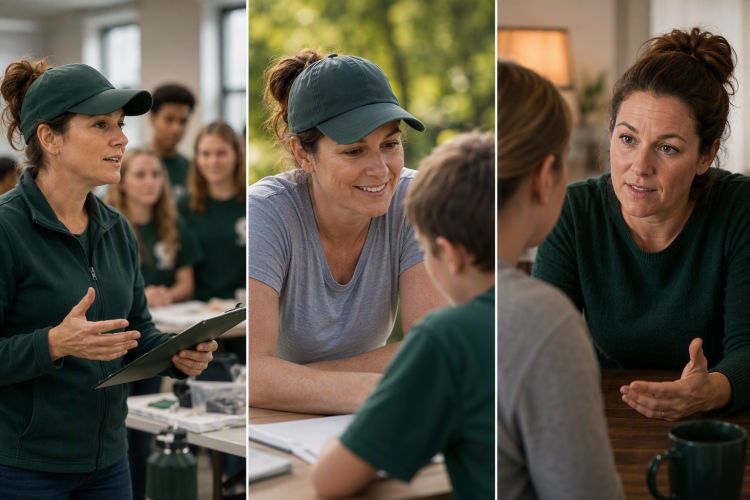
Volunteer managers are often deeply connected to the programs they support and holding multiple roles is common in volunteer-driven organizations. A volunteer manager might supervise volunteers while also cheering on their own child as a parent in the organization. They may find themselves coordinating an event while volunteering at that same event. Addressing concerns as a volunteer manager may involve navigating a relationship with a close friend or relative. While these connections can bring valuable insight and commitment, they can also create challenges related to objectivity, fairness and professional boundaries. What should a volunteer do in these situations to help ensure the success of the program?
Clear boundaries and thoughtful decision-making are two steps to take to ensure that the program remains trusted and that all participants are treated equitably. Important questions a volunteer manager can ask are:
- "Am I able to make this decision objectively, or would a neutral party be better positioned to handle it?"
- “Would I be able to have a challenging conversation with this volunteer about a decision they made?”
If the answer is uncertain or no to either question, involving a supervisor or another impartial individual may be the best course of action. Other ways that volunteer managers can help maintain trust when wearing multiple hats is by following these guidelines.
Recognize potential conflicts of interest
Volunteer managers should be mindful of situations where personal relationships could influence, or appear to influence, decisions. This could include recruiting, screening, managing or disciplining volunteers with whom you have a personal relationship or when making decisions that directly affect your child or another relative participating in the program. Even when intentions are positive, others may question the fairness of a decision if the volunteer manager has a close connection to those involved.
Know when to step back
Sometimes the most professional action is to step away from a situation. Consider involving a supervisor, colleague or other neutral party when a decision involves your child, spouse, relative or close friend, or you are handling a complaint against someone with whom you have a personal relationship. Stepping back is not a sign of weakness or inability. Rather, it demonstrates a commitment to fairness, transparency and sound decision-making.
Clarifying what “hat” you are wearing
The transition between roles may not always be obvious. A volunteer manager may attend an event as a parent but still be approached with staff questions. Similarly, they may be volunteering at an activity but remain aware of information or authority they have as an employee. Taking time to consciously identify your role in a given situation can help guide your actions and responses.
There may also be times when it is appropriate to redirect conversations or decisions to another staff member. For example, if you are attending an event as a parent and another parent raises a concern about a volunteer, you may choose to refer them to the appropriate staff member or ask them to contact you during working hours rather than attempting to address the concern in your personal role.
Transparency can also be valuable in these situations. When appropriate, communicate which role you are serving in by making statements such as:
- "Today I'm participating as a parent."
- "I'm speaking as a volunteer, not in my staff role."
- "Because I manage this program, I'll ask another staff member to handle that decision."
Being clear about when you are functioning in a staff role and when you are not helps others understand expectations and responsibilities.
Be aware of personal biases
Everyone brings experiences, values and relationships into their work. Being aware of personal biases is an important part of maintaining professional boundaries. Self-reflection helps volunteer managers make decisions that are based on organizational policies, established procedures and the needs of the program rather than personal relationships. Clear boundaries support healthy professional relationships and help create consistency in decision-making.
Set and communicate expectations
Strong boundaries do not happen by accident. They require clear communication and consistency. When expectations are communicated early, volunteers and participants are less likely to misunderstand a volunteer manager's actions or intentions. Clear boundaries also help prevent burnout and maintain professional relationships built on mutual respect.
Put the mission and organizational policies first
When balancing multiple roles, the organization's mission should remain the guiding principle. Decisions should follow organizational policies and prioritize the well-being of participants, the integrity of the program, and equitable treatment of all individuals. Keeping the mission at the center of decisions can help volunteer managers navigate difficult situations and explain the reasoning behind their actions.
Volunteer managers do not need to eliminate every overlap between their personal and professional lives. In many communities, that simply is not possible. Instead, the goal is to recognize when multiple roles may affect decision-making and take appropriate steps to manage those situations responsibly.
By practicing self-awareness, setting healthy boundaries, being transparent about potential conflicts, and involving neutral parties when needed, volunteer managers can build trust and credibility with volunteers, participants and families. These practices help create an environment where decisions are viewed as fair, relationships remain professional, and everyone can focus on advancing the organization's mission.
To learn more, watch the Friendly but Firm: Boundaries that Make Volunteering Better webinar from the Michigan 4-H Volunteer Webinar Series. Michigan State University Extension also offers a variety of resources for volunteer managers and trainings for volunteers related to setting boundaries in the Ready to Go: Volunteer Training Toolkit curriculum.