Thrips management in field-grown specialty cut flowers
 Print
Print Email
EmailA systems approach to reducing risk and protecting crop quality.
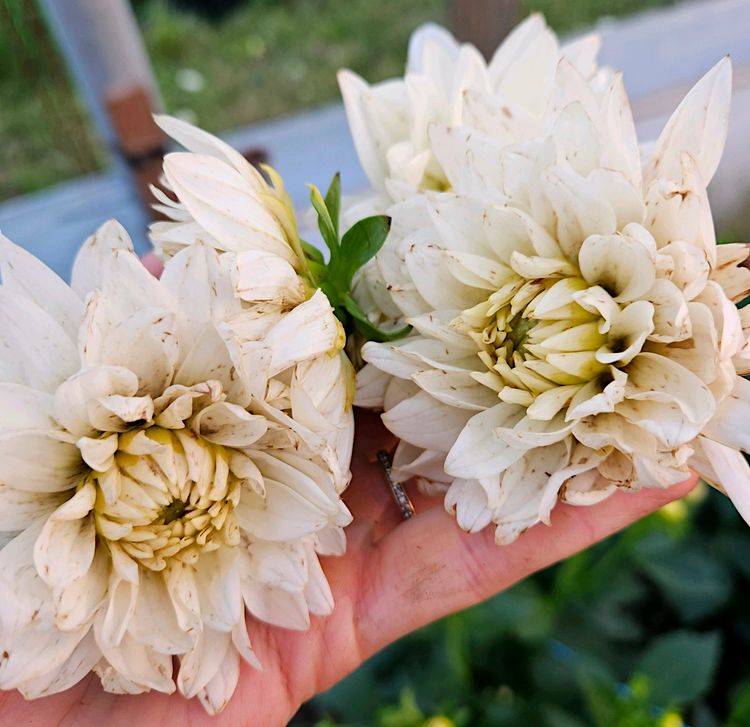
Managing thrips in field-grown specialty cut flowers is an exercise in risk management. As with many crop production decisions, there is rarely a single "right" answer. Growers must weigh the risk of crop loss against the potential impacts of different management approaches on pollinators, beneficial insects, production costs, and long-term sustainability. The goal is to minimize the risk of economically significant damage while producing high-quality, marketable flowers.
Although not the most consistent annual pest problem, thrips are among the most challenging insect pests of specialty cut flowers. Management is especially difficult once populations become established. Unlike greenhouse and high tunnel production, where thrips often require season-long attention, field populations are influenced by weather, surrounding vegetation, nearby crops, and natural enemies. In any given year, there will be some outdoor production areas that experience little to no economically important damage, while others may suffer losses due to outbreaks. This variability makes routine scouting and informed decision-making especially important.
Managing thrips in cut flowers presents a challenge because the crop also attracts beneficial insects that growers are trying to protect. Flower farmers must balance two important objectives: producing high-quality, marketable stems while conserving pollinators and other beneficial organisms whenever possible. Flowering crops provide valuable forage for bees, butterflies, and many beneficial insects that contribute to pollination and natural pest suppression. At the same time, the market value of cut flowers depends almost entirely on the crop’s appearance. Even relatively minor feeding injury can reduce stem quality and marketability.
Integrated pest management (IPM) provides a practical framework for making these decisions. Through prevention, regular scouting, conservation of beneficial organisms, and timely intervention, growers can reduce the risk of economically significant damage (Photos 1-4) while minimizing unnecessary pesticide use. The sections that follow describe how these principles can be applied throughout the growing season to build an effective thrips management program.
Understanding the challenge
Several characteristics of thrips biology make them particularly difficult to manage in field-grown specialty cut flowers. These characteristics explain why successful management depends on prevention, regular scouting, and timely intervention rather than insecticides alone.
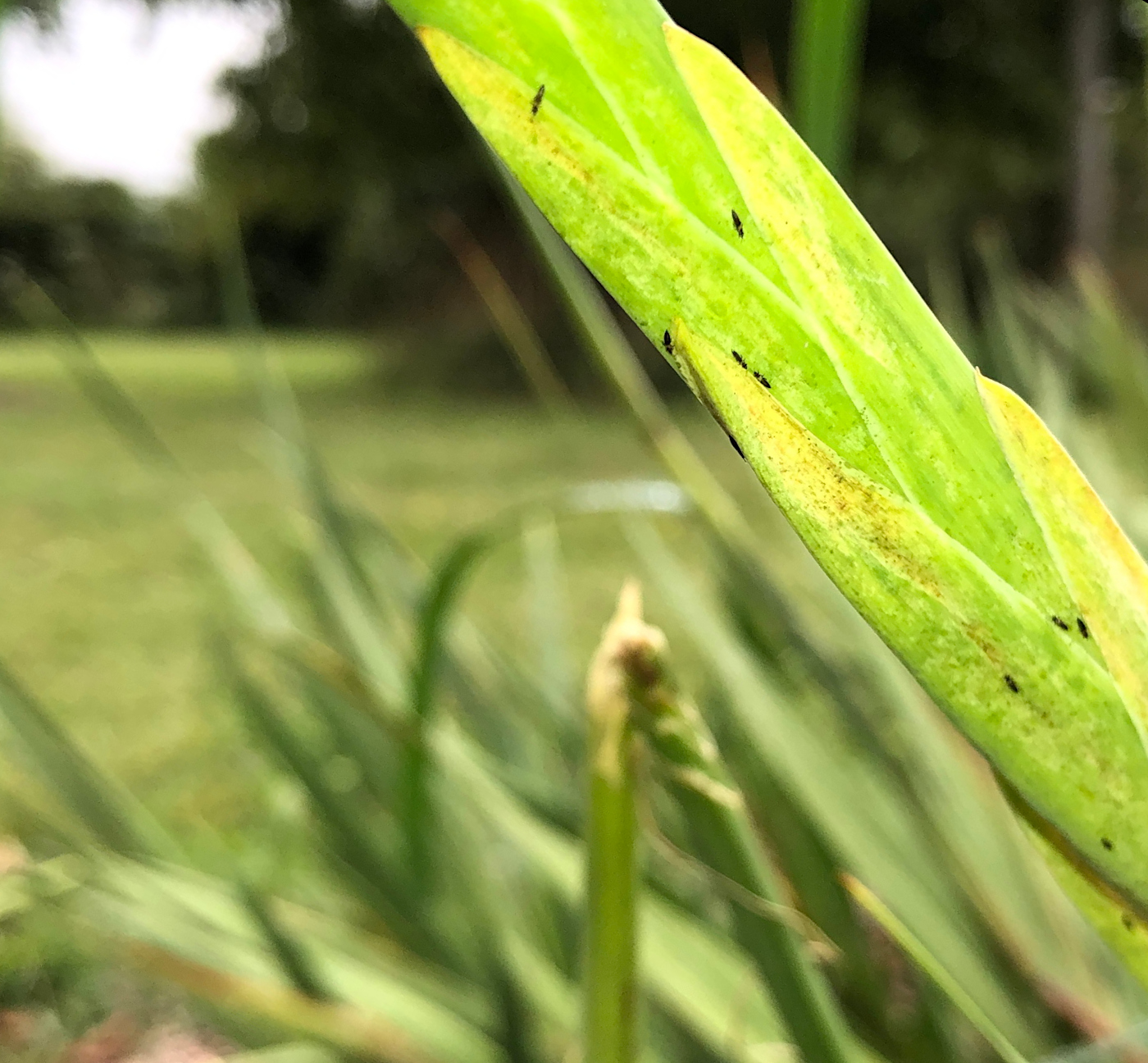
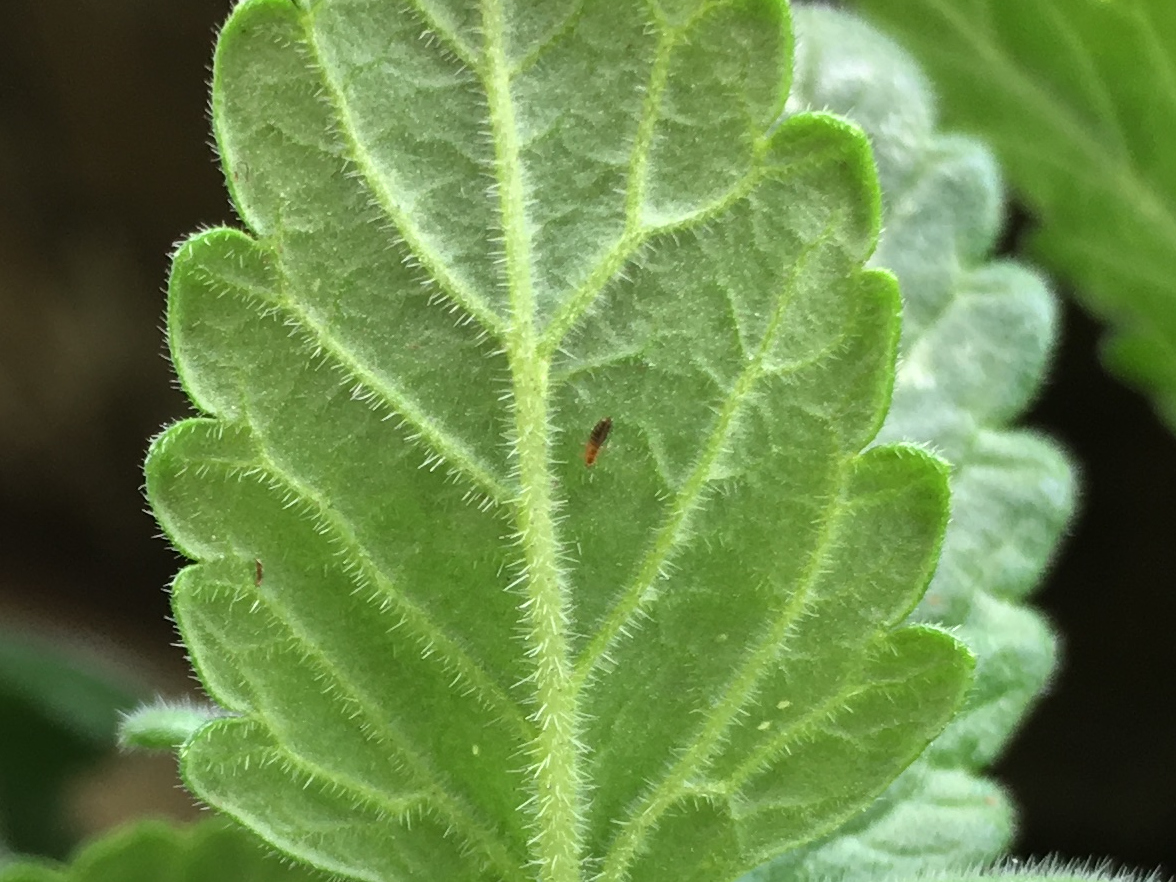
One of the greatest challenges in managing thrips is finding them before they cause widespread damage. Adult and immature thrips are tiny (Photos 2, 4, 5) and often feed deep within flowers, developing buds, and other protected plant parts where they are difficult to detect during routine scouting. Some species also pupate in the soil, placing another life stage out of sight during the scouting process. By the time feeding injury becomes apparent, populations may already be well established.
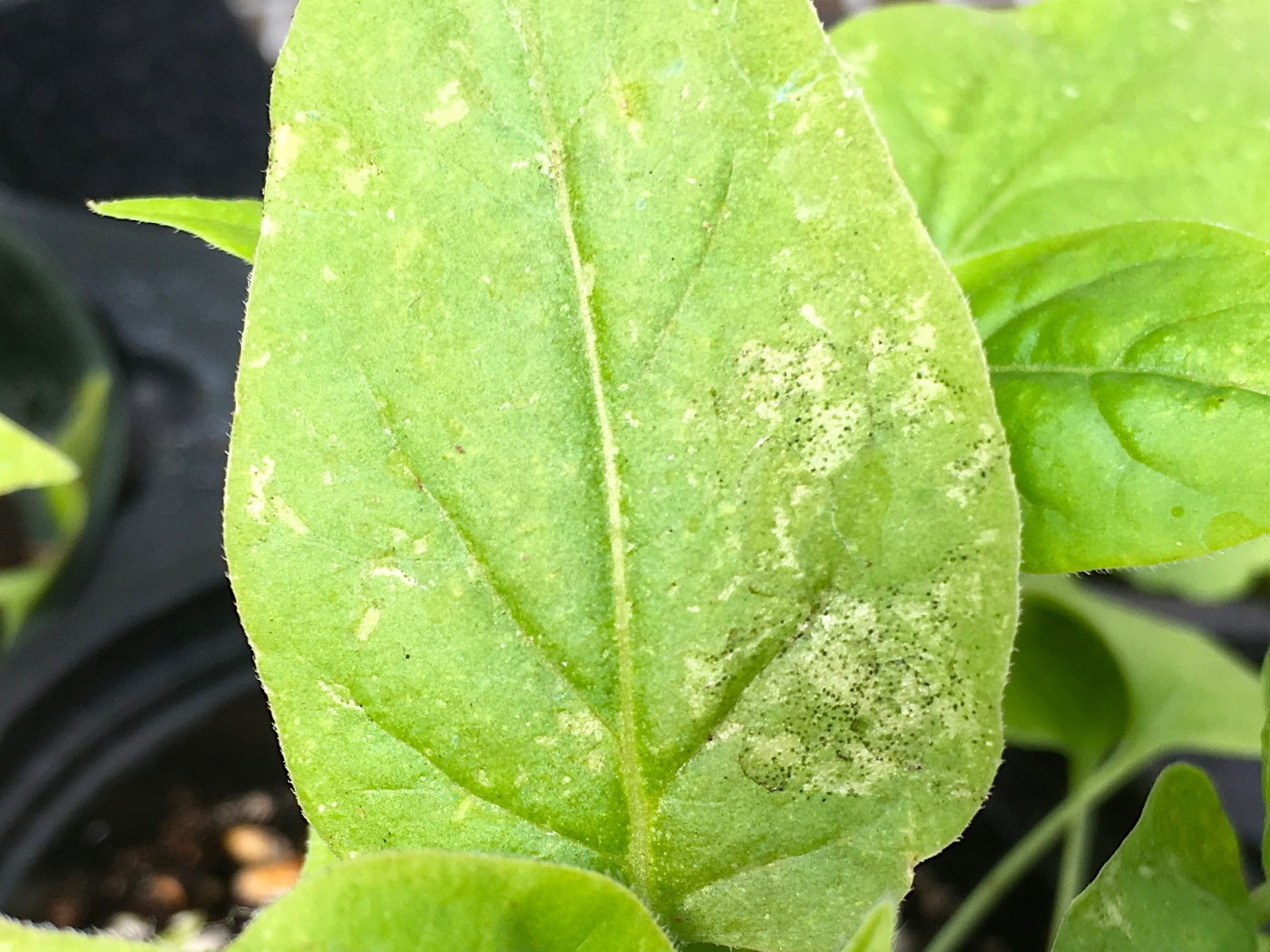
To complicate matters further, their protected feeding and pupation sites can also make thrips difficult to reach with insecticide applications. For these reasons, careful scouting and thorough spray coverage are essential components of any thrips management strategy.
Small infestations rarely stay small for long. In mild temperature environments, thrips often complete their development in two to three weeks. During warmer weather, however, thrips can complete multiple overlapping generations in a much shorter period, allowing populations to increase rapidly. Early intervention is more effective than waiting until feeding injury becomes apparent, particularly when using biopesticides and other reduced-risk products. Even so, a successful treatment does not necessarily mean the problem is over.
Adult thrips readily move among flowering crops, weeds, and surrounding vegetation. They can also be carried considerable distances by wind, allowing thrips from surrounding agricultural fields and natural areas to move into cut flower plantings. Once they arrive, their attraction to pollen and nectar increases the likelihood that they will settle on flowering crops rather than surrounding foliage and other vegetation.
As a result, even well-managed fields can experience repeated infestations throughout the growing season as new thrips continually move into the production space from surrounding areas. Regular scouting and consistent management are therefore more reliable than assuming a single treatment will provide season-long control.
The products are not always to blame when insecticide applications produce disappointing results. While some thrips species have developed resistance to numerous insecticide groups, poor spray coverage, delayed applications, and the insects' concealed feeding habits can also reduce control. Successful insecticide programs depend on selecting appropriate products and integrating them with prevention, regular scouting, and timely intervention.
Taken together, these characteristics explain why the most effective thrips management programs emphasize prevention, early detection, and informed decision-making throughout the growing season. Building that foundation begins long before an insecticide application is needed.
Building a thrips management program
Successful thrips management begins long before insecticide applications become necessary. No single practice will prevent every outbreak, but combining complementary management strategies can reduce pest pressure, improve crop resilience, and provide more options if thrips populations begin to increase.
An effective IPM program begins with healthy plants. Vigorous plants are generally better able to tolerate environmental stress and recover from minor pest injury than plants weakened by poor nutrition, drought stress, or other production challenges. Maintaining appropriate fertility, irrigation, drainage, and plant spacing supports crop vigor and helps plants withstand pest pressure. Ideally, growers should design their fertility program to meet the needs of the crop without exceeding them, because excessive fertility can increase plant attractiveness and suitability for insect pests while adding unnecessary production costs.
Weed management is important for more than reducing competition. Many weeds serve as alternate hosts for thrips and other insect pests, allowing populations to build up before migrating into flowering crops. Weedy field borders and unmanaged vegetation also provide pollen and shelter that help sustain thrips populations throughout the growing season. Regularly mowing turf grass borders and keeping production areas as weed-free as possible reduces these resources while improving overall field sanitation.
Sanitation should continue throughout the growing season and after harvest. Crop residues, volunteer plants, and heavily infested plant material can harbor insects and pathogens, thus contributing to future pest and disease problems. Removing crop debris, destroying heavily infested plant material (when practical), and cleaning production areas after harvest can significantly reduce potential sources of reinfestation.
Beneficial insects are an important part of outdoor production systems. Predatory insects, spiders, and other naturally occurring biological control agents often help suppress developing pest populations. Augmentative releases of commercially produced natural enemies have become a cornerstone of greenhouse thrips management, but their use in open-field production is generally less predictable and may not always be economically practical. In most field situations, conserving naturally occurring beneficial organisms offers the greatest opportunity to benefit from biological control.
Thoughtful pesticide use can reduce harm to these organisms, while habitat management can provide resources such as pollen, nectar, alternative prey, and shelter. Intentionally planted flower strips or other managed non-crop habitat can provide these resources without relying on unmanaged weeds, although their effectiveness will depend on the plants, beneficial organisms, pests, and surrounding landscape.
Experience is one of the most valuable tools in a grower's IPM program. Many growers observe that certain flower species or cultivars consistently attract thrips earlier or show feeding injury sooner than others (Photo 3). These crops can serve as useful indicators during routine scouting.
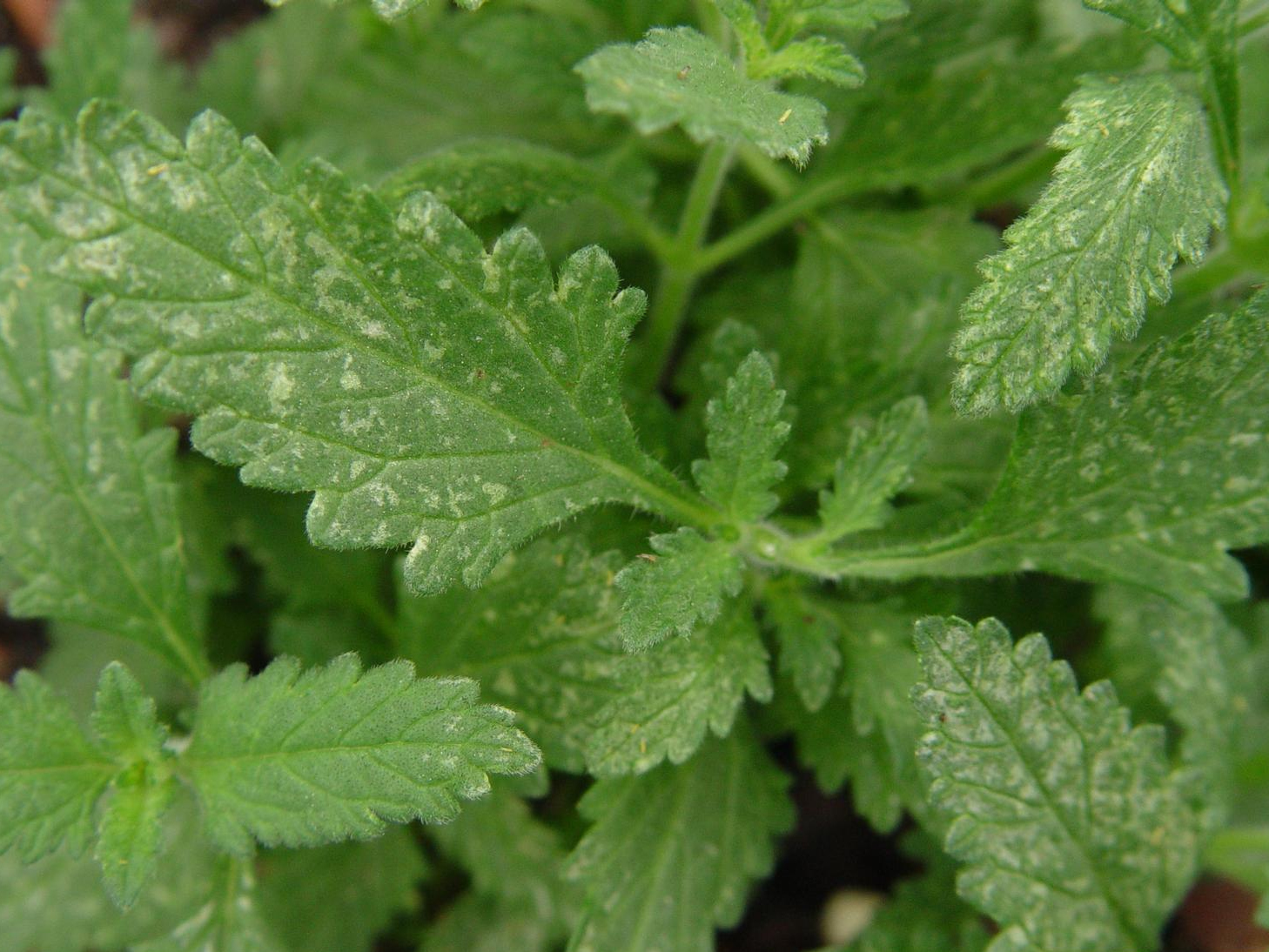
Highly attractive non-crop plants placed near production areas may serve a similar purpose, providing another location to watch for incoming thrips before populations become established in the crop. Paying closer attention to indicator plants and historically troublesome crops may provide an early warning that thrips activity is increasing elsewhere in the field. Early detection allows growers to respond before damage becomes widespread.
No field can be completely protected from thrips, and even the best-managed farms occasionally experience outbreaks. The objective is to detect problems early and respond before crop quality is compromised. That preparation begins with one of the most valuable tools available to any grower: regular, systematic scouting.
Scout before and after you decide
Scouting provides the information needed to make timely, sound management decisions and evaluate their effectiveness. Regular scouting helps determine whether thrips are present, whether populations are increasing, and whether management is necessary. After treatment, continued scouting helps determine whether the intervention reduced pest pressure or additional action is needed. In other words, crop scouting answers an important question throughout the growing season: Is the level of risk changing?
Effective scouting is both systematic and consistent. Field edges and crops that are highly attractive to thrips can provide an early warning of increasing pest activity, but scouting should also include multiple locations throughout the field. Pay particular attention to crops or cultivars that have historically experienced thrips injury and areas where problems have developed in previous seasons. Revisiting the same locations throughout the season makes it easier to recognize meaningful changes over time.
Because thrips spend much of their time inside flowers and developing buds, simply looking over the crop from a distance is rarely sufficient. Inspect blooms closely with a hand lens or gently tap flowers over a white sheet of paper or index card and use a hand lens to examine the insects that are dislodged. Sticky cards are useful for monitoring thrips movement into a field (Photo 6), but direct inspection of flowers and foliage remains the most reliable way to assess developing infestations.
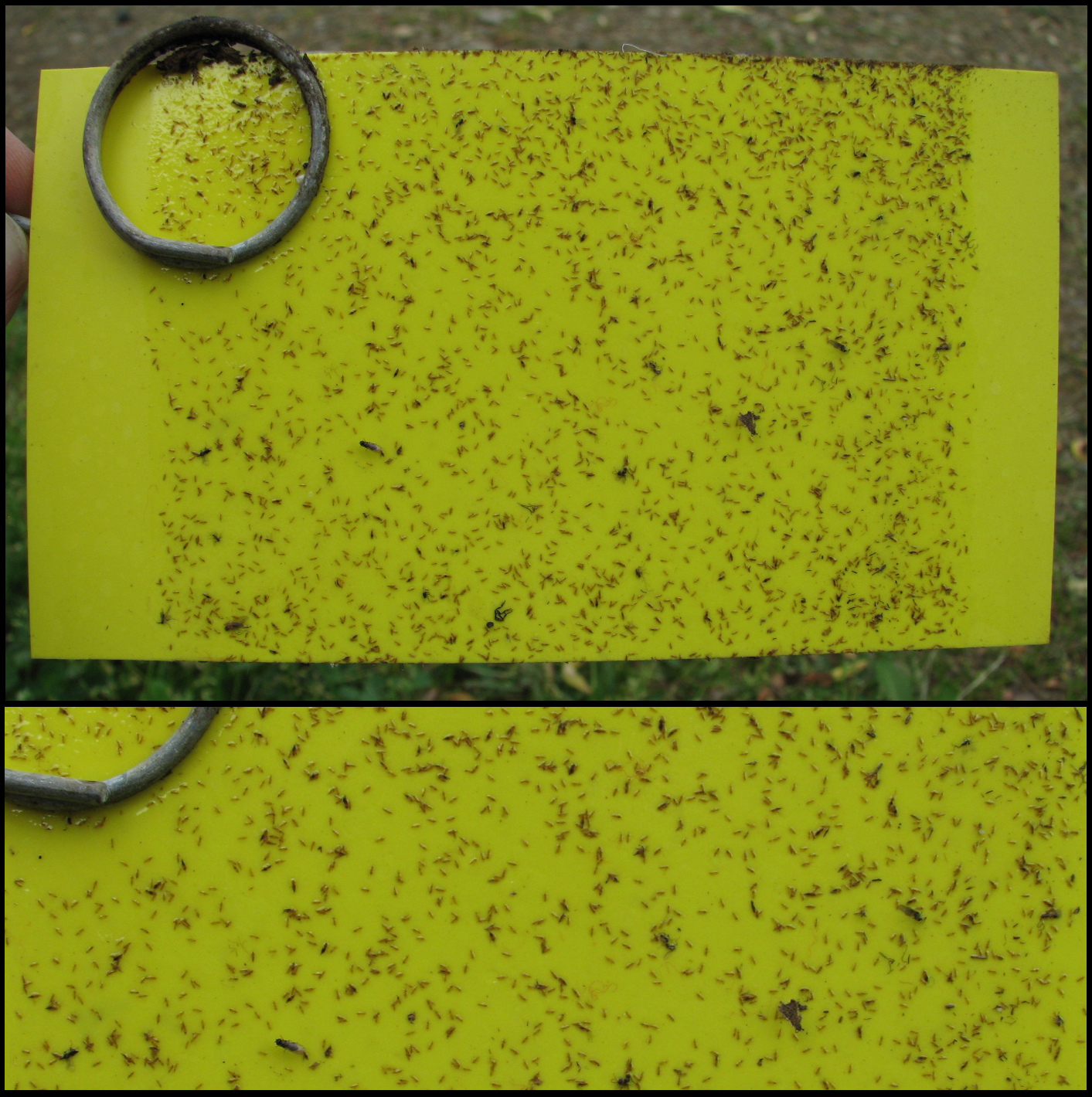
During each scouting session, record thrips abundance, feeding injury, and where problems are occurring. The value of these observations comes from the trends that emerge over time rather than the number of thrips found on any given day. Because treatment thresholds have not been established for most specialty cut flowers, the objective is not to count every thrips but to recognize meaningful changes in pest pressure and crop injury.
Are populations increasing or remaining stable? Is feeding injury becoming more common? Are infestations confined to one area of the field or spreading into additional crops? Are beneficial insects present and active? Consistent observations and recordkeeping provide a much stronger foundation for management decisions than reacting to the first thrips observed in the field.
Records of your observations throughout the season can also be used to plan future management. Notes on pest pressure, crop stage, weather conditions, management actions, and treatment outcomes become increasingly valuable over time. These records can help identify recurring hotspots, improve the timing of scouting and intervention, and strengthen future management decisions. Good scouting improves today's decisions and strengthens next year's management program.
Match your response to the level of risk
Successful IPM matches the management approach to current conditions. As pest pressure changes throughout the season, management strategies should change as well. The objective is to intervene early enough to protect crop quality while using the least disruptive tactic that provides satisfactory control. Effective IPM is measured less by the products that are used than by how well those products fit the situation.
Small thrips populations do not always require immediate intervention. Not every thrips observation develops into an economically important outbreak, particularly in outdoor production systems where weather, natural enemies, and other environmental factors influence pest populations. In some cases, a strong natural enemy presence may reduce a pest infestation enough to make additional intervention unnecessary. Increasing scouting frequency often provides more valuable information than making an immediate insecticide application.
Intervention becomes increasingly important as thrips populations increase or feeding injury becomes more apparent. Biopesticides and other reduced-risk products often fit best when populations are still small and crop injury is limited. These products generally provide less residual activity and slower population suppression than conventional insecticides, particularly under outdoor growing conditions where sunlight, rainfall, and temperature can reduce their persistence. Applying them before infestations become widespread improves the likelihood of successful control. Multiple applications may be necessary with continued scouting guiding subsequent management decisions.
When pest pressure threatens crop quality and marketability, conventional insecticides become an important part of an IPM program. Their greater knock-down ability can rapidly reduce damaging populations before stem quality is compromised. Once populations have been reduced, growers can often return to an approach centered on regular scouting, conservation of beneficial insects, and reduced-risk products when appropriate.
Regardless of the products selected, thorough spray coverage is essential because thrips frequently feed within flowers and developing buds where they are difficult to reach. Rotating insecticides with different modes of action helps preserve the effectiveness of available products over time. Even highly effective insecticides can produce disappointing results if applications are delayed or spray coverage is inadequate.
Reference tables
The following reference tables summarize commonly used biopesticides and conventional insecticides for thrips management in specialty cut flowers. The tables list insecticides by active ingredient rather than trade name because many active ingredients are sold under multiple trade names, and available products change over time. To find products containing a particular active ingredient, search online, consult a pesticide dealer, or check with your local Michigan State University Extension educator. Before purchasing or applying any pesticide, confirm that the product is labeled for the crop and intended use.
Restricted entry intervals (REIs) may vary among products containing the same active ingredient. The typical REI shown in these tables is provided only as a general reference and should not be used to determine when workers may reenter a treated area. Personal protective equipment (PPE) requirements also vary by product and by the activity being performed. Always check the product label for the required PPE, REI and other requirements that apply to the specific product you are using.
Some products listed in these tables may be classified as restricted use pesticides (RUPs). In Michigan, RUPs may only be purchased and used by appropriately certified pesticide applicators. For information about pesticide applicator certification and licensing requirements, visit the Michigan Department of Agriculture and Rural Development (MDARD) Pesticide Licensing and Certification website.
While these products differ in their strengths and limitations, their greatest value comes from integrating them into a broader IPM strategy built on prevention, regular scouting, and timely decision-making.
Table 1. Active ingredients of common conventional insecticides labeled for thrips management in outdoor commercial ornamental production systems.
|
MoA Code |
Active Ingredient |
Typical REI* |
|---|---|---|
|
1A |
carbaryl |
12 |
|
1B |
acephate |
12-24 |
|
3A |
bifenthrin |
12 |
|
3A |
lambda-cyhalothrin |
24 |
|
3A |
fenpropathrin |
24 |
|
3A |
tau-fluvalinate |
12 |
|
3A |
permethrin |
12 |
|
4A |
acetamiprid |
12 |
|
4A |
dinotefuran |
12 |
|
4A |
imidacloprid |
12 |
|
4A |
thiamethoxam |
12 |
|
4D |
flupyradifurone |
4 |
|
4C + 5 |
sulfoxaflor + spinetoram |
12 |
|
6 |
abamectin |
12 |
|
6 + 20D |
abamectin + bifenazate |
12 |
|
7C |
pyriproxifen |
12 |
|
15 |
novaluron |
12 |
|
21A |
fenpyroximate |
12 |
|
21A |
tolfenpyrad |
12 |
|
23 |
spirotetramat |
0-24 |
|
25A |
cyflumetofen |
12 |
|
28 |
chlorantraniliprole |
4 |
|
28 |
cyantraniliprole |
4 |
|
28 |
cyclaniliprole |
4 |
|
29 |
flonicamid |
12 |
|
30 |
isocycloseram |
12 |
Table 2. Biopesticide active ingredients and other products derived from natural materials labeled for thrips management in outdoor commercial ornamental production systems.
|
MoA Code |
Active Ingredient |
Typical REI* |
|
3A |
pyrethrins |
12 |
|
5 |
spinosad |
4 |
|
32 |
peptides |
4 |
|
UN |
azadirachtin |
4-12 |
|
UNB |
Burkholderia sp. |
4 |
|
UNB |
Chromobacterium subtsugae |
4 |
|
UNE |
botanical oil (including neem) |
0-4 |
|
UNF |
Beauveria bassiana |
4 |
|
UNF |
Isaria formosorosea |
4 |
|
UNF |
Metarhizium brunneum |
4 |
|
UNM |
mineral (horticultural) oil |
4 |
|
UC |
Steinernema feltiae |
N/A |
|
UC |
capsicum oleoresin extract |
4 |
|
UC |
Potassium salts of fatty acids (insecticidal soap) |
12 |
MoA = Mode of Action
REI = Restricted Entry Interval
UN = Compounds of unknown or uncertain MoA
UNB = Bacterial agents (non-Bt) of unknown or uncertain MoA
UNE = Botanical essence including synthetic, extracts and unrefined oils with unknown or uncertain MoA
UNF = Fungal agents of unknown or uncertain MoA
UNM = Non-specific mechanical and physical disruptors
UC = Unclassified
Protecting pollinators without sacrificing crop quality
Flower growers often face difficult pest management decisions because the same crops that attract thrips also attract bees, butterflies, and many other beneficial insects. Protecting pollinators is an important goal, but so is producing a marketable crop. IPM principles provide a framework for balancing these objectives by reducing unnecessary insecticide applications, selecting products thoughtfully, and applying them in ways that minimize risks to non-target organisms.
The most pollinator-friendly insecticide application is the one that never becomes necessary. Building a strong IPM program through prevention, regular scouting, and early intervention reduces the likelihood that severe outbreaks develop. When intervention is needed, acting before populations become widespread allows growers to use reduced-risk products that are generally less disruptive to pollinators and beneficial insects than those needed to manage major outbreaks.
When insecticide applications are necessary, application timing can greatly reduce pollinator exposure. Whenever practical, apply insecticides during the evening or other periods when pollinators are no longer actively foraging. Avoid making applications when plants are heavily visited by beneficial insects and minimize spray drift onto adjacent flowering vegetation where pollinators may also be active.
Product selection also influences risk to non-target organisms. When several products are expected to provide adequate control, selecting one with lower toxicity to pollinators and natural enemies can reduce unnecessary impacts. Severe outbreaks, however, may require products with greater knock-down activity to protect crop quality. Weighing both efficacy and potential non-target effects is consistent with the principles of IPM.
Pollinators are only part of the picture. Predators and parasitoids present in flowering systems contribute to the suppression of thrips and many other pests throughout the growing season. Conserving these beneficial organisms through thoughtful pesticide use strengthens the biological component of an IPM program and can help reduce pest pressure over time. The University of California Statewide Integrated Pest Management Program provides relative toxicity information for many commonly used insecticides and miticides to help growers compare their potential effects on bees, predators, and parasitoids. These ratings provide supplemental information for product selection and do not replace pesticide label requirements.
Finally, always consult the pesticide label before making an application. In addition to directions for use, pesticide labels contain important information regarding pollinator protection, application timing, environmental precautions, and other restrictions designed to reduce risks to non-target organisms while ensuring effective pest control.
Careful planning and thoughtful pesticide use allow growers to reduce risks to pollinators and other beneficial organisms while producing high-quality, marketable flowers. These decisions represent another practical application of IPM in field-grown specialty cut flower production.
Improving decisions over time
No two growing seasons are exactly alike. Weather patterns, pest pressure, crop mixes, and market expectations all influence the challenges growers face from year to year. Successful thrips management develops through continually improving the decisions that guide your IPM program. No single solution works every year.
Each season provides an opportunity to learn. Records from routine scouting, notes on when thrips first appeared, observations of crop susceptibility, and evaluations of management practices all contribute to a better understanding of how thrips behave on your farm. Over time, these observations help identify recurring hotspots, improve the timing of scouting and intervention, and refine future management decisions.
IPM is a season-long systems approach that combines prevention, regular scouting, timely intervention, conservation of beneficial organisms, and thoughtful use of insecticides. Together, these complementary practices reduce the likelihood of economically significant damage while supporting the long-term sustainability of the production system.
Ultimately, successful thrips management is measured not by the absence of insects, but by the consistent production of high-quality, marketable flowers through informed decision-making. Each growing season provides another opportunity to refine your approach, strengthen your decision-making, and become better prepared for the next one.
We thank JC Chong of SePRO Corporation for his thoughtful review of this document.
The information presented here is for educational purposes only. Reference to commercial products or trade names does not imply endorsement by MSU Extension or bias against those not mentioned.
This work is supported by the Crop Protection and Pest Management Program (grant no 2024-70006-43569) from the USDA National Institute of Food and Agriculture. Any opinions, findings, conclusions, or recommendations expressed in this publication are those of the author(s) and do not necessarily reflect the view of the U.S. Department of Agriculture.