The return of the trumpeter swan: How the Kellogg Bird Sanctuary helped restore a Michigan icon
 Print
Print Email
EmailW.K. Kellogg Bird Sanctuary played a key role in restoring Michigan's trumpeter swan population, helping return the native species from near extinction to wetlands across the state through decades of conservation and collaboration.
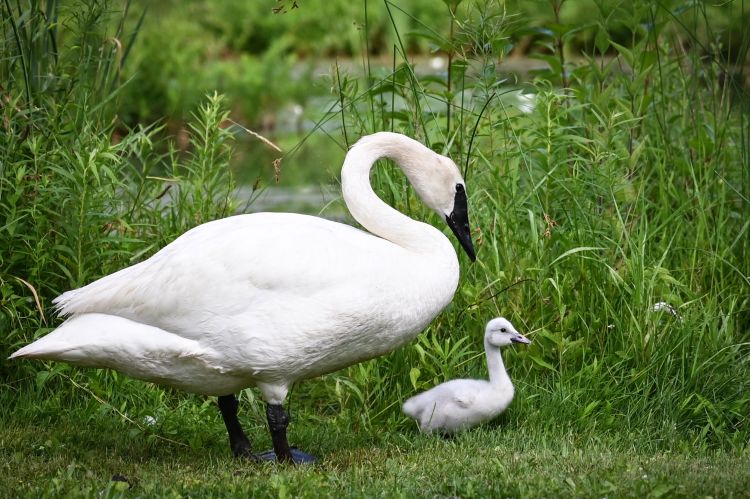
Visitors strolling the trails around Wintergreen Lake at Michigan State University's W.K. Kellogg Bird Sanctuary often stop when they hear it: the unmistakable call of a trumpeter swan carrying across the water. With a wingspan of more than 6 feet and a resonant voice that inspired its name, the bird is one of North America's most impressive waterfowl species.
Today, spotting a trumpeter swan in Michigan is not unusual. Along inland lakes, quiet marshes and wetland habitats across the state, the birds have become a natural part of the landscape.
A century ago, however, the species was on a path toward disappearance.
Though once native to the state, trumpeter swans had vanished from Michigan by the late 1800s after decades of overhunting and habitat loss. Wetlands were drained for agriculture and development, while the birds were hunted for meat, feathers and skins. By 1933, only 69 remained in the continental United States.
The dramatic decline of trumpeter swans helped inspire decades of conservation work, including Michigan's effort to return the species to its historic range.
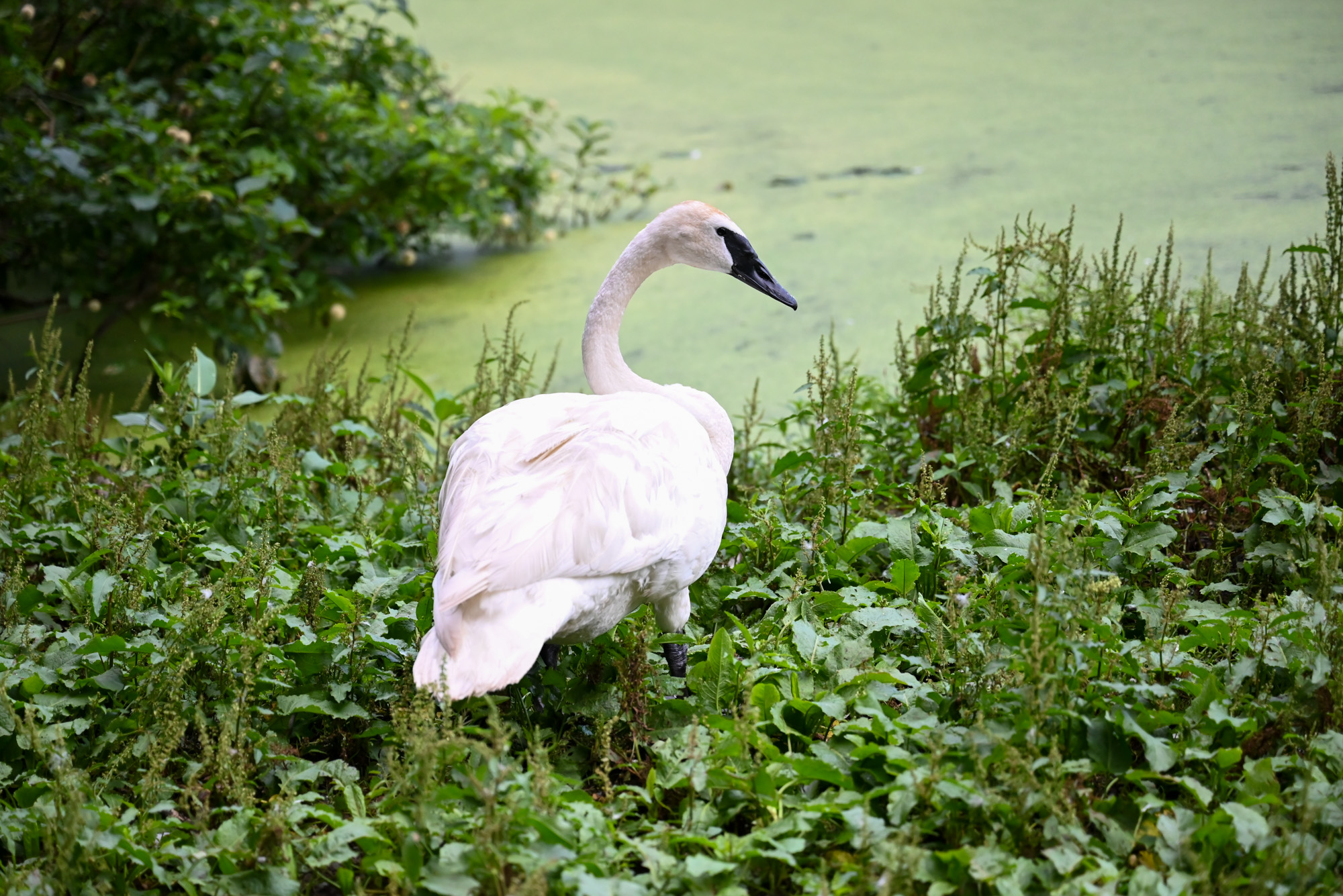
Today, Michigan's trumpeter swan population is estimated at roughly 3,000-5,000 birds, the result of collaboration among by researchers, wildlife professionals and partners, including the W.K. Kellogg Bird Sanctuary, which became the center of Michigan's trumpeter swan recovery program.
The drive to restore
Michigan's trumpeter swan restoration program began in the 1980s as part of a broader North American initiative to rebuild self-sustaining populations.
Initiated by the Mississippi Flyway Council Trumpeter Swan Reintroduction Plan, Minnesota, Ontario and Michigan launched their reintroduction programs in 1982 and 1986, respectively. After decades of wetland loss due to agriculture and development, wildlife officials viewed the project as an opportunity to restore a native species and highlight the importance of protecting the state's remaining wetlands.
The W.K. Kellogg Bird Sanctuary provided the facilities, expertise and leadership needed to return trumpeter swans to their historic range. Biologist Wilbur C. "Joe" Johnson, who began his career at the sanctuary as an MSU graduate student before rising into a leadership role, helped guide the project alongside the Michigan Department of Natural Resources and conservation partners across the state.
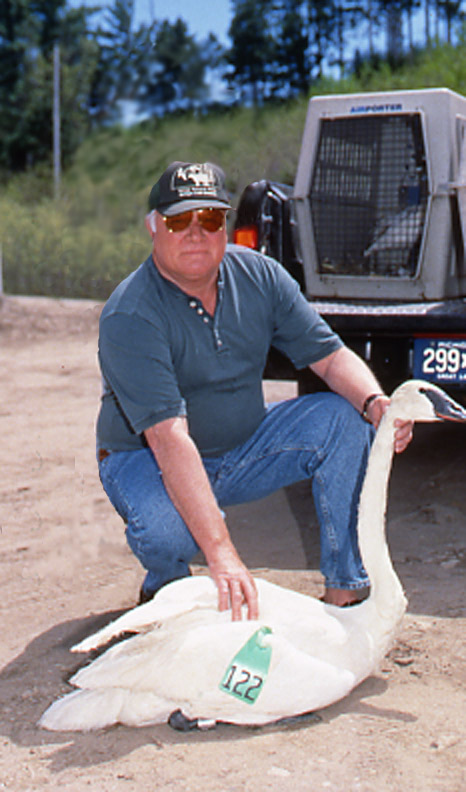
Johnson's leadership became a defining part of the sanctuary's conservation legacy, and his work continues to be remembered by those who helped advance the initiative.
"Joe had an incredible impact. He set this example that with the right partnerships and personal drive, we can make amazing changes," said Lisa Duke, current sanctuary grounds manager at the W.K. Kellogg Bird Sanctuary. "People still show up and ask about him. Joe was and is still well known."
The restoration's success also depended on a network of organizations working toward a shared goal.
The program brought together MSU, the Michigan Department of Natural Resources, The Trumpeter Swan Society, the Michigan Habitat Foundation and local conservation organizations, combining expertise in wildlife management, research and habitat protection.
"In the conservation world, nothing happens by ourselves. It's incredibly important to find partners to be able to get this work done," said Kali Rush, a Michigan Department of Natural Resources waterfowl specialist and MSU Fisheries and Wildlife alumna. "Leveraging that partnership between MSU, the DNR and other partners, empowering those with the capacity and the knowledge, is what made this such a success."
From Alaska to Michigan
Michigan's restoration effort began with a series of experimental approaches, including placing trumpeter swan eggs beneath the nests of mute swans, a different species whose population is more abundant. Biologists later launched a more ambitious strategy, collecting eggs from wild trumpeter swan populations in Alaska, rearing them in captivity and releasing them as adults.
Between 1989 and 1990, Johnson and DNR staff traveled north to gather eggs that would become the foundation of Michigan's growing population. Of the 92 eggs collected, 88 hatched at the Bird Sanctuary and 80 survived to the flight stage, an exceptionally high survival rate for human-reared birds. The sanctuary's staff then raised the cygnets, preparing them for release into Michigan's wild habitats.
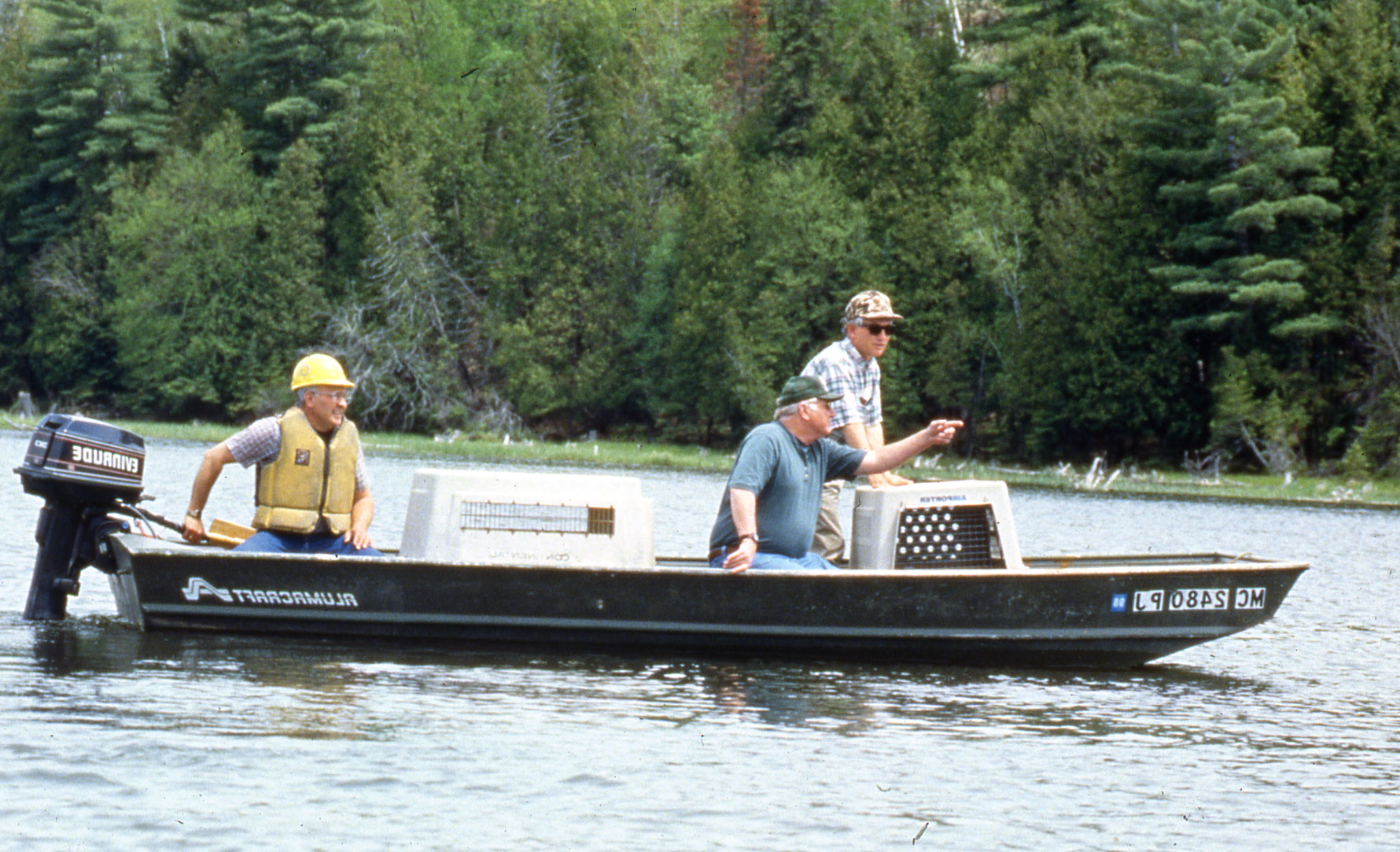
The birds lived at the sanctuary for nearly two years before being released at sites throughout the state. From 1989 to 2005, 246 trumpeter swans were released across Michigan.
Michigan's original restoration goal was to establish two flocks with at least 15 nesting pairs, one in the Upper Peninsula and one in the Lower Peninsula, by the year 2000. The state reached that milestone three years early, in 1997.
The recovery continued to gain momentum as additional birds were released and wild populations expanded.
A lasting legacy
Trumpeter swans now breed throughout much of Michigan, and the Kellogg Bird Sanctuary continues to serve as a gathering place for wild birds. Duke said Wintergreen Lake remains especially attractive to younger swans that have not yet established nesting territories.
"We get the young ones, non-breeders of the year," Duke said. "They pick us. We're quiet, we're safe."
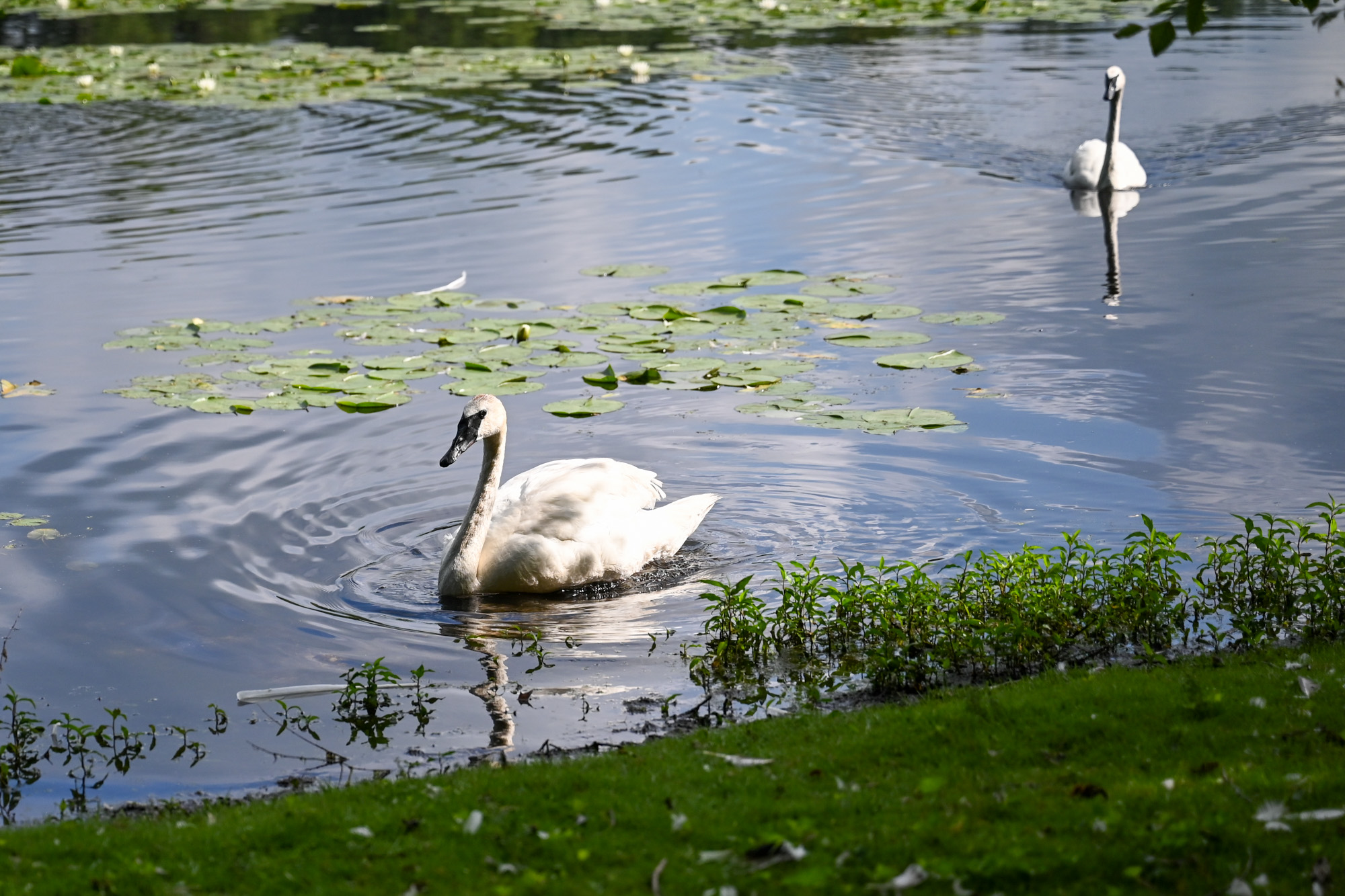
Many spend several seasons at the sanctuary before pairing off and establishing nesting territories elsewhere in the state. For a species once absent from Michigan's landscape, their return reflects what is possible when conservation work is sustained over generations and communities work together to restore native wildlife.
While the species has recovered dramatically, wildlife professionals continue to monitor challenges including habitat loss, lead contamination, disease and collisions with power lines. Because healthy wetlands reduce flooding, improve water quality and provide places for people to enjoy nature, the return of trumpeter swans reflects benefits that extend well beyond a single species.
"Wetlands help reduce flooding, improve water quality and provide places for people to enjoy nature," Rush said. "When we see healthy populations of trumpeter swans, it's an indication that we're maintaining the kinds of wetlands that are important for wildlife and people alike."
Beyond supporting wild populations, the sanctuary continues to advance conservation by housing rehabilitated trumpeter swans and assisting wildlife professionals across Michigan.
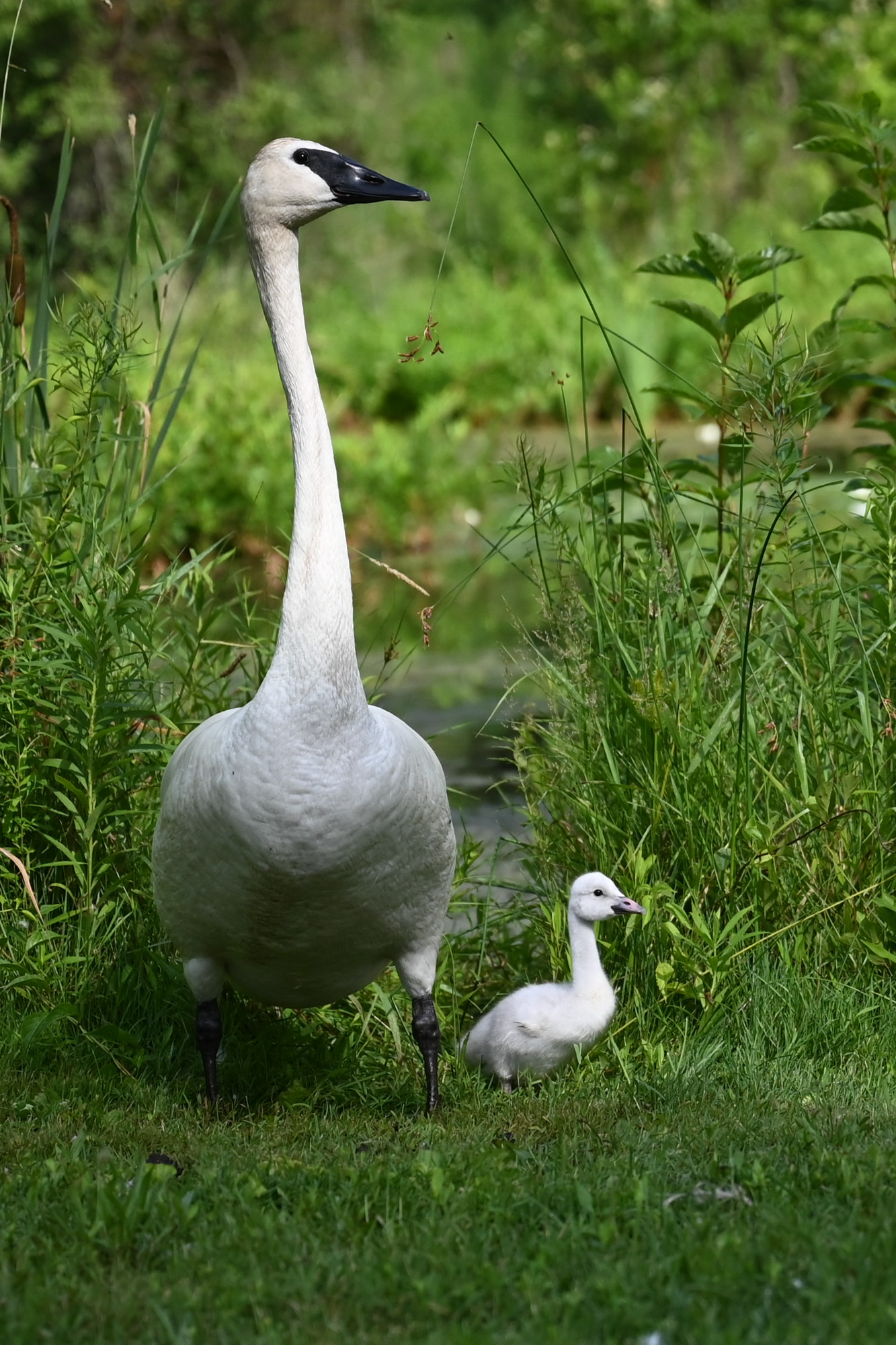
As the W.K. Kellogg Bird Sanctuary prepares to celebrate its 100th anniversary in 2027, the return of trumpeter swans stands among its most visible conservation achievements. The project reflects the sanctuary's long-standing mission: using science, education and collaboration to protect Michigan's wildlife.
Duke believes that lesson is as relevant today as it was when the project began.
"I always go back to the why: why take on this challenge of bringing trumpeter swans back to Michigan?" Duke said. "The reason that this species went into such deep decline is because of us. Humans overhunted them and changed their habitat by filling in wetlands. So why bring them back? Because we did that. We succeeded in righting a wrong."