MSU researchers receive $148K NSF grant to create wetlands partnership
 Print
Print Email
EmailProject will focus on developing education plans and activities related to wetlands that address community needs and increase participants’ scientific literacy and engagement.
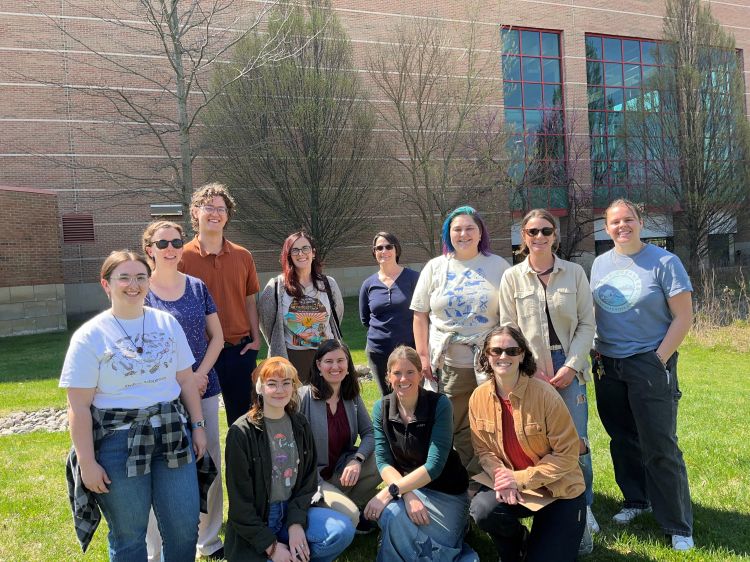
Researchers at Michigan State University (MSU) and MSU Extension have received a $148,765 U.S. National Science Foundation grant to build collaborative partnerships with watershed non-profit organizations, local community members and MSU. The project will focus on community perspectives and needs related to wetlands in Metro Detroit.
Organizers plan to partner with the Clinton River Watershed Council, Friends of the St. Clair River, Friends of the Detroit River, Friends of the Rouge, Huron River Watershed Council and local community members in the project titled “Urban Wetlands: Partnership Building for Community-based Conservation Education.” The goal of the project is to develop informal science, technology, engineering and mathematics (STEM) education plans and activities related to wetlands that address community needs and increase participants’ scientific literacy and engagement.
“Urban wetlands are a critical but often underappreciated part of how we address water quality and extreme weather impacts,” said Emily Pomeranz, an assistant professor with MSU's Department of Fisheries and Wildlife. “When communities, researchers, and watershed groups have meaningful opportunities to engage together, it becomes easier to recognize the value of wetlands and support efforts to protect them."
Led by Pomeranz, the organizing team also includes MSU Fisheries and Wildlife faculty members Alexa Warwick, Angela Burrow, graduate student Ben Eiler, and Michigan Sea Grant Extension’s Erica Anculle. The project will include regular facilitated meetings with the watershed groups and also a two-day event that will seek community input from across Metro Detroit.
The project is funded by the Advancing Informal STEM Learning (AISL) program, which seeks to advance new approaches to, and evidence-based understanding of, the design and development of STEM learning in informal environments, which includes providing everyone multiple pathways for accessing and engaging in STEM learning experiences. The project has a deliberate emphasis on developing a long-term, mutually beneficial, and sustainable community-led partnership.
"We are incredibly grateful for the opportunity to work alongside such dedicated watershed organizations and community members,” said Pomeranz. “We hope to build and strengthen partnerships that will continue beyond the life of this project."
Michigan Sea Grant is committed to research, education, and outreach through partnerships with people and organizations to foster healthy Great Lakes coastal ecosystems, communities, and economies. A collaborative effort of the University of Michigan and Michigan State University and its MSU Extension, Michigan Sea Grant is part of the NOAA-National Sea Grant network of 34 university-based programs.
This article was prepared by Michigan Sea Grant under award NA24OARX417C0157-T1-01 from the National Oceanic and Atmospheric Administration, U.S. Department of Commerce through the Regents of the University of Michigan. The statement, findings, conclusions, and recommendations are those of the author(s) and do not necessarily reflect the views of the National Oceanic and Atmospheric Administration, the Department of Commerce, or the Regents of the University of Michigan.