MSU Potato Breeding Program Achieves Historic Regulatory Milestone
 Print
Print Email
EmailDavid Douches, Kelly Zarka and the Potato Breeding and Genetics Program have published a landmark study
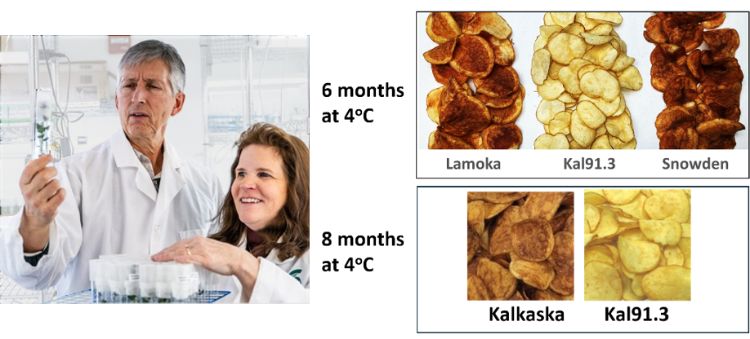
David Douches, Kelly Zarka and the Potato Breeding and Genetics Program have published a comprehensive study documenting the development and regulatory approval of Kal91.3, a cold sweetening-resistant chip-processing potato created by combining advanced conventional breeding with genetic engineering.
This work represents the first USDA/FDA regulatory approval of a genetically modified field crop developed by a publicly funded, non-industry breeding program, which demonstrates how “our breeding program is a leader in public sector efforts to use these innovative technologies, along with conventional breeding, to both develop and releaseimproved crop varieties that benefit growers, processors, and consumers,” said research technologist Kelly Zarka. Also contributing to this effort, research assistant, Joseph Coombs, providng expertise in field data analysis, along with MSU’s ICER/Bioinformatic Core specialist Nanye Long.
The publication has already drawn praise from peer reviewers; as one reviewer noted, "This example of combining advanced breeding with genetic engineering provides immense applied value to public-sector plant breeding."
Publication: Zarka, K. A., Long, N., Coombs, J., & Douches, D. S. (2026). Development and regulatory approval of Kal91.3: Combining advanced conventional breeding with genetic engineering to create a cold sweetening-resistant chip-processing potato. GM Crops & Food, 17(1). https://doi.org/10.1080/21645698.2026.2707844