Michigan vegetable crop report – May 13, 2026
 Print
Print Email
EmailThe current cool period will soon be behind us and more supportive weather for growth is ahead.
Weather
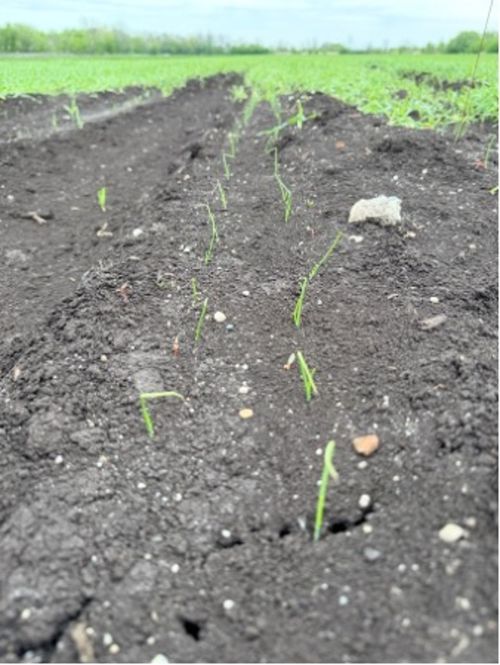
Growers in southern tier counties have been dodging frost events the last couple weeks. Some growers plan for this and make row covers, low-tunnels and hot caps a part of their spring planting method, while others have had to improvise.
The Jetstream trough we are under is about to jet away, bringing a shot of summer. Over the past week, temperatures were 2-8 degrees below normal with dry weather outside of far southern Michigan. Degree day totals are behind normal to the north and increasingly ahead of normal from the central lower to the south.
Check out Jeff Andresen’s weekly forecast:
- Cloudy, windy and unseasonably cool Wednesday, May 13. Fair, dry and warmer most areas Thursday and Friday, May 14–15. Scattered showers possible to the north Friday. Fair and warmer Saturday. Warm early next week with rain possible on a daily basis Sunday and early next week.
- High temperatures from the 50s Wednesday warming to the 60s to near 80 Saturday, to the 70s to low 80s early next week.
- Low temperatures from the 30s north to the 40s south Thursday warming to the 40s north to the 50s south this weekend.
- Precipitation totals of 0.5-1 inch through next Wednesday, May 20, with most falling early next week
- Medium range outlooks call for a return of warmer and wetter weather during late May.
Farmers invited to join national study on farming practices and soil health
Farmers and ranchers are invited to participate in a free soil health evaluation and contribute to research supporting profitables, resilient and sustainable agriculture. To learn more about the study and how to submit your soil samples, refer to the following article.
Rotational restrictions for corn herbicides
Field corn is a good rotational partner for vegetables, but long-residual corn herbicides can sometimes pose a problem the following year. With everyone busy, communication sometimes doesn’t happen until things are in motion. Many of these longer residual herbicides will have tables with rotational restrictions, which list some common vegetables, but also have an “other crop” category for other vegetables (which often has a relatively long period). The Michigan State University Extension field crops weed guide contains an all in one table you can reference for a quick look. Labels may also describe factors like soil pH or rainfall that increase or decrease the risk of issues.
Got aphids? Learn more!
Were aphids a challenge on your farm last year? Accurate aphid identification was and remains the first step toward effective management and reducing virus transmission risk. In a recent webinar, MSU entomologists walked through how to recognize common aphid species and how to distinguish them from other insects encountered while scouting. We also demonstrated the specific diagnostic features specialists use to identify aphids to the species level. Whether you scout your own fields or advise other growers, this recorded webinar provides practical tools to strengthen your aphid management decisions for the upcoming season. Watch the webinar recording:
Early season weather and soil nitrogen and sulfur
Earlier heavy rains combined with cool soils mean that much of the available nitrogen (N) and sulfur (S) may have leached on sandy soils, while at the same time microbial activity could be slow at making what’s locked up in organic matter available to plants. Yellowing and stunting are common symptoms for both N and S deficiency. However, N deficiency will cause yellowing first on the bottom of plants/older leaves (or purpling in brassicas). Sulfur deficiency tends to create more general yellowing on the middle and newer growth first, sometimes with striping depending on the crop. Both can co-occur.
Standard crop fertilization recommendations that include early season N/S with additional topdress, sidedress or fertigation applications should address any deficiencies. That said, this is a season to keep an eye out for early-season symptoms due to the potential lower soil supply of these nutrients. Double check that your fertilizer program is set to meet demand.
Crop updates
Asparagus
There were more harvest carts visible in west central Michigan as asparagus harvest had a “soft opening” on some farms. At the research farm, the effects of cool, windy weather were visible with “weather vane” asparagus crooking in the direction of the wind, and spears that were completely to partly dead from freezes. The upcoming warmer weather should accelerate harvest and bring good quality spears, especially if/when overnight lows increase over the weekend through Monday, May 18.
Consider checking field edges in hotspots for common asparagus beetle as temperatures warm into the 70s. Despite the cool weather, degree days at the Hart MSU Enviroweather station are still ahead of last year. Carbaryl and acetamiprid have a one-day preharvest interval and are effective for control. For organic growers, research by Zsofia Szendrei at MSU showed that PyGanic (pyrethrins) does not kill beetles but may repel them and reduce egg laying on spears. Read more about in-season control in this article.
Root crops
Small lambsquarters were germinating aplenty just over the past week in some west central Michigan root crop fields. MSU Extension tested sulfentrazone as a post application in fall turnips on mineral soil last year. Both 1 and 2 fluid ounces per acre burned down small lambsquarters and provided residual control without detectable crop injury. Higher rates of 4 fluid ounces per acre clearly injured the crop. This trial was conducted in a pleasant, warm fall.
This spring has been stressful with cool temperatures. We sprayed a cabbage maggot trial this week and are hoping the weeds die and the crop will survive. Labeled formulations, including Aquesta 4F, Agristar Sulfentrazone 4L and Sulfen 4SC, state that a postemergence application can be made 40–60 days before harvest.
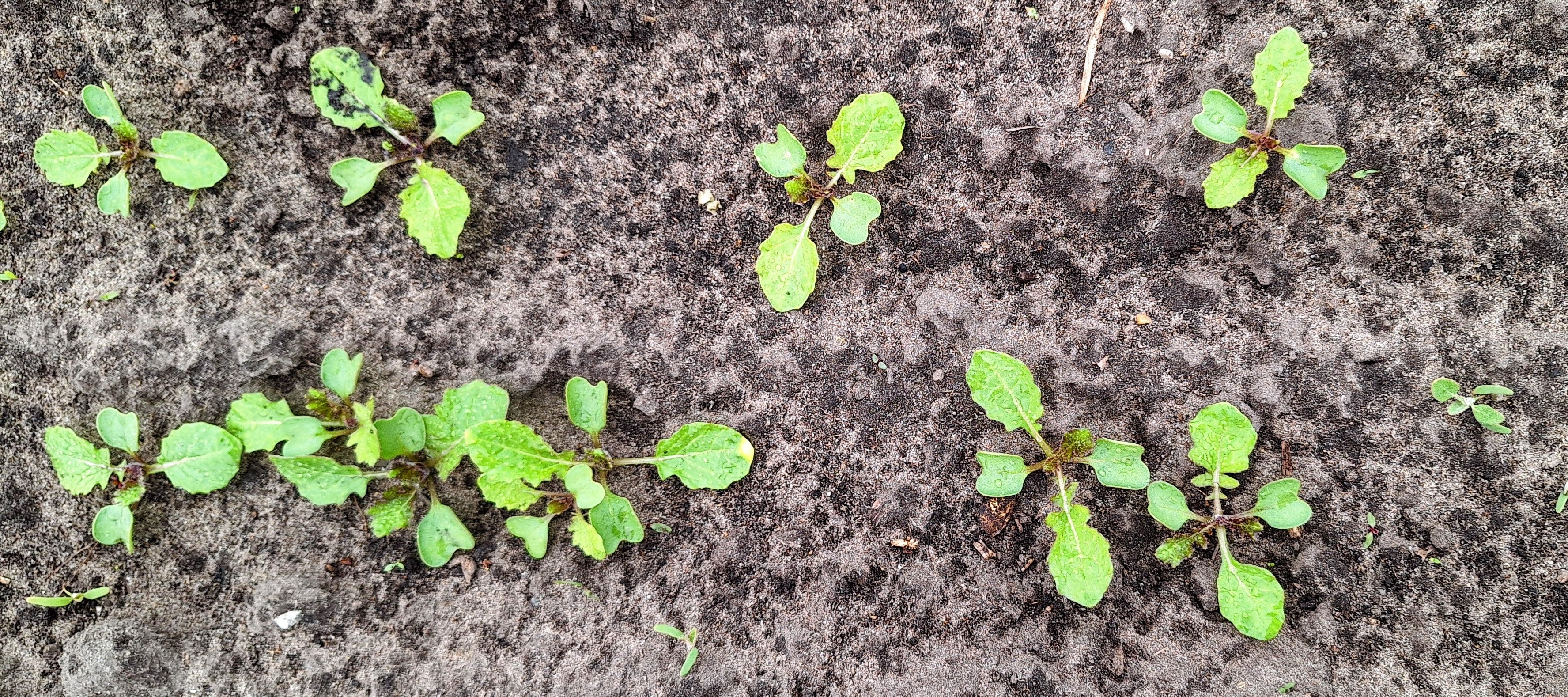
For beets, Spin Aid has activity against lambsquarters and a 60-day preharvest interval. The label provides warnings about stressful conditions that increase risk of injury, including a rapid change from cool, cloudy days to bright days with temperatures over 75 degrees Fahrenheit.
Cucurbits
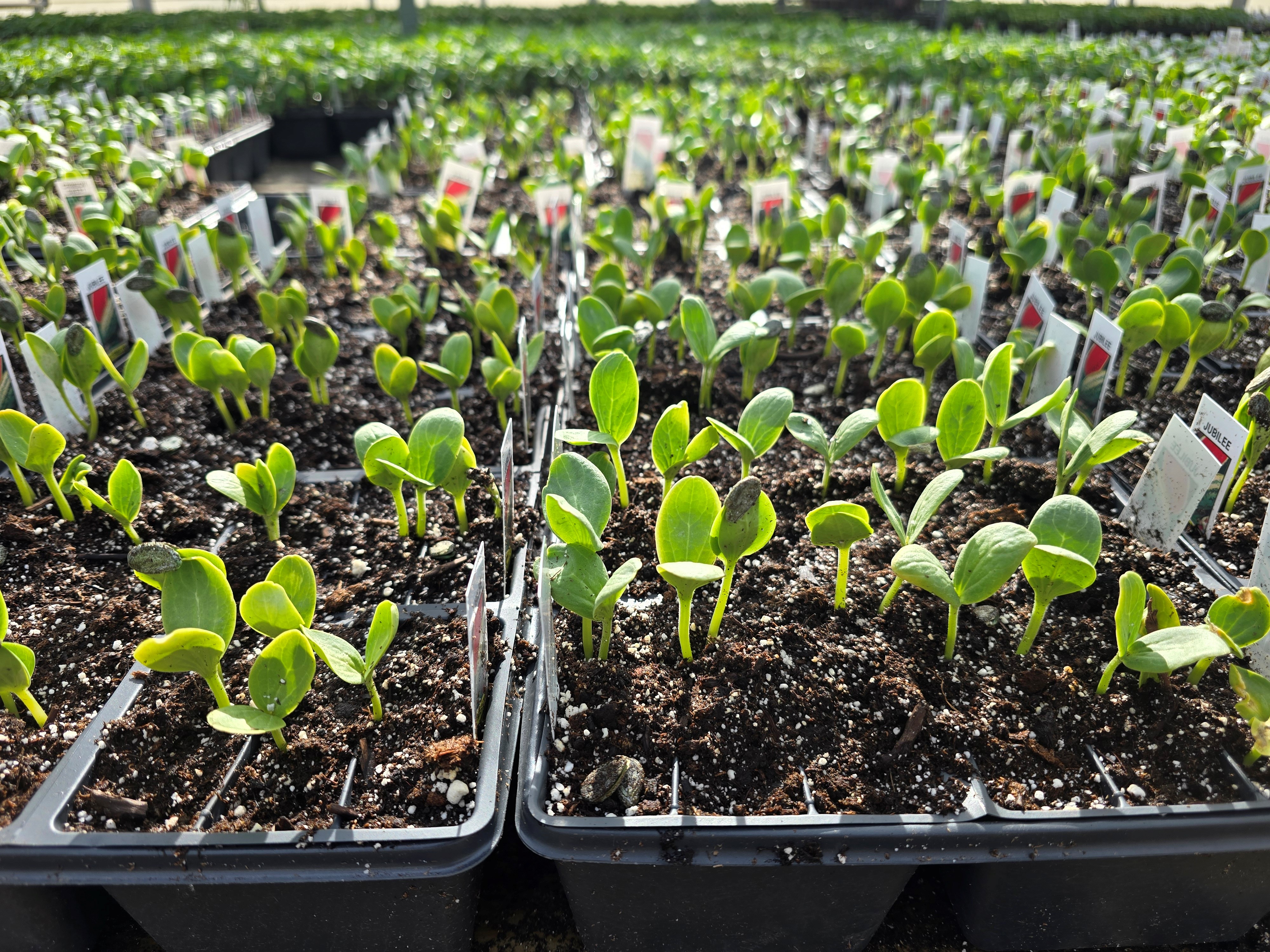
Squash and cucumbers are being planted. Field cucumbers and summer squash are hanging on under low tunnels waiting for the weather to flip. High tunnel cucumbers are at the five- or six-leaf stage.
The FarMore FI400 package for cucurbits is very helpful for seedcorn maggot and striped cucumber beetle, but specialty varieties of cucurbit seed do not always come treated with insecticide. For striped cucumber beetle, it is possible to apply neonicotinoids like imidacloprid or thiamethoxam through trickle irrigation, in or under furrows, as a transplant water drench, a postplant drench or as a subsurface sidedress (in other words, knifed in). These systemic products will provide good early season beetle control.
Brassicas and greens
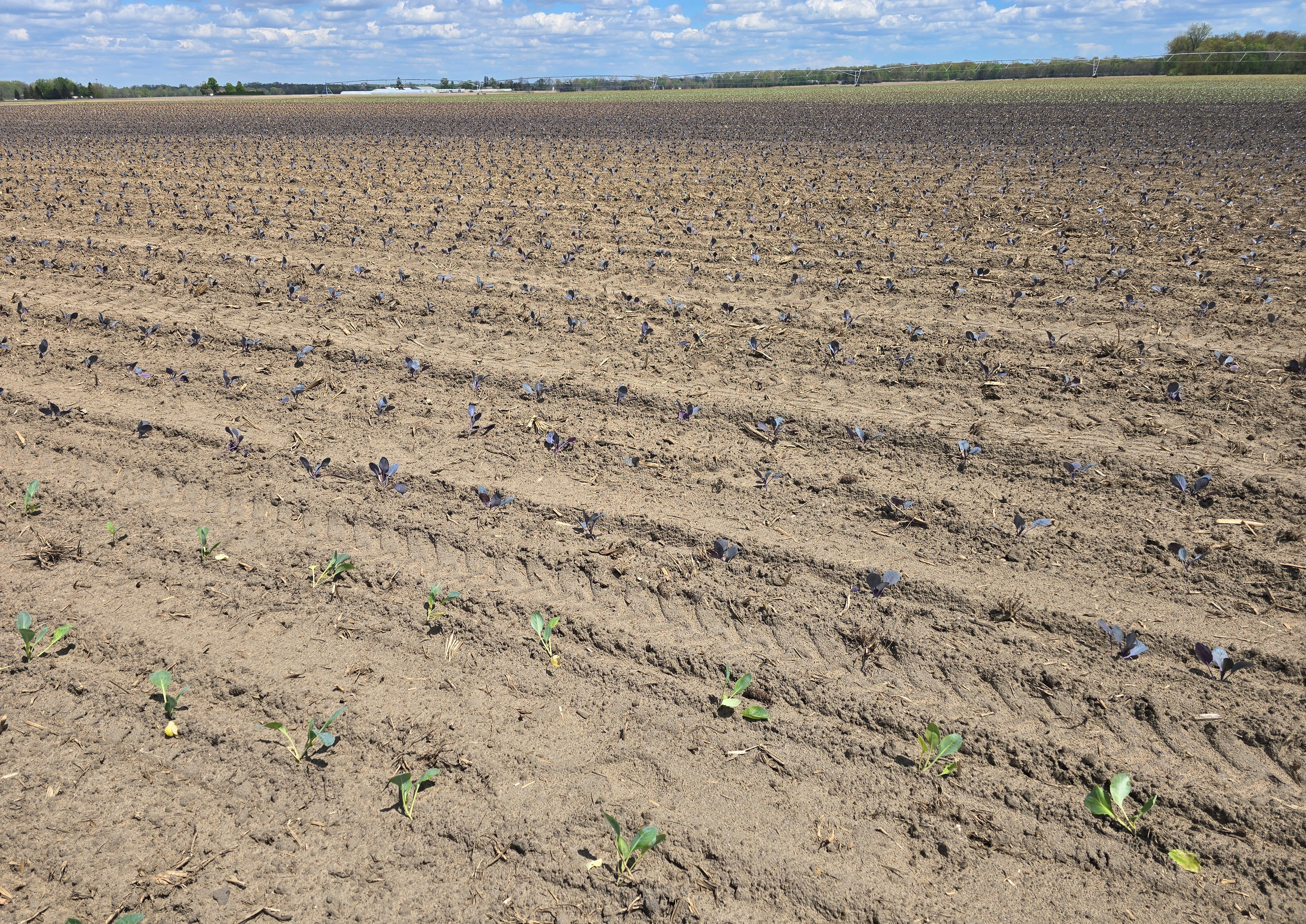
Broccoli, cabbage, cauliflower and other brassicas have all been and continue to be planted. Lettuce and celery transplanting and direct seeding are ongoing.
Battling swede midge? Swede midge activity is expected to increase from mid-May through June in brassica crops. Begin monitoring susceptible crops, including broccoli, cauliflower, cabbage, brussels sprouts and other cole crops for early signs of infestation.
Feeding by swede midge larvae occurs within the growing point and may result in twisted foliage, blind heads, multiple stems, corky scarring and distorted marketable tissue. Swede midge damage to leaves can look similar to hormonal herbicide exposure, whiptail from molybdenum deficiency or cupping from boron deficiency. Mechanical damage during transplanting or stress from irregular moisture or inadequate temperature conditions as seedlings can also cause symptoms similar to swede midge damage.
Because larvae are protected within plant tissue and damage symptoms often appear after larvae have already left the plant, preventative management and early detection are critical. Rotating brassica crops away from previously infested fields for at least two to three years, destroying crop residue promptly after harvest, and controlling brassica weeds and volunteer plants can help reduce population buildup. Exclusion netting may also provide protection for high-value crops when installed before adult emergence. Sequential plantings can sustain overlapping generations throughout the season, so careful field placement and sanitation are especially important.
Researchers at the University of Vermont and Cornell University recently hosted a webinar all about swede midge management. You can watch the recording below:
Fruiting vegetables
Greenhouse tomatoes and peppers are setting fruit, sizing and coloring, with first harvests starting in southwest Michigan. There are about six fruit trusses right now. Tomato transplants are being hardened off for early field plantings and some are being planted under plastic.
Legumes
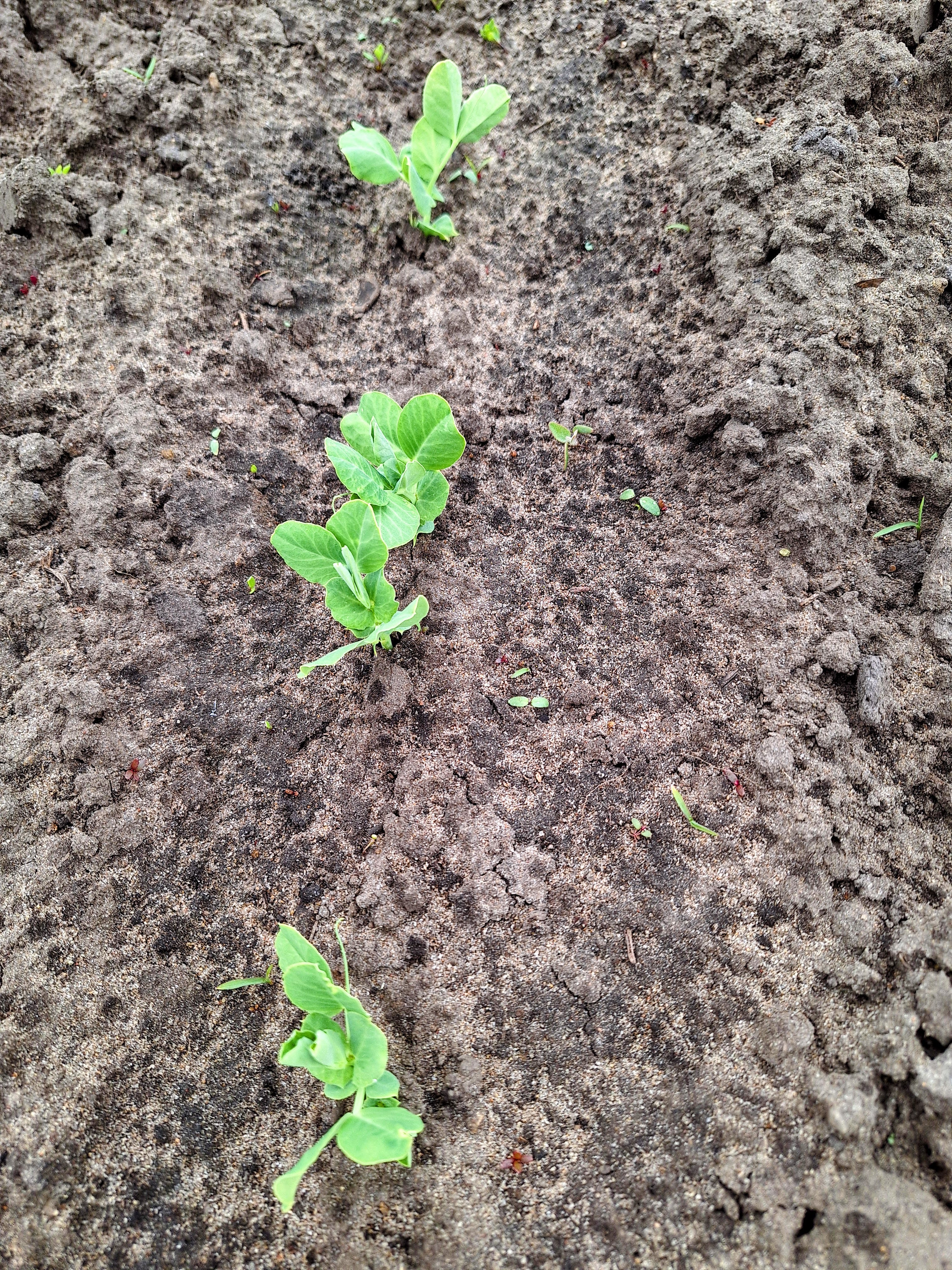
Peas are in and up on some farms. Pea plants have been showing some signs of cold stress with purple coloration on their foliage. Green beans have been planted.
Sweet corn
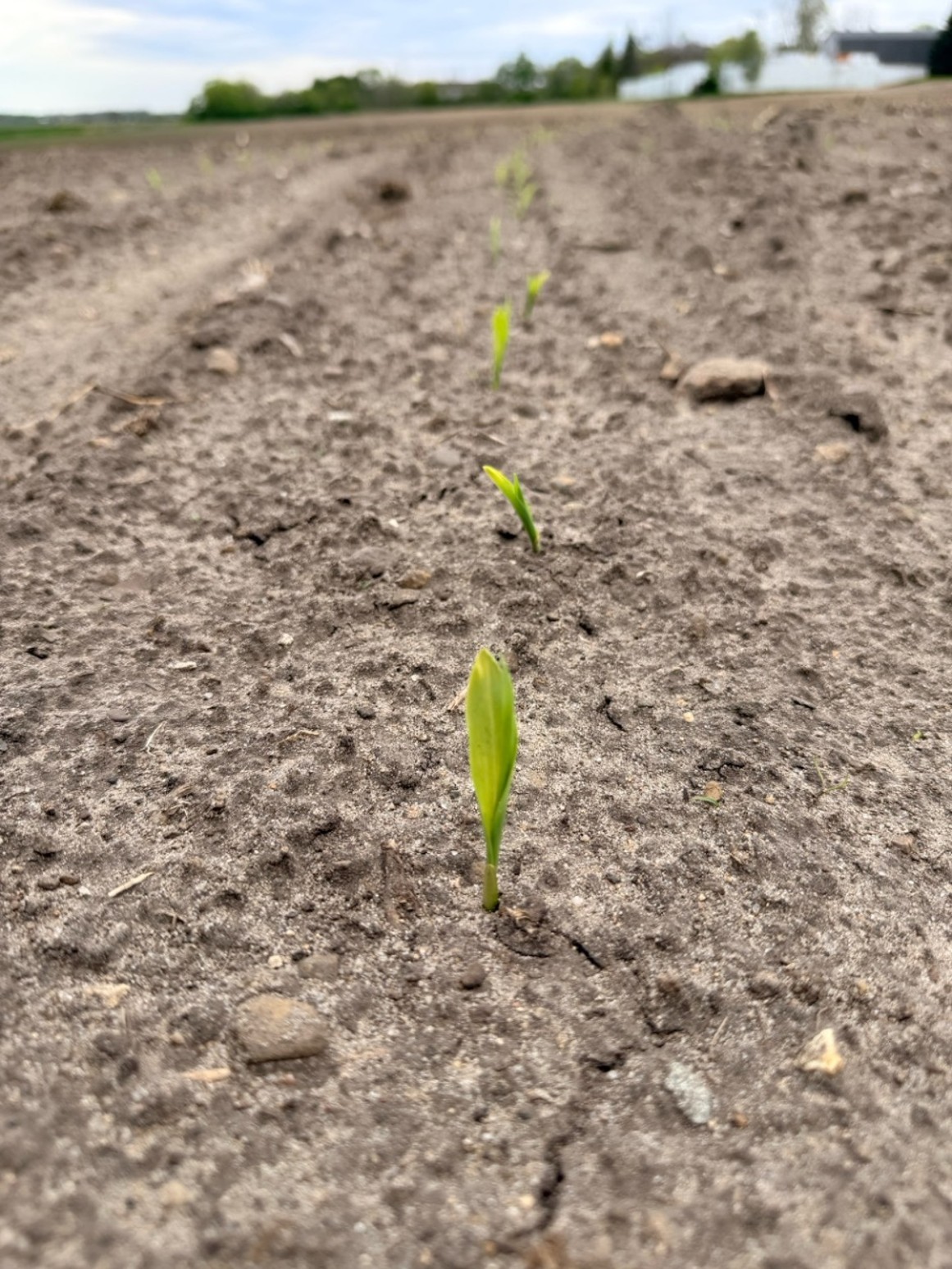
Sweet corn successions are being seeded on many farms. Some young sweet corn seedlings are developing well in some fields.
Produce Food Safety On-Farm Readiness Reviews
Schedule an On-Farm Readiness Review (OFRR) today for a 2-hour educational visit that takes place during the harvest season and is meant to be casual and low stress. Everything discussed during an OFRR is confidential and focused on ways you can reduce your own risks in relation to produce safety. There is no pressure to take our advice either, we are just here to support you in your produce safety efforts!
Submit your ideas for 2026 GLEXPO sessions or speakers
The Great Lakes Fruit, Vegetable and Farm Market Expo (GLEXPO) is a premier conference for fruit, vegetable, horticulture and farmer market growers to see and learn about all of the latest research and innovations in farming. The GLEXPO board along with Michigan State University Extension hosts a variety of educational sessions and discussions to further the knowledge and resources growers need to be competitive in today’s markets. The 2026 GLEXPO will be Dec. 8-10 at the DeVos Place in Grand Rapids, Michigan.
The GLEXPO organizers and Michigan State University Extension would like your ideas as we plan future education sessions. We want to hear from growers and industry members about ideas for topics and speakers that you think would be of value to your farming operations as well as other growers. To facilitate this endeavor, the Great Lakes Expo board has created a fillable online form. Ideas can be submitted year-round via the online form. For ideas to be considered for inclusion in the 2026 education program, they must be submitted by June 12, 2026.
Access the form to submit your ideas
For more information on the Great Lakes Expo, visit https://glexpo.com.
Events
- May 19, 2026: Drip by Drip: Building Irrigation Know-How, Saginaw Valley Research and Extension Center, Frankenmuth, MI
- May 28, 2026: Presenting MI Farm Link: Connecting Farmers to Farmland – (Virtual)
- June 2-4, 2026: 2026 Conservation Drainage Network Annual Meeting – East Lansing, MI
- June 3, 2026: Beginning Farmer Field Day - Agritourism, Farm Marketing, Farm Business Management – Freeland, MI
- June 10, 2026: Food Grade Grains Field Day at Boyer Livestock – Clarklake, MI
- June 17, 2026: Food-Grade Grains Field Day at Kellogg Biological Station – Hickory Corners, MI
- June 17, 2026: Protecting the Farm: Medicaid & What Farmers Should Know - Virtual
- June 18, 2026: Healthy Habitats and Productive Pollinators – Flint, MI
- June 20, 2026: Michigan Farm Bureau Farmers Teaching Farmers Event – Lansing, MI
- June 22-23, 2026: State of the Western Lake Erie Basin Conference – Adrian, MI
- June 29, 2026: Technical Assistance Provider Training for Pay for Performance Program – Adrian, MI
- July 21, 2026: Washtenaw TOPP Farm Tours – Whitmore Lake/Dexter/Willis, MI
- July 31, 2026: Berrien County Organic Agriculture: Tour 3 Value-Added & Agritourism Farms – Sodus/Buchanan/Three Oaks, MI
- August 11, 2026: West Michigan Organic Farm Tour: Explore Farm to Institution Markets from schools to hospitals – Muskegon/Whitehall, MI
- August 18, 2026: Northwest Michigan TOPP Field Day: Farming for People, Purpose, and Profit – Petoskey, MI
- August 20, 2026: Hillsdale Nutrient Management Field Day – Waldron, MI
- August 28, 2026: Washtenaw Conservation District Field Day – Ann Arbor, MI
- September 9, 2026: MSU Extension Monroe County Field Day – Monroe, MI
- September 10-11, 2026: Great Lakes Tek Flex – Benton Harbor, MI
- September 16, 2026: 2026 Midwest Mechanical Weed Control Weed Day – Benton Harbor, MI
- September 22-24, 2026: Farm Science Review 2026 – London, OH
- October 4-6, 2026: Northern Michigan Small Farm Conference – Bellaire, MI
- November 4-6, 2026: Michigan Agritourism 20th Anniversary Convention – Frankenmuth, MI
- December 8-10, 2026: Great Lakes Fruit, Vegetable, & Farm Market Expo – Grand Rapids, MI
This work is supported by the Crop Protection and Pest Management Program [grant no 2024-70006-43569] from the USDA National Institute of Food and Agriculture. Any opinions, findings, conclusions, or recommendations expressed in this publication are those of the author(s) and do not necessarily reflect the view of the U.S. Department of Agriculture.