Michigan vegetable crop report – August 12, 2026
 Print
Print Email
EmailMelon, watermelon and sweet corn harvests are in full swing, with processing tomatoes close behind. Dry conditions are increasing pest pressure, while cucurbit downy mildew nears Michigan and vegetable diseases remain a concern.
Weather
Watch this week’s weather forecast.
Crop updates
Asparagus
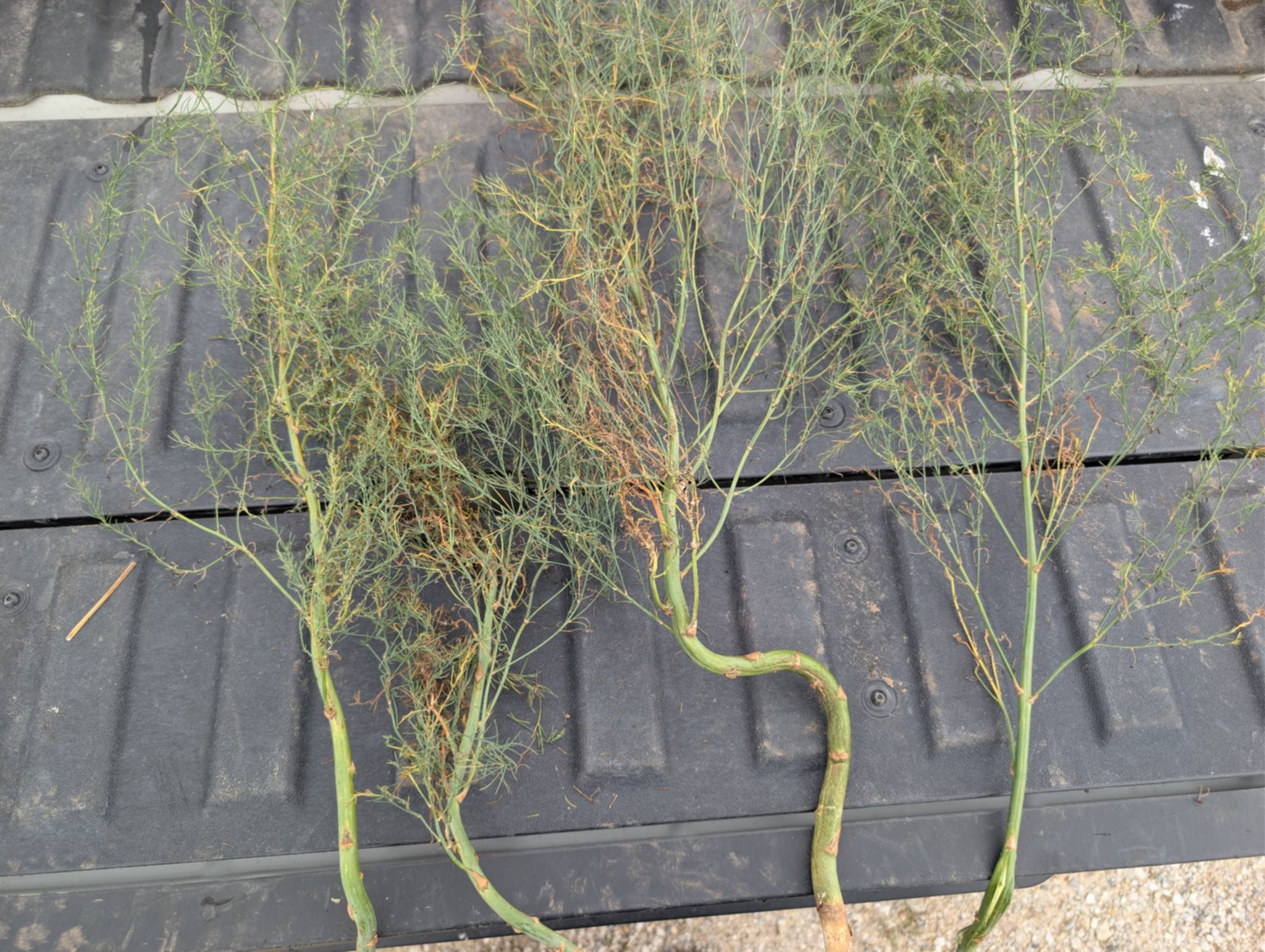
Are you seeing crooked, zig-zaggy asparagus? Auxin herbicide injury in asparagus creates twists and turns. Though not ideal, these symptoms are fairly regular and plants grow out of it.
Brassicas and greens
Downy mildew and black rot have both been reported in cabbage. Black rot is primarily a seed-borne pathogen. Hot water seed treatment is recommended by the Midwest Vegetable Production Guide as a non-chemical approach to prevent this bacterial disease. Different varieties of cole crops also have varying levels of resistance to the pathogen.
Carrots and celery
The leafhopper collection and testing program is winding down for the season. Samples have been collected on a weekly basis this summer by MSU Extension and a scout; leafhoppers have been tested for phytoplasmas by MSU Plant and Pest Diagnostics. Recent results of the samples are listed below, the last four samples had 0% infectivity. To receive this information as soon as it is available, sign up for aster leafhopper text alerts. Those signed up for 2026 will be automatically included in the 2027 season.
Phytoplasma infectivity of aster leafhoppers:
|
County |
Collection Date |
Infectivity (%) |
|---|---|---|
|
Oceana |
August 3 |
0 |
|
Lapeer |
July 30 |
0 |
|
Oceana |
July 28 |
0 |
|
Ottawa |
July 28 |
0 |
|
Newaygo |
July 23 |
4.2 |
Cucurbits
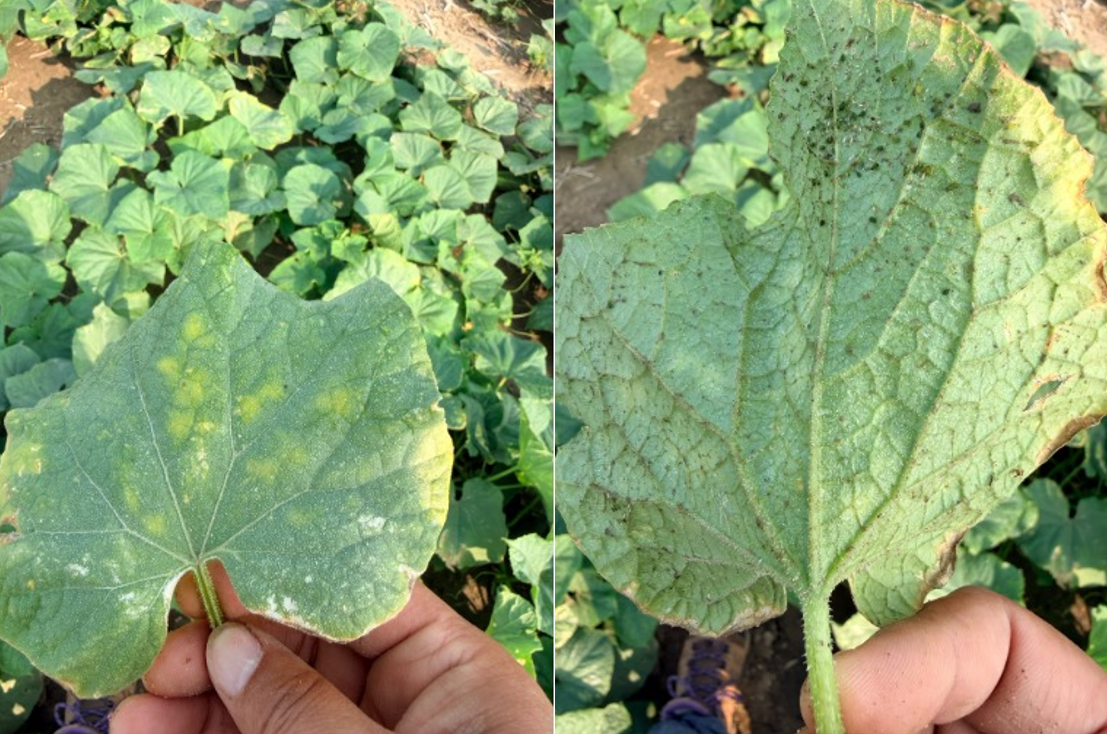
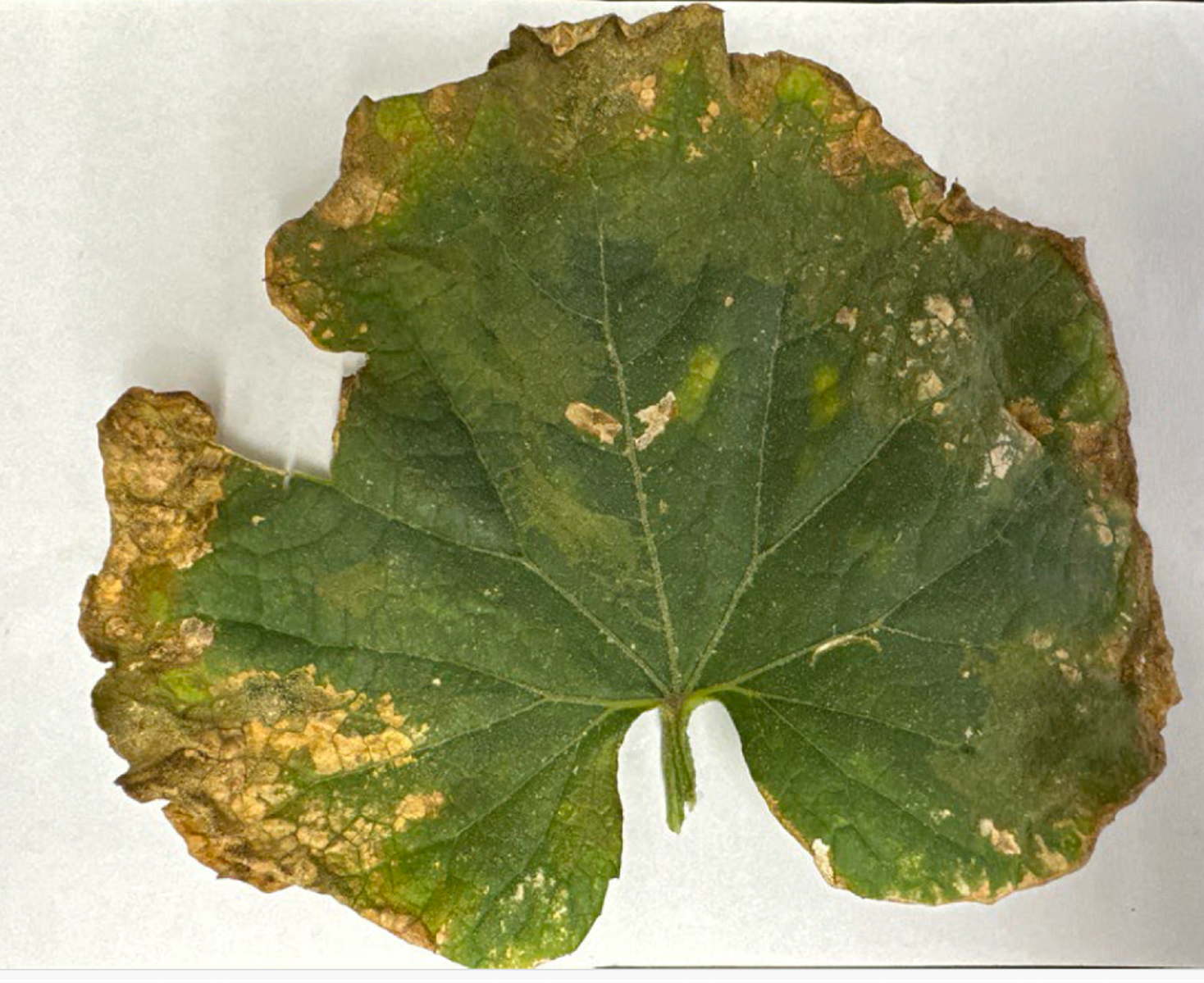
Melon and watermelon harvests are in full swing! Cucumber beetles have been noted as being bad this year. Some areas of the eastern part of the state have been very dry, with little or no rain. These areas are reporting active cucumber beetle and squash bug issues in cucurbit crops. Foliar lesions on cucumbers caused by Alternaria, Colletotrichum, and Didymella and other pathogens commonly develop later in the season. We urge caution and suggest that you look carefully at symptoms and signs (look for sporulation) to differentiate these symptoms from those caused by cucurbit downy mildew.
Pumpkins maturing early can be a result of planting too early, stressed plants racing to maturity, or other factors. If you find yourself with orange pumpkins earlier than your market will accept, it can pay to be strategic in order to minimize losses before they can be sold. Keep the fruit dry to the best of your abilities. Instead of piling in bins, set the pumpkins side-by-side under cover to maintain good airflow. In this manner you can also remove pumpkins that are beginning to show signs of post-harvest rotting. By taking steps to maintain fruit quality in storage, you can ensure early harvested fruit can last until the demand for fall decor and halloween decorations is back.
Have you ever wondered about the historical average yields of watermelon? The Southwest Purdue Agricultural Center in Vincennes, Indiana, conducts variety trials every year. You can find all of their reports dating back to 2016.
Cucurbit downy mildew spores continue to be captured across Michigan State University’s Trap Network. To date, all spores are clade 2, which affects cucumbers and melons. Clade 1, which affects pumpkins and squash, has not been detected (and only occurs some years in Michigan). Read this article for more information and a list of effective fungicides. As always, you can track the spread of downy mildew with the Cucurbit Downy Mildew Forecasting website.
The first symptoms of cucurbit downy mildew disease on cucumber plants in a commercial field planting were verified in LaGrange County, Indiana on July 29, 2026, and in Fulton County, Ohio on Aug. 11, 2026. Both counties border Michigan, and growers should expect to see the first field downy mildew symptoms sometime soon with the recent milder temperatures and rainfall. Check the latest article on downy mildew.
Fruiting vegetables
Harvest of processing tomatoes is planned to start soon. Scarring and misshapen fruit has been reported on eggplant. Early thrips feeding on young fruit can lead to these symptoms as the eggplant develops.
Michigan’s potato late blight map is available through MSU Enviroweather. The Vegetable Disease and Insect Forecasting Network from the University of Wisconsin Extension is another online tool for determining the risk for late blight and other vegetable pests in the Upper Midwest.
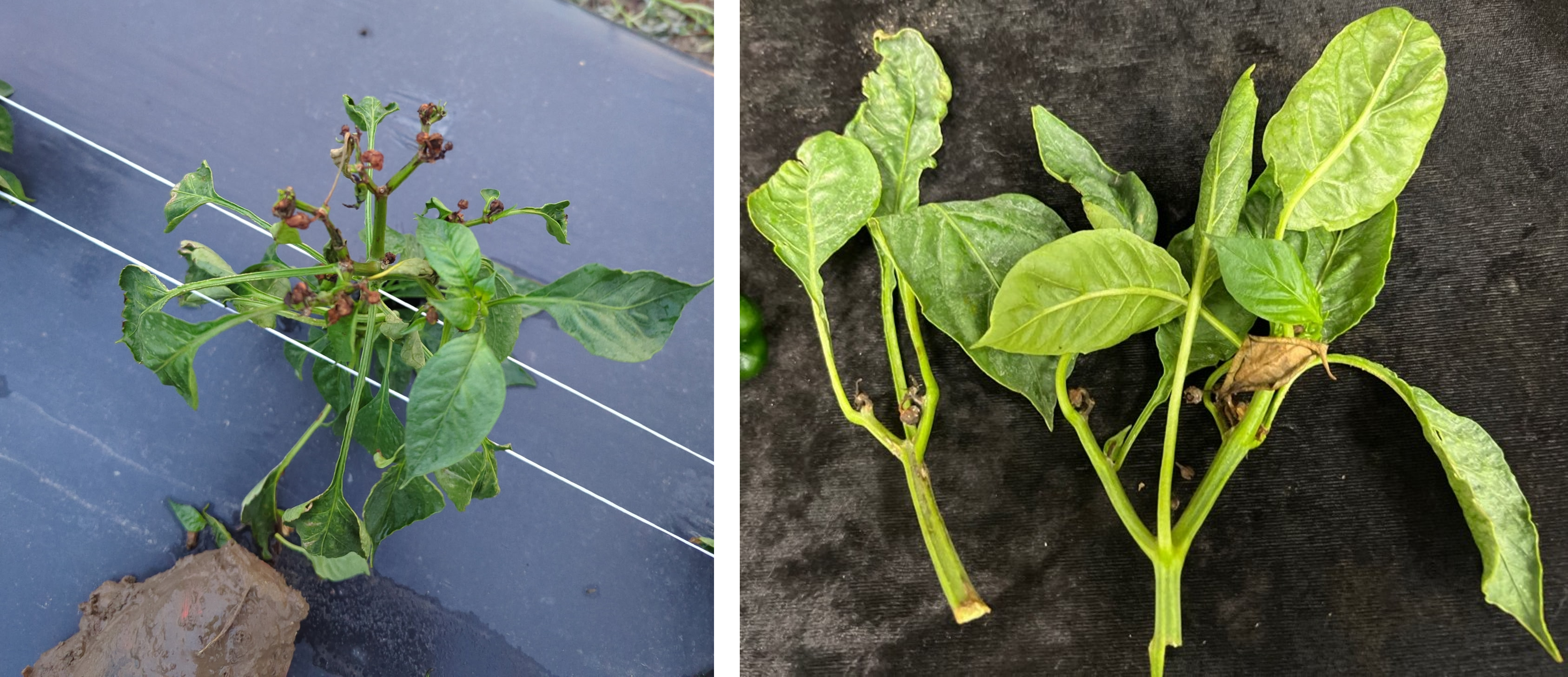
Tomato necrotic spot virus was detected in samples of both tomatoes and peppers. Damage was severe and widespread in the field. This pepper case was confirmed after a similar case in tomatoes was discussed in our July 29 report.
Garlic and onions
A recent question from the world of growing vegetables: Can garlic be grown from true seed? Not cloves or bulbils but actual seeds?
The short answer is yes. However, germination rates can be very low and getting a harvestable bulb takes longer than if planting seed garlic, or cloves. Getting garlic to produce seed is an involved process and often the small amount of seed yielded may have low viability and plant vigor. Garlic is much more reliable and efficiently grown from cloves.
Sweet corn
Harvests are in full swing! As thrips, aphids, and mites can be worse in a dry year, so can bird damage. Sweet corn growers are seeing more bird damage as successively planted crops mature in sequence. It is as though the dinner bell is eternally ringing.
Corn earworm was present at low numbers at traps MSU Extension and partner farms are monitoring.
To our south, corn earworm was present at very low numbers in Ohio State University’s trapping network, as of Aug. 9.
Table 1. Corn earworm captures. Total in trap for week1 (avg # per night2).
|
Week |
Ottawa Co.4 |
Allegan Co.4 |
Oceana Co.4 |
Washtenaw Co.3 |
Monroe Co.3 |
Saginaw Co.3 |
Lapeer Co.3 |
Genesee Co.3 |
Midland Co |
|---|---|---|---|---|---|---|---|---|---|
|
June 28 |
15 (1.5) |
|
- |
- |
- |
- |
- |
- |
- |
|
July 5 |
15 (1.5) |
|
0 |
- |
- |
- |
- |
- |
- |
|
July 14 |
15 (1.9) |
|
5 (0.8) |
0 |
- |
2 (0.2) |
6 (0.8) |
1 (0.1) |
- |
|
July 21 |
10 (1.4) |
19 (2.7) |
8 (1.1) |
0 |
0 |
10 (1.4) |
1 (0.1) |
0 |
1 (0.1) |
|
July 28 |
10 (1.7) |
17 (2.4) |
17 (2.4) |
0 |
0 |
4 (0.6) |
0 |
0 |
1 (0.1) |
|
August 4 |
4 (0.8) |
- |
13 (1.9) |
0 |
2 (0.3) |
2 (0.2) |
0 |
0 |
1 (0.1) |
|
August 11 |
- |
- |
- |
1 (0.1) |
2 (0.1) |
1 (0.1) |
0 |
0 |
0 |
1Total number collected since last trap check; 2The total number divided by the number of nights since the last trap check; 3Cloth Heliothis traps track trends but catch less moths overall; 4Wire Harstack traps capture more moths.
Pay-for-Performance Program
The Pay-for-Performance (PfP) Program, led by Michigan State University’s Institute of Water Research in partnership with the Michigan Department of Agriculture and Rural Development (MDARD), provides financial incentives to farmers who implement conservation practices that improve water quality. Rather than paying solely for adopting conservation practices, the program rewards environmental outcomes by estimating the phosphorus reductions achieved on participating fields. Eligible practices include cover crops, reduced tillage, nutrient management, conservation crop rotations, drainage water management, filter strips, and conservation land set aside.
The program is currently available to eligible corn, soybean, wheat, and hay producers within the Western Lake Erie Basin in Southeast Michigan. Farmers interested in enrollment opportunities, eligibility requirements, and incentive payments are encouraged to visit the PfP website at iwr.msu.edu/pfp or contact David DeYoung at deyoun59@msu.edu or Chris Galbraith at galbra53@msu.edu for more information.
Produce Food Safety On-Farm Readiness Reviews
Schedule an On-Farm Readiness Review (OFRR) today for a two-hour educational visit that takes place during the harvest season and is meant to be casual and low stress! Everything discussed during an OFRR is confidential, and focused on ways a grower can reduce their own risks in relation to produce safety. There is no pressure to take our advice either, we are just here to support you in your produce safety efforts!
Events
- August 18, 2026: Northwest Michigan TOPP Field Day: Farming for People, Purpose, and Profit – Petoskey, MI
- August 20, 2026: Hillsdale Nutrient Management Field Day – Waldron, MI
- August 28, 2026: Washtenaw Conservation District Field Day – Ann Arbor, MI
- August 30, 2026: Bee Palooza - East Lansing, MI
- September 1, 2026: U.P. Potato Field Day – Chatham, MI
- September 3, 2026: Cover Crop Workshop 2- Incorporating Principles of Regenerative Agriculture to Make My Farm More Resilient and Successful- Frankenmuth, MI
- September 3, 2026: Fourth Annual KBS LTAR Field Day - Hickory Corners, MI
- September 9, 2026: Tillage & Soil Health Field Day – La Salle, MI
- September 10-11, 2026: Great Lakes Tek Flex – Benton Harbor, MI
- September 16, 2026: 2026 Midwest Mechanical Weed Control Weed Day – Benton Harbor, MI
- The Midwest Transition to Organic Partnership Program (TOPP) has provided funding to cover admission for any Illinois or Indiana grower and the first 50 Michigan farmers interested in attending this year’s event. Illinois farmers, please use the coupon code ILLINOIS26 when registering. Indiana growers, please use the coupon code INDIANA26, and Michigan farmers please contact Mariel Borgman at mborgm@msu.edu for coupon code.
- September 22-24, 2026: Farm Science Review 2026 – London, OH
- October 1, 2026: “I have no fogging clue!” Greenhouse Workshop - Deneweth’s Garden Center, Macomb, MI
- October 4-6, 2026: Northern Michigan Small Farm Conference – Bellaire, MI
- Michigan's Emerging Farmers team is funding 20 farmers to attend this. Funding support will include conference registration fees (including the Sunday farm tour), lodging near the conference, two shared meals, and a stipend to support participants that can be used to cover travel costs. Farmers and producers can apply by Aug. 20. After the short application is submitted, applicants will be notified of their award by Aug. 21 and be asked to accept it and register with the Michigan's Emerging Farmers team by Aug. 30. Accepted participants will be required to attend the full conference (Sunday-Tuesday) as well as a networking lunch with other participants and NIFBE MEF team members, and complete a post-conference survey. A pre-conference virtual orientation session will be optional for participants.
- November 4-6, 2026: Michigan Agritourism 20th Anniversary Convention – Frankenmuth, MI
- December 8-10, 2026: Great Lakes Fruit, Vegetable, & Farm Market Expo – Grand Rapids, MI
This work is supported by the Crop Protection and Pest Management Program (grant no 2024-70006-43569) from the USDA National Institute of Food and Agriculture. Any opinions, findings, conclusions, or recommendations expressed in this publication are those of the author(s) and do not necessarily reflect the view of the U.S. Department of Agriculture.