It’s a Wrap: Tall Timber Exhibition Draws Diverse Audiences and Dynamic Programming to Downtown Detroit
 Print
Print Email
EmailHosted by MassTimber@MSU and Michigan Department of Natural Resources, the traveling Tall Timber: The Future of Cities in Wood exhibition saw over 1000 visitors during its 3-month run in downtown Detroit.
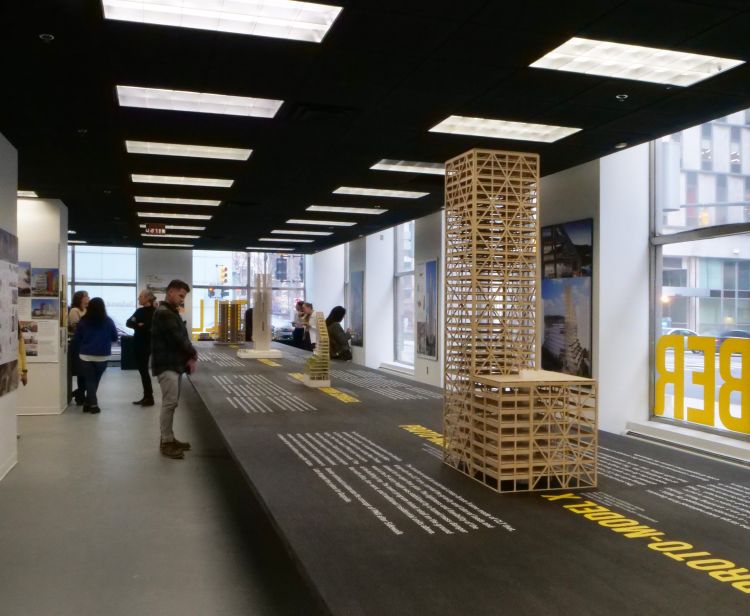
In March, we closed out the three-month run of the Tall Timber: The Future of Cities in Wood exhibition in downtown Detroit. Over the course of the exhibition, more than 1,000 visitors, including students, policymakers, industry professionals and members of the public, walked through the doors to experience the exhibit and participate in its programming. We are deeply grateful to everyone who attended events, toured the exhibit, and helped bring energy and momentum to the space, creating a vibrant forum for learning, connection, and collaboration around the future of mass timber. 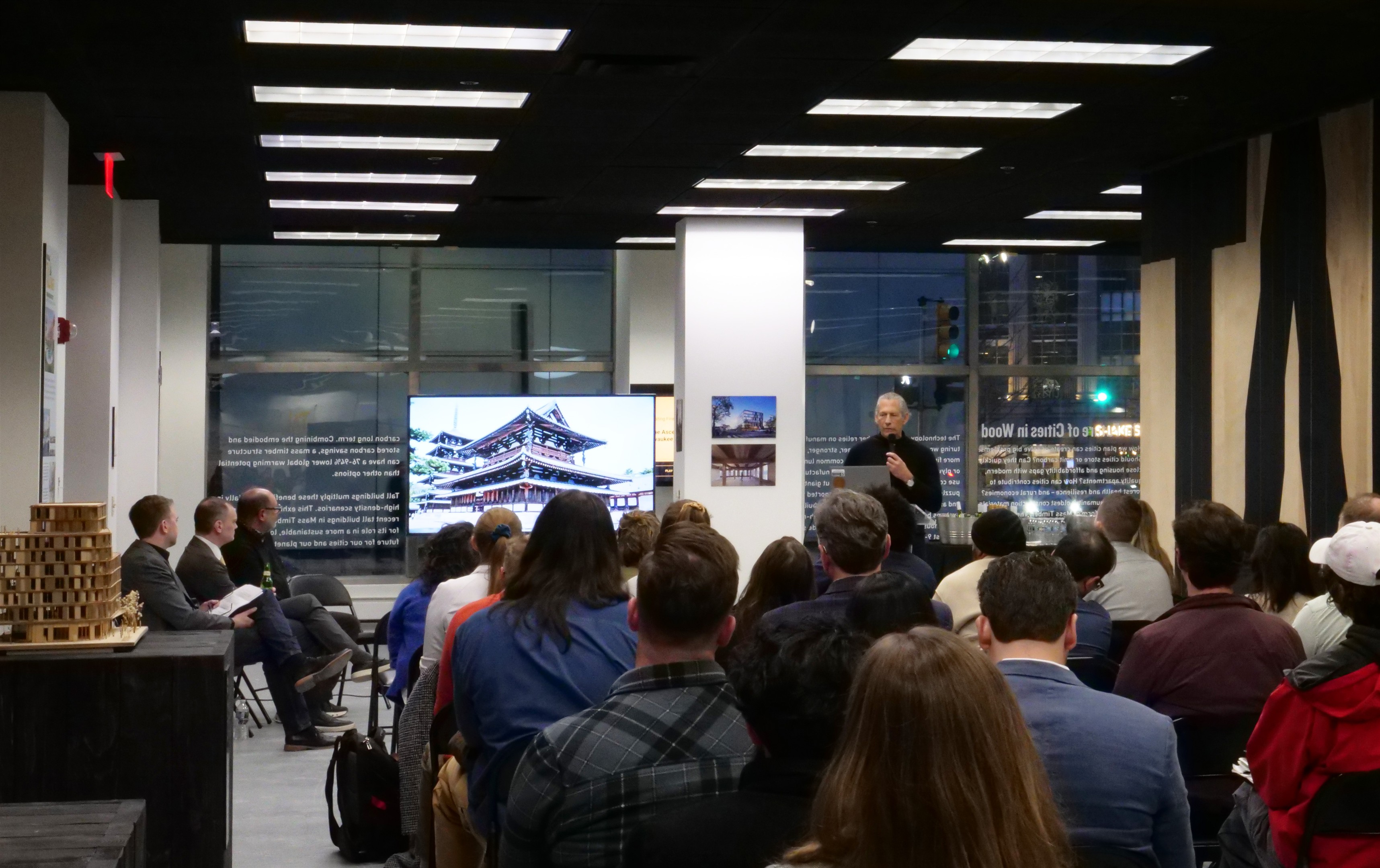
We want to thank our collaborator, Michigan Department of Natural Resources, for co-hosting this exhibit alongside MassTimber@MSU. We also extend our sincere appreciation to our outstanding sponsors: ROSSETTI, Bedrock Detroit, Northern Midwest Regional Council of Carpenters, The Christman Company / Christman Constructors, Inc., and Metro Signs & Lighting, for their invaluable support in transforming our vision for this space into a reality.
Together, we brought Tall Timber: The Future of Cities in Wood to the heart of the city to introduce the possibilities and future of mass timber. Through architectural models, material samples, drawings, videos, and photography, the exhibit showcased some of the most innovative and beautiful examples of buildings designed and constructed using mass timber systems. The space offered visitors a tangible look into how wood construction can contribute to healthier, more sustainable, and more vibrant communities.
To highlight Michigan’s mass timber leadership, the exhibit also spotlighted 10 mass timber projects from across the state, demonstrating the diversity of building types and communities already embracing wood construction. Featured projects included Vineyard View Apartments by Home Stretch Non-Profit Housing; Mitchell Elementary School by Neumann/Smith Architecture; KRESA Career Connect Campus by Wightman; MSU STEM Teaching and Learning Facility by Integrated Design Solutions; A.B. Ford Community Center by Inform Studio; Stine Community Park Rink by OHM Advisors; Western Michigan University Student Housing by Hanbury; MiDNR Newberry Customer Service Center by Lord Aeck Sargent; University of Michigan College of Pharmacy by RDG Planning & Design; and Griffith Veterinary Hospital by Heid Architects.
Beyond serving as a display of inspiring projects, the exhibition space served as a dynamic hub for learning. Through a diverse range of programming, practitioners from across disciplines utilized the exhibit space to share knowledge, exchange ideas, and explore the future of wood construction. Architectural firms working on successful mass timber projects offered insights and lessons learned on bringing these buildings from concept to completion. Structural engineers discussed design considerations and emerging innovations, while construction professionals, including carpenters and millwrights, highlighted the workforce skills and opportunities developing 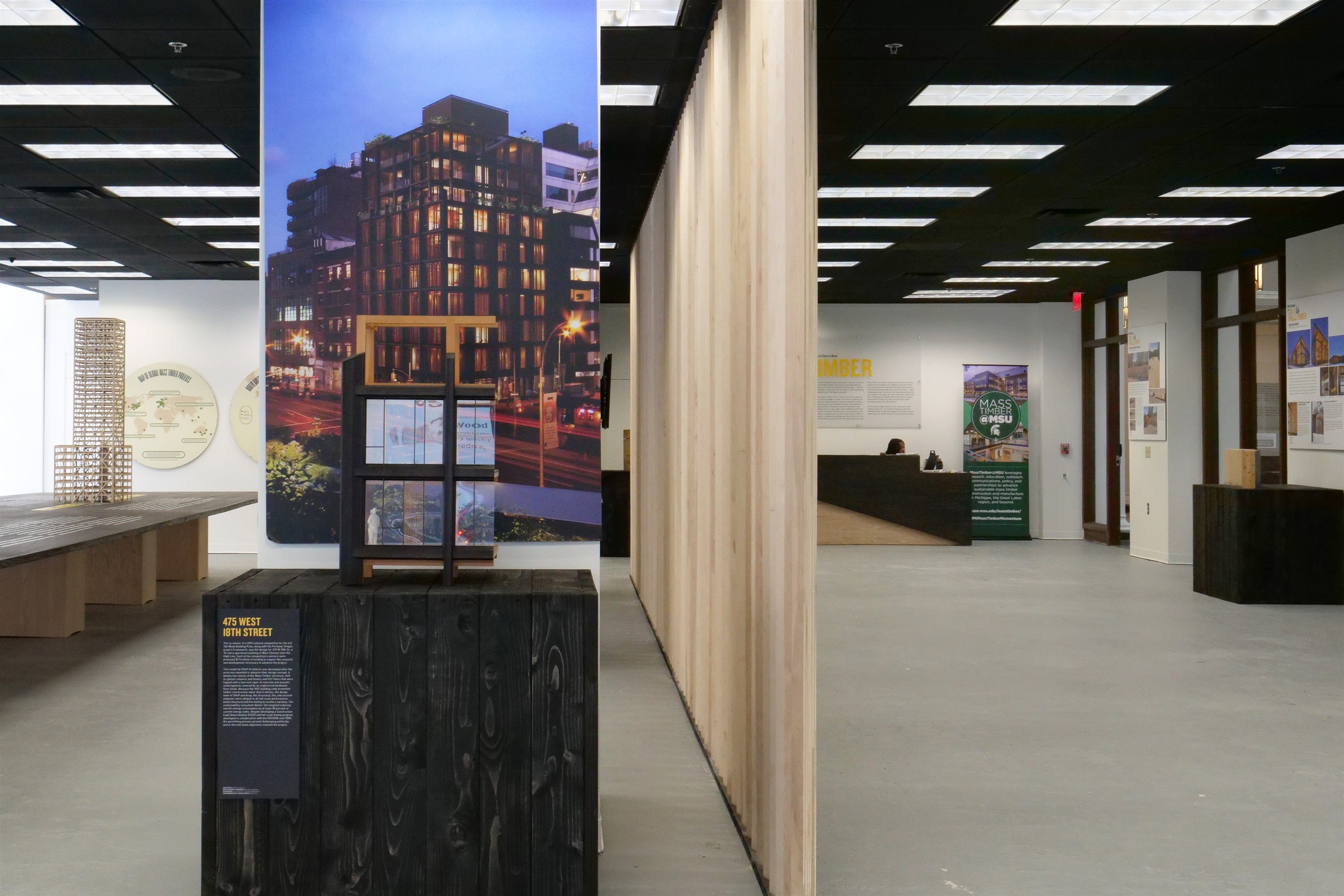 alongside the growth of mass timber. Conversations also extended to developers, policymakers, students, and community members, creating an environment where new perspectives could intersect and spark fresh ideas. Together, these gatherings helped strengthen a growing community of practice around mass timber across Michigan.
The enthusiasm and collaboration witnessed throughout the exhibit reaffirm that Michigan is well-positioned to expand the role of mass timber in the built environment and local economies. With more than 65 mass timber projects in the pipeline across the state, Michigan has built a strong foundation to continue accelerating this momentum. By convening leaders across design, construction, forestry, and policy, Tall Timber: The Future of Cities in Wood helped catalyze new partnerships and ideas that will carry this progress forward, both within Michigan and across the Great Lakes region, advancing resilient communities, strengthening local industries, and supporting a more sustainable, wood-based future.