Is my baby ready for “real” food?
 Print
Print Email
EmailSimple tips for introducing solid foods to your child.
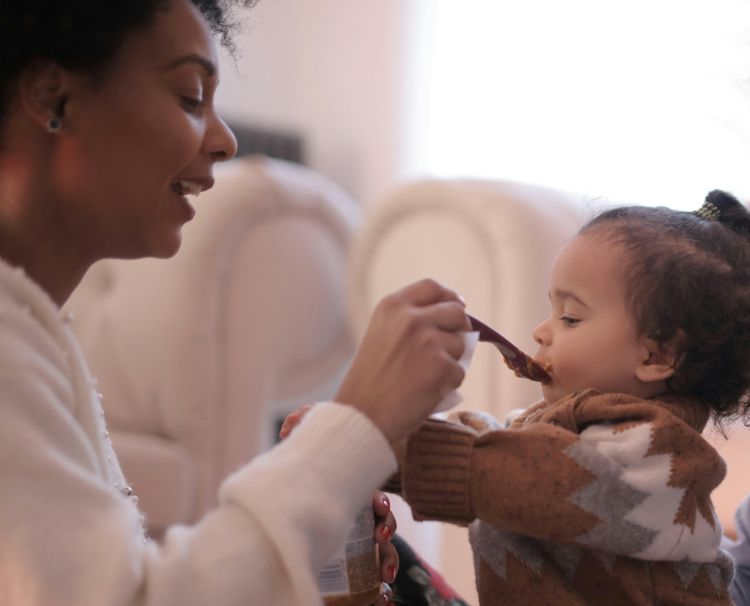
One of the most exciting milestones for parents is the introduction of solid food into their child’s diet. Unfortunately, parents quite often receive an overwhelming amount of information during this transition, which may not be grounded in sound scientific evidence. The American Academy of Pediatrics recommends introducing children to foods other than breast milk or infant formula at about 6 months. How do parents know if their child is ready for solids?
There are certain developmental signs that your child is ready to start solids. Here’s a short list of signs.
- The first sign is when the baby can sit up alone and has good self control of their head and neck.
- Another sign is that the baby is interested in food and they open their mouth when food comes their way.
- If your child can they take food off a spoon, and keep it in their mouth, and move it to the back of their throat for swallowing, this is a sign they are ready for solid foods.
- Finally, if the baby has doubled their weight and is greater than 13 pounds, that is often a sign they are ready for solids.
Usually, children start eating solids between four to six months of age, but every baby is different. Try to introduce new foods when your baby is well rested and happy. If your baby rejects your efforts at introducing solids give them a week and try again.
As your child develops through their first year they move from exclusive breast or bottle feeding to eating table foods and being part of the family meal. There are several factors to consider as your child makes this transition. The first thing to consider is what foods to introduce first. There is no specific order in which foods need to be introduced. First foods might include fortified rice or oat cereals, vegetables, fruits, meats, yogurt or cheeses.
As you begin to introduce new foods, it is important to introduce one food at a time and wait three to five days before introducing another. Monitor your child for any signs of allergies such as diarrhea, vomiting or rashes. If your baby shows any of these signs, discontinue this food and discuss it with your health care provider. It is no longer the recommendation to delay the introduction of eggs, dairy, soy, peanut products or fish beyond 4-6 months unless your baby has severe eczema or a family history of allergy.
Food textures also play an important role in babies’ acceptance of foods. Typically babies prefer to begin with soft, smoother textures and gradually move toward thicker consistencies. Around nine to 12 months, your baby will be ready to start trying some finger foods and feeding themselves. Although it may seem that your child is getting more food on their outside than inside this is an important developmental milestone that will be well worth the mess in the end.
Be aware of choking hazards such as round, slippery or sticky foods. Some examples of choking foods include popcorn, peanuts, grapes, cherry tomatoes, hard candies and peanut butter. Avoid these foods until the child is 4 years old or cut them carefully to avoid choking dangers.
Allow your child to set the pace with feedings. Offer nutritious foods two to three times per day, but let your child decide how much, or if they eat at all. Breast milk of infant formula will still provide for the bulk of your child’s nutrition needs for the first year. Feeding is a new adventure for both the child and parents, so enjoy this fun time in your child’s life.
Michigan State University Extension offers a variety nutrition and food related programs at no cost to help you build healthier habits for your family.