Blending production and conservation: How a market vegetable farm integrated native plants
 Print
Print Email
EmailThis project highlights the potential for integrating native plants into existing vegetable farms.
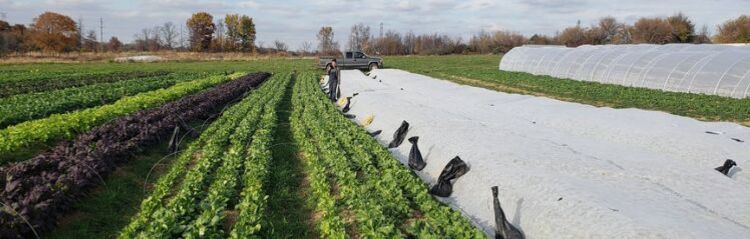
Helen Chandler has been farming diverse vegetables for market for 16 years. In 2017, she started running Lake Divide Farm, a 54-acre certified organic farm in Jackson County, Michigan. She produces a variety of vegetables for sale at Eastern Market in Detroit and various wholesale outlets, with brassicas as core crops. Alongside the vegetable business, Chandler has long envisioned for something more: habitat for native insects, plants and wildlife, and a way to contribute to Michigan’s growing need for native seeds. In 2025, she began turning that vision into a working part of her farm.
“The stewardship component of farming is central to my interest in growing food. I hope to understand the viability of growing, collecting and selling native flower seed while also running a vegetable business.” Helen Chandler
Chandler’s goals were both ecological and practical. She wanted to contribute to Michigan’s growing demand for native seeds, create habitats for pollinators and wildlife, and test whether native seed production could become a viable addition as an additional income stream to her vegetable operation.
Site selection
Lake Divide Farm encompasses 36 tillable acres, about half of which are actively managed for vegetable production. The remaining half rotates through cover crops and fallow periods. When selecting sites for the native plantings, Chandler focused on areas that were less ideal for vegetable production but still easy to maintain. She prioritized locations that met the following criteria:
- Easy to care for without interrupting vegetable production
- Easy to irrigate, observe and harvest
- Compatible with native plant species needs
- Close enough to daily work areas to stay on her radar
Two areas of the farm were selected for the project. Site 1 had been part of the vegetable rotation, but it was too slow to dry in spring and carried a history of Alternaria leaf spot, a common fungal disease that causes problems for brassicas but not for native plants. Site 2 was a narrow, short field that was difficult to work efficiently with a tractor. Both sites had sandy loam soils, minimal sloping, and easy access for irrigation and monitoring—ideal qualities for the native plants. Soil tests from 2023 revealed no issues that influenced the site decisions.
Site preparation
Site preparation was one of the most labor-intensive parts of the project, but also the most important. Chandler wanted the native plantings to establish cleanly without adding weeding pressure during the vegetable season; therefore she invested heavily in weed control and soil preparation upfront.
Site 1 was in vegetable production in 2024, followed by a long fallow period until July 2025, which helped reduce weed pressure. Chandler disced the area in early July and plowed later that month, followed by additional discing, bed forming and rototilling. In late September, final preparations were done—a final cycle of bed forming and rototilling, ground cloth and irrigation. Most of the ground cloth came with pre-burned holes, lessening the preparation time. Irrigation lines included three lines of drip irrigation with eight emitters under the fabric for each bed. Plugs were installed just two days later.
Site 2 underwent a full year of preparation, beginning with a fall plow in 2024. In May 2025, Chandler disced and plowed the area, followed by two additional disc passes. Buckwheat cover crops were then planted in June. In July, the site bed was formed and rototilled to incorporate nutrients, and the aisles were cultivated. Chandler then grew cabbage and radish on the site from July through November, using the crop cycle to suppress weeds and build soil structure.
Weather held in her favor, as she was able to get an additional discing and mowing period before winter. Spring 2026 will bring final bed preparations—additional bed forming, rototilling and laying of ground cover to fully inhibit weeds before planting Lupine perennis transplants.
Ground cover considerations
Chandler evaluated several options for weed suppression—bare ground, organic mulch and ground cloth—and ultimately chose ground cloth because it required the least ongoing maintenance. Bare ground would have demanded regular cultivation and weeding, and straw mulch would still have required hand-weeding along with annual reapplication. The ground cloth may still require hand weeding twice per year, but only immediately around the plant.
She used 4-foot-wide ground cloth with pre-burned holes spaced at 10 inches, arranged in three rows per bed. For species that needed wider spacing, holes were burned using a handheld torch and premeasured pipe. The beds were raised 5.5 feet on center to improve drainage and spring soil warming and had flat aisles.
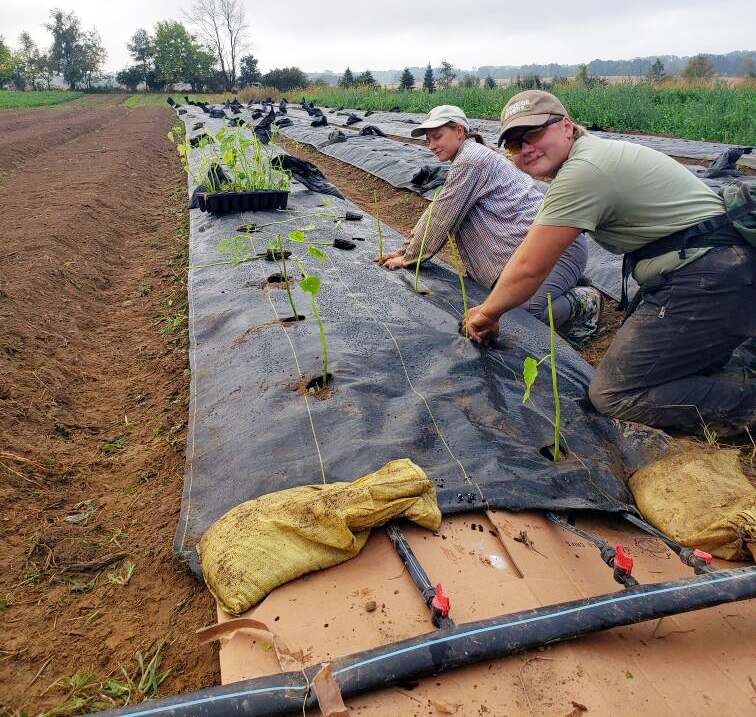
The pre-burned ground cloth, however, was only available in 4-foot widths, leaving the aisles uncovered and cloth edges exposed to the wind. Chandler covered the aisles with pre-used ground cloth she already had on hand, and held the bed cloth in place with sandbags, though strong fall winds still pulled the cloth loose. Re-aligning the cloth holes with the plants became a recurring frustration. In hindsight, she determined the wider cloth would have been worth the extra time it would have taken to burn all the holes by hand, simply for the improved anchoring and full aisle coverage.
All preparations were completed with standard farm equipment: an 8-foot Alis Chalmers disc, a 4-foot Taylor Way rototiller, and a Buckeye bed former. No specialized tools were necessary.
Plant selection
Chandler’s plant list was shaped by both the ecological goals and practical considerations of her farm’s needs. She consulted Native Connections, Michigan Wildflower Farm and Wildtype Nursery, evaluating each species for:
- Seed value and marketability
- Estimated yield
- Ease of harvesting and cleaning
- Availability of parent material
- Site compatibility
Because the sites had a broad range of habitat conditions, she was not heavily limited by site compatibility, though Chandler did avoid shade-loving plants that would not thrive in the open fields.
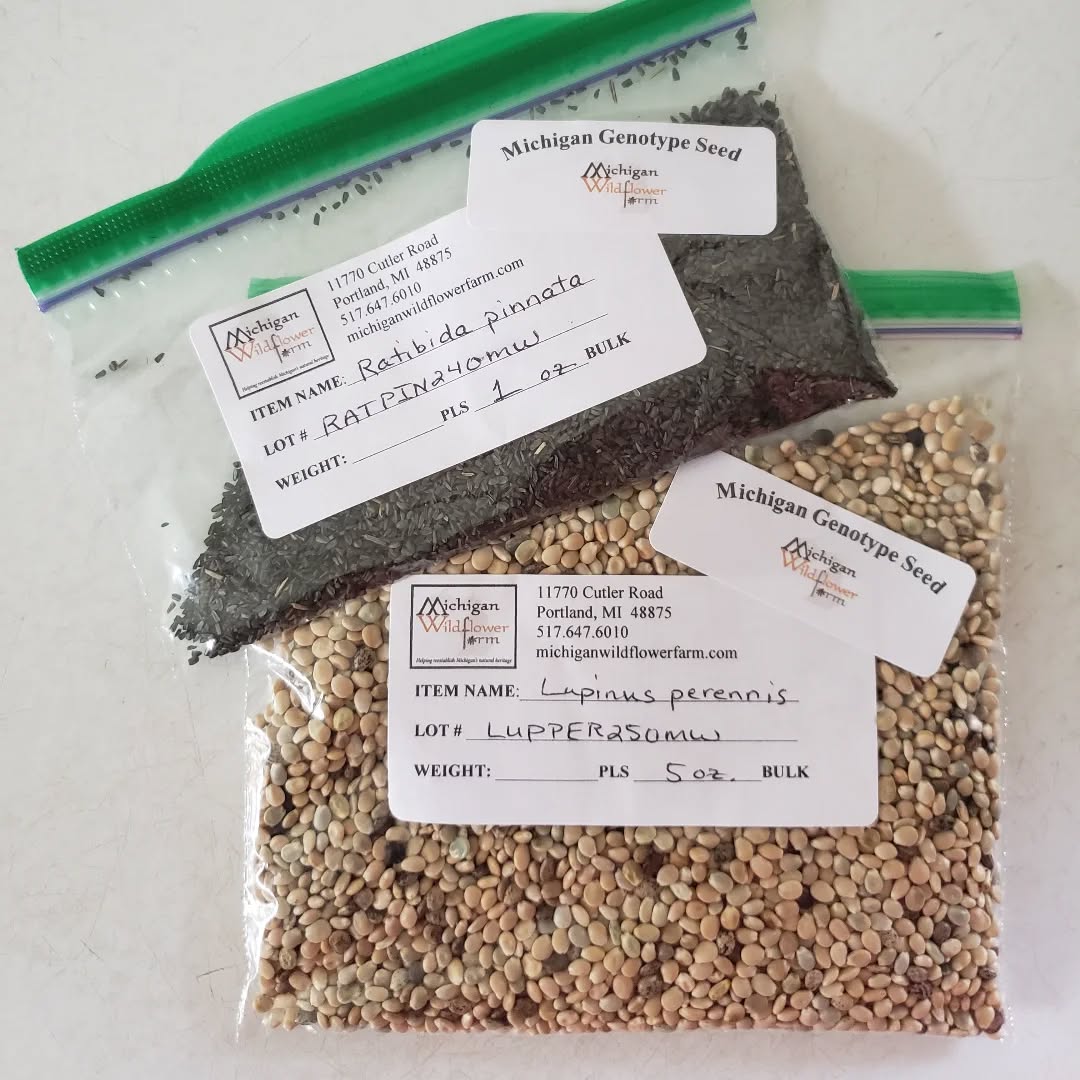
The final species list included:
- Lupine perennis (Sundial lupine)
- Ratibida pinnata (Yellow coneflower)
- Anemone canadensis (Canada anenome)
- Hibiscus moscheutos (Rose mallow)
- Geranium maculatum (Wild geranium)
- Gentiana andrewsii (Bottle gentian).
|
Species |
Seeds/Plugs |
Source |
Amount |
Planting date |
|---|---|---|---|---|
|
Lupine perennis |
Seeds |
Michigan Wildflower Farm |
5 ounces |
June 2026 |
|
Ratibida pinnata |
Seeds |
Michigan Wildflower Farm |
1 ounce |
Spring 2026 |
|
Anemone canadensis |
Plugs |
Wildtype Nursery |
4 flats |
Sept. 24, 2026 |
|
Hibiscus moscheutos |
Plugs |
Wildtype Nursery |
7 flats (38-cell) |
Sept. 24, 2026 |
|
Geranium maculatum |
Plugs |
Wildtype Nursery |
4 flats (38-cell) |
Sept. 24, 2026 |
|
Gentiana andrewsii |
Plugs |
Wildtype Nursery |
4 flats |
Sept. 24, 2026 |
Establishment and early management
Lupine
Because seed was limited and higher seedling survival was important to Chandler, it was recommended that she plant lupine as transplants after germination. Until spring, the seeds were stored in a seed fridge. Her future plans include:
- Early March: Heavily scarify with coarse sandpaper, place between damp paper towel in the fridge for 10 days
- Mid-March: Move the seeds into 288 cell seed trays—germination mix at cell bottoms, covered with pool sand
- April: Pot up into 3-inch-deep pots with ridge
- Early June: Transplant into the field
Ratibida
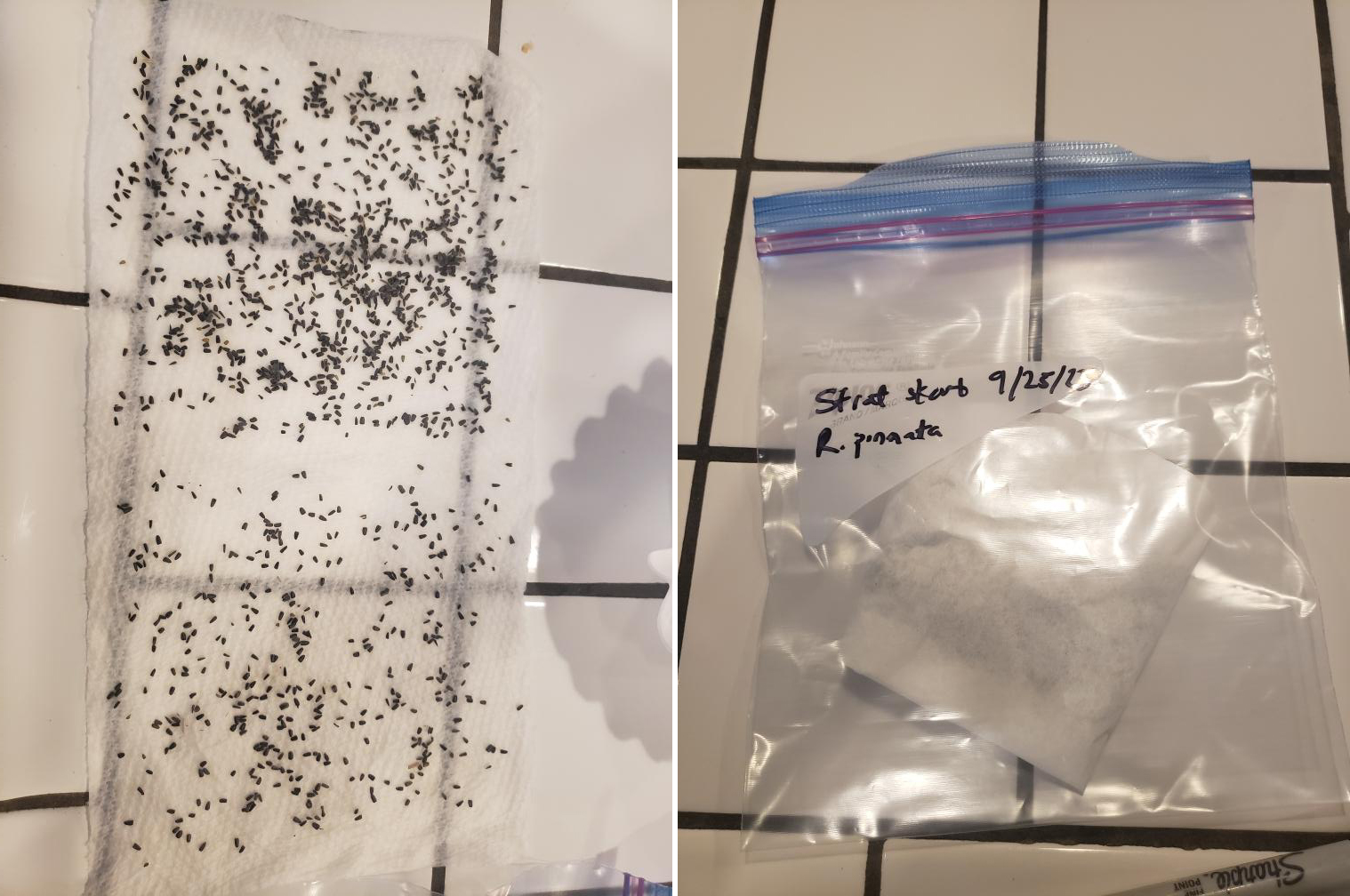
These were originally planned for fall 2025 planting but got delayed. Chandler now plans to start most seeds in the greenhouse and transplant to the field. For some, she may direct seeds during a cold, early spring day. Until then, the seeds are stored between damp paper towels in a seed fridge.
Plugs
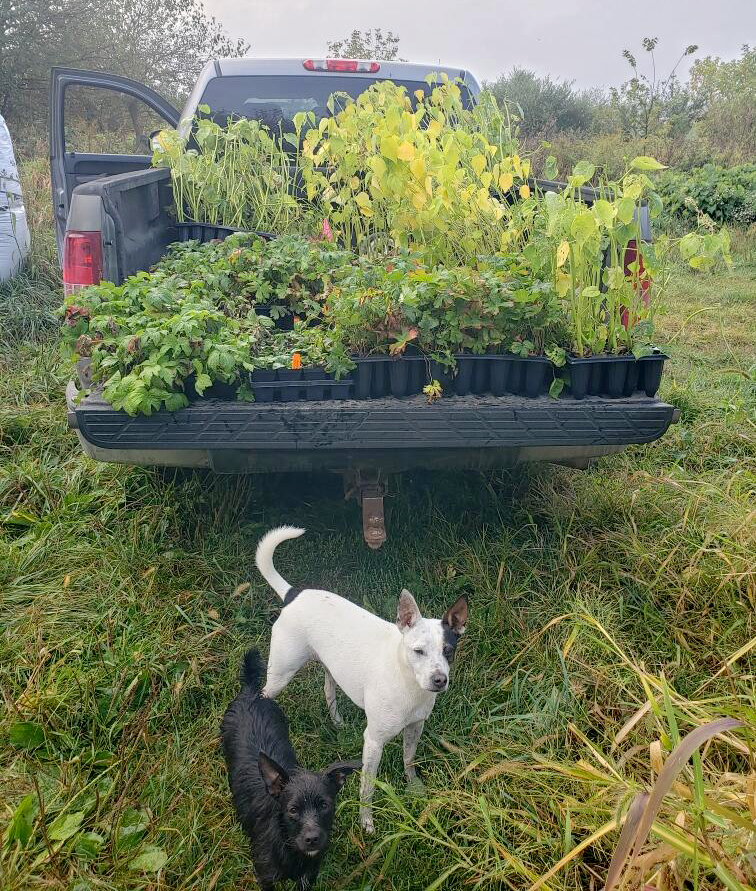
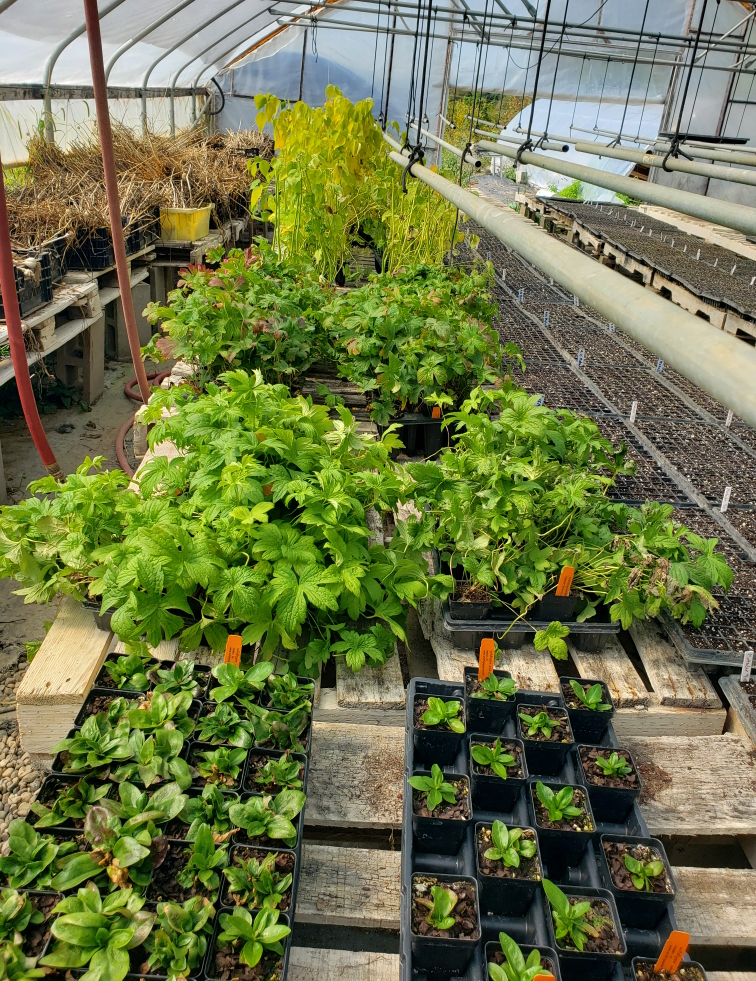
All plugs were greenhouse-stored for several weeks before planting, with additional watering as needed. Spacing varied by species:
- Anemone canadensis: 3 rows per bed, 10-inch spacing
- Hibiscus moscheutoes: 2 rows per bed, 24-inch spacing
- Many cells contained multiple plants—opted to divide them, resulting in some roots being very broken
- Geranium maculatum: 3 rows per bed, 10-inch spacing
- Gentiana andrewsii: 3 rows per bed, 18-inch spacing
Maintenance and harvest
Chandler intentionally designed the system to require minimal attention during the vegetable season. Maintenance will be focused on keeping irrigation functional, re-anchoring ground cloth and occasional hand-weeding.
Chandler expects the first seed harvest from plug-grown species in 2026. Seed-grown species will likely be ready for harvest by June 2027. Seeds will be harvested by hand and stored in paper bags. She is still evaluating seed storage locations, such as a greenhouse, mudroom, walk-in freezer, refrigerator or barn loft. The seeds will then be sold back to Michigan Wildflower Farm and Native Connections.
Reflection
Chandler describes the project as rewarding and energizing. Though it required slightly more time and mental energy than she anticipated, the benefits made it worthwhile. She also emphasized how valuable it was to connect with native plant producers, both for the encouragement to get started and for practical support along the way.
Key takeaways
- Choose sites that fit your workflow, not just your soil map.
- Invest in site preparation—it saves considerable time later.
- Design for minimal maintenance—consider ground cover, irrigation and spacing.
- Be flexible—expect plans to shift and adapt as needed.
- Lean on the native plant producers for advice, recommendations and troubleshooting.
- Start small if needed—a few beds or a small field edge is enough to learn.
This project highlights the potential for integrating native plants into existing vegetable farms. It does not need to require specialized equipment or significant overhauls. Thoughtful site selection and strong planning can allow native plantings to integrate into the working system.