FCCP receives funding to improve methods to measure and monitor aboveground biomass in US agroforestry systems
 Print
Print Email
EmailFCCP, in collaboration with the MSU Forest Measurement and Modeling Lab, received funding to measure and monitor aboveground biomass in US agroforestry systems.
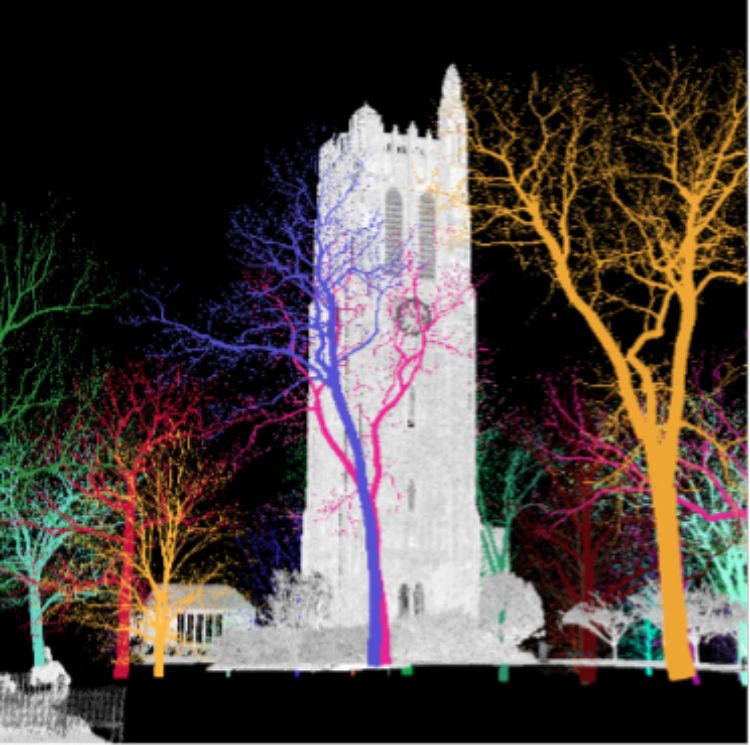
FCCP, in collaboration with the MSU Forest Measurement and Modeling Lab, received funding from the USDA Forest Service to measure and monitor aboveground biomass in US agroforestry systems. The purpose of this project is to advance the USDA Forest Service National Agroforestry Center (NAC) and the USDA Natural Resources Conservation Service (NRCS) ability to measure the aboveground productivity of agroforestry systems to monitor carbon, timber and conservation outcomes at the program level. Funds will be used to improve current protocols and standards to more cost-effectively leverage tools to assess outcomes from the purposeful incorporation of perennial woody species into cropping and grazing lands.
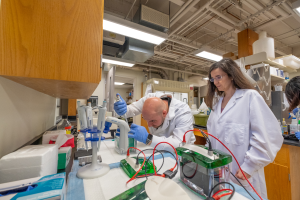
The project will combine literature review, field campaigns, and laboratory analysis to investigate existing sampling approaches for aboveground biomass, carbon, and timber in North American agroforestry systems and develop methodologies and protocols for agroforestry systems in the Midwestern US in a standardized fashion that can scale nationally across geographies, using novel minimally destructive terrestrial laser scanning methodologies.
The project will identify field sites throughout the Midwestern US that incorporate alley cropping, shelterbelts or windbreaks, riparian forest buffers, and silvopasture by addition and subtraction of agroforestry practices. Using innovative TLS methodologies, the project team will then measure tree volumes and other forest characteristics to develop more robust, agroforestry-specific allometric relationships to improve sampling protocols to measure carbon, biomass, and timber in midwestern agroforestry systems, which can then inform sampling design elsewhere, an area of high priority in agroforestry.